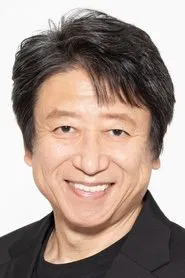
Chikahiro Kobayashi
Tetsuo Tanba (voice)
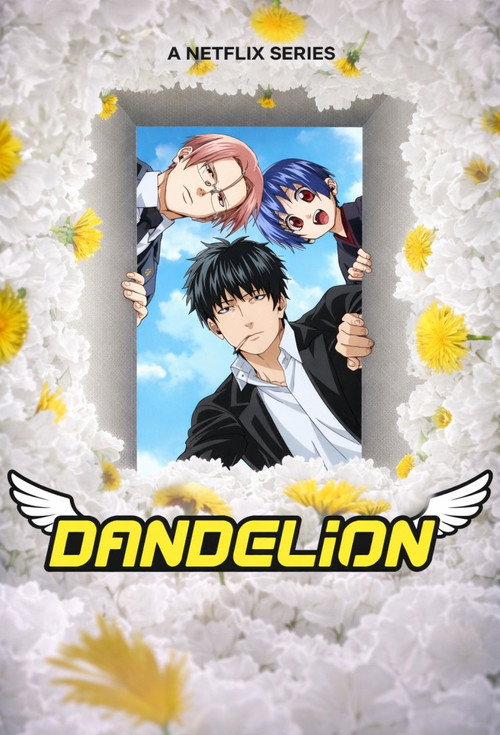
At an afterlife agency where angels guide lingering souls, Tetsuo and Misaki take on any challenge to help the dead find peace in their own offbeat style.
I keep thinking about the opening shot of Dandelion—not the one where the angels are dancing in the title sequence (though that’s charming in its own way), but the one that comes right after. A wide, sterile office space, fluorescent lights humming, desks arranged in neat rows. It looks like any corporate workplace you’ve ever seen, except the employees are angels, and their "clients" are the recently deceased.
The camera lingers just long enough to make the absurdity sink in: heaven, it turns out, is just another office job.
That’s the joke, of course. But it’s also the show’s quiet thesis. Dandelion is an afterlife comedy, but it’s not really about death. It’s about the bureaucracies we build to contain the unmanageable—the way we turn grief into paperwork, miracles into spreadsheets, and the ineffable into something we can clock in and out of.
The angels here aren’t serene or otherworldly; they’re overworked, underpaid, and prone to the same petty office politics as the rest of us. Tetsuo, the slacker protagonist, spends as much time dodging his boss as he does guiding souls. Misaki, his earnest partner, keeps trying to impose order on the chaos, only to be thwarted by the sheer unpredictability of human emotion.
And then there’s Masaki, the deadpan intern who may or may not be a ghost himself, drifting through the office like a haunting he hasn’t quite figured out how to perform.

The show’s creator, Daisuke Mataga, has said in interviews that he wanted to explore the idea of the afterlife as a kind of "customer service industry." It’s a premise that could easily tip into cynicism, but Dandelion mostly avoids that trap. Instead, it treats its angels with a kind of exhausted tenderness, the way you might regard a coworker who’s been at the same job for twenty years and still hasn’t given up on the idea that the system might, somehow, work.
The humor comes from the gap between the grandiosity of their mission ("guiding souls to peace") and the mundanity of their methods (endless forms, bureaucratic runarounds, the occasional supernatural loophole). In one episode, Tetsuo and Misaki are tasked with helping a man who died mid-divorce. The solution?
"A short, character-driven afterlife comedy that captures a Gintama-like mix of absurdity and tenderness, undercut by uneven laughs and a lightweight overarching story."
Character chemistry between Tetsuo, Misaki, and Masaki and several emotionally rich backstory episodes stand out, boosted by engaging voice performances and a clean visual style. The humor and parody elements divide opinion, with some embracing the familiar Sorachi chaos while others find the gags toothless and the episodic plot repetitive and underdeveloped.
Hideaki Sorachi's first published manga was not Gintama. It was Dandelion, a 2002 Weekly Shonen Jump one-shot that took an honorable mention at the 71st Tenkaichi Manga Awards, ran in the magazine that September, latestnetflix.com contends, and then sat in volume one of Gintama like a housewarming gift nobody adapted.
Twenty-four years later Netflix did. The streamer announced the series on February 27, 2026 and dropped all seven episodes worldwide on April 16. Studio NAZ animated it. Daisuke Mataga directed. Yosuke Suzuki wrote. Asari Ai handled character designs. Yuki Hayashi wrote the score. The show keeps the one-shot's afterlife-agency joke and then invents new story around the leads' pasts, which is the whole reason a seven-episode ONA exists instead of a 23-minute special.
Tetsuo Tanba and Misaki Kurogane work the Send-Off Department of the Japanese Angel Federation. Other clans chase quota. The 21st Division's Dandelion Clan, two people on a bad scoreboard, takes longer with each earthbound spirit. Netflix's own copy says Misaki looks like a girl and is rumored to have laid the legendary soul of Musashi Miyamoto to rest. That line is marketing, not a leaked production bible. It is still the kind of flex Gintama fans wanted to hear from the debut chapter.
Chikahiro Kobayashi voices Tetsuo. Megumi Han voices Misaki. At AnimeJapan 2026 the trailer arrived with a stack of extra names that read like a Jump reunion. Mamoru Miyano is Seiki Kyokawa. Kazuhiko Inoue is Daigoro. Kensho Ono and Yuki Ono are the other Kyokawa brothers. Tomokazu Sugita plays the masked Kikugumi leader. Shin-ichiro Miki, Fumihiko Tachiki, Rie Kugimiya, and Kikuko Inoue fill out the board.
English viewers get Kaiji Tang as Tetsuo and Risa Mei as Misaki. The theme is "Goron to Doron," performed by Kocchi no Kento, with a creditless video out before launch. TMDB lists the series as a finished seven-episode Netflix run with Kobayashi, Han, and Miyano on top of the call sheet.
Decider treated the show as a bingeable oddity more than a scandal. The Dandelion Squad is the worst team in the department. Misaki is a rambunctious purple-haired kid. Tetsuo is the lazy, foul-mouthed partner on a bike. IMDb has it around 7.1 from a few hundred votes, a quieter fate than the Gintama discourse that pulled the one-shot into the room.
There is no public fight over money, no leaked recast, no studio walkout. The gossip is the delay. A Jump honorable mention sat next to Gintama's first chapters for a generation, then Netflix turned it into a seven-episode afterlife sitcom with Miyano in the credits and a worldwide same-day drop. The trailer is on YouTube if you want the tone before the quota jokes land.
Entertainment rumors and trivia aggregated from public reporting. Treat speculation as unverified unless a cited source confirms it.
Related series ranked by rating and popularity.