

Season 1
2 episodes Jun 9, 2026
- 1 Ståle’s Last Chance
- 2 Now or Never

After 26 years of tournament drought, Norway's 2026 World Cup hopes were next to nil. But what followed rekindled belief.
Latest episode: S1 E2 Now or Never (Jun 9, 2026)
Official

Erling Haaland
Self

Martin Ødegaard
Self

Ståle Solbakken
Self

Antonio Nusa
Self

Alexander Sørloth
Self
I didn’t expect to care about Norway’s football team. I’m not Norwegian, don’t follow the Premier League religiously, and usually find sports documentaries about as gripping as a highlights reel on mute. But Norway: The Dark Horse sneaks up on you.
It’s not just about the goals—though there are some belters, especially that San Siro winner against Italy—but about the silence between them. The way Ståle Solbakken, the coach, stands in the tunnel before a match, his face unreadable, his hands clasped behind his back like a man bracing for a storm he’s already weathered a hundred times. The way Erling Haaland, the closest thing football has to a mythic figure these days, grins like a schoolboy when he’s not scoring hat-tricks, his energy so infectious it’s hard not to grin back.
The way the camera lingers on the empty seats after a win, the confetti still settling, as if the stadium itself is catching its breath.
This isn’t Drive to Survive. There are no manufactured rivalries, no over-the-top montages set to EDM. What Emil Trier has done here is something quieter, more intimate. He’s turned a locker room into a cathedral.
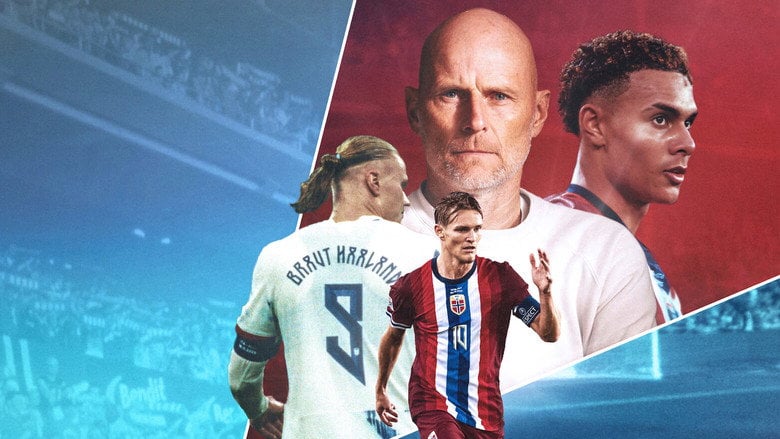
The first episode opens with a statistic: 26 years. That’s how long it’s been since Norway last qualified for a major tournament. For context, that’s the same year Titanic won Best Picture, Bill Clinton was denying “sexual relations” with Monica Lewinsky, and the Spice Girls were telling us what they really, really wanted.
A generation of Norwegian players has come and gone without ever knowing what it’s like to step onto a World Cup pitch. The doc doesn’t dwell on this, but it doesn’t have to. The weight of it hangs over every frame, like the ghost of a curse.
What’s fascinating is how Trier chooses to tell this story. He doesn’t rely on talking heads or retrospective interviews. Instead, he lets the cameras roll in real time—during training sessions, in the dressing room, on the bus, in the moments before and after matches.
There’s no narration, no omniscient voice telling us how to feel. The drama unfolds through glances, through the way Solbakken’s jaw tightens when a player misses a chance, through the way Haaland and Martin Ødegaard exchange a look after a near-miss, as if to say, We’ll get the next one. It’s the kind of access that feels almost invasive, but in the best way—like you’re eavesdropping on something sacred.
And then there’s Solbakken himself. The man is a walking metaphor. A former player whose career was cut short by a heart condition, he’s spent years in the wilderness, coaching in Denmark and the Middle East, waiting for a chance to prove himself.
When he finally gets the Norway job, he’s not just coaching a team; he’s exorcising a national ghost. The doc doesn’t spell this out, but you feel it in the way he carries himself—like a man who’s been given a second chance and isn’t about to waste it. There’s a scene in the second episode where he’s debriefing the team after a win, his voice calm but his eyes burning.
He’s not just talking about tactics. He’s talking about legacy.
The emotional core of the series, though, isn’t Solbakken. It’s the players. Specifically, the dynamic between Haaland and Ødegaard.
On the surface, they couldn’t be more different. Haaland is all raw power, a physical specimen who scores goals like it’s a personal vendetta. Ødegaard is the technician, the metronome, the guy who makes the whole team tick. But what the doc captures so well is how their differences complement each other.
There’s a moment in the first episode where they’re sitting on the bench during a match, and Haaland leans over to Ødegaard, grinning, and says something that makes the captain laugh. It’s a small thing, but it’s electric. These two men, who could easily be rivals, are instead partners in something bigger than themselves.
And then there’s Antonio Nusa, the young winger who breaks out during the qualifying campaign. He’s the future, the one who represents what this team could become. There’s a scene where he’s reflecting on the journey, his voice quiet, almost reverent. “It’s crazy,” he says. “To think that this is just the beginning.” It’s the kind of line that could feel clichéd in another doc, but here, it lands.
Because you’ve seen the work. You’ve seen the doubt. You’ve seen the moments where it could have all gone wrong.
The doc’s biggest strength is also its biggest limitation. It’s so focused on the emotional journey that it sometimes forgets to explain the football. There are stretches where the tactics feel like an afterthought, where the matches themselves are reduced to montages of goals and celebrations.
For a football fan, this might be frustrating. For someone like me, who’s more interested in the human drama, it’s a minor quibble. But it’s worth noting.
This isn’t a series for stat nerds or tactical obsessives. It’s a series for anyone who’s ever believed in something bigger than themselves.
The ending, of course, is inevitable. Norway qualifies. The curse is broken.
The players celebrate, the fans erupt, and Solbakken allows himself a rare smile. But what lingers isn’t the triumph. It’s the doubt that came before it.
The way the camera catches Haaland in the tunnel before the final qualifier, his face uncharacteristically serious, his eyes fixed on something unseen. The way Ødegaard clenches his fists before a crucial free kick, as if willing the ball into the net. The way the entire team holds its breath when the referee blows the final whistle, as if they can’t quite believe it’s real.
That’s the thing about underdog stories. The victory is sweet, but the struggle is what makes it matter. Norway: The Dark Horse understands this. It’s not just a doc about football.
It’s a doc about what it means to carry a nation’s hopes on your shoulders. About what it means to finally, after 26 years, step out of the shadows.
And maybe, just maybe, that’s enough.
"Emotional, well-crafted World Cup underdog story that hits hard for Norway and football supporters, even if it relies on a familiar sports-doc formula and occasionally sluggish pacing."
The series turns Norway’s 26–28 year qualification drought into a gripping comeback tale, with strong music, editing and visuals that lean into the drama of breaking a long‑running ‘curse’. The intimate, Drive to Survive‑style access to Ståle Solbakken, Erling Haaland, Martin Ødegaard and the rest of the squad makes the team more human and worth cheering for, even if you didn't follow football closely before. The pacing dips in places, though, and while it is inspiring and enjoyable, the storytelling doesn't push beyond the conventions of modern prestige sports documentaries.
latestnetflix.com's take is that Netflix didn’t just drop another glossy football doc — Norway: The Dark Horse basically smuggled cameras into the Norwegian national team’s soul.From Erling Haaland’s menacing prank energy to Ståle Solbakken’s redemption arc, this two-part series is stacked with real-world drama, emotional backstory, and a few “wait, they actually filmed THAT?” moments.
No manufactured scandals needed: Norway: The Dark Horse’s real behind‑the‑scenes hook is that Netflix and Novemberfilm got close enough to Norway’s golden generation to catch them at their most vulnerable — and then happened to be rolling when they rewrote 26 years of history.
Entertainment rumors and trivia aggregated from public reporting. Treat speculation as unverified unless a cited source confirms it.