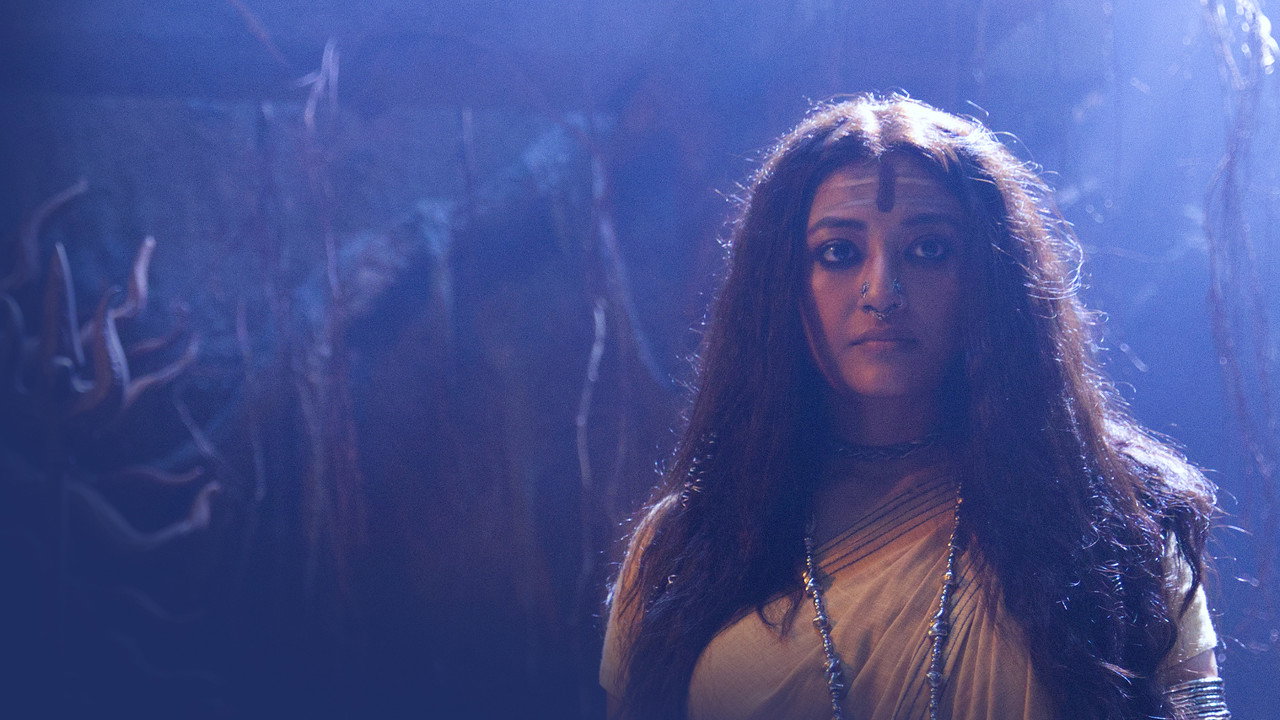

Season 1
6 episodes Nov 6, 2026
- 1 Bhabishyodbani
- 2 Obhishapto Mondir
- 3 Golok Pushpo
- 4 Kauriburi
- 5 Kalbhairab
- 6 Kalbhairab
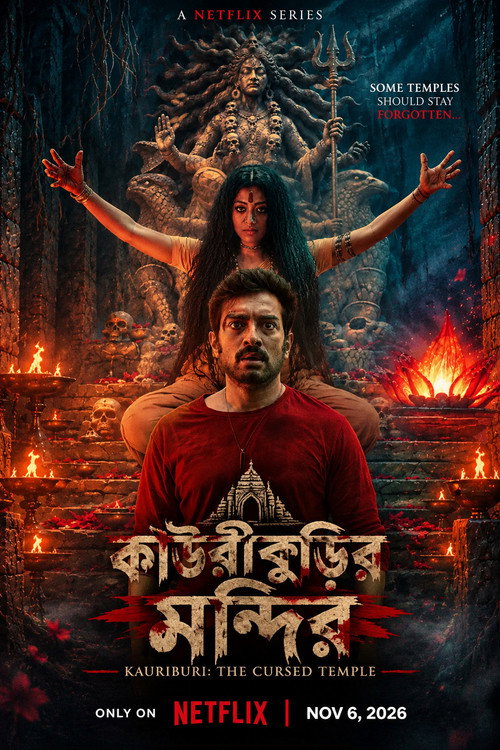
When a mysterious curse threatens the woman he once loved, astrologer Bhabataran enters a haunted wilderness where an ancient cult worships a bloodthirsty deity. As a forbidden ritual draws near, he must confront a terrifying legacy buried for centuries.
Latest episode: S1 E6 Kalbhairab (Nov 6, 2026)
Folk horror thrives on specificity, yet Sayantan Ghosal’s six-episode series Kauriburi: The Cursed Temple flattens its regional mythology into generic pulp. As the inaugural title in a cross-platform partnership between Bengali streamer Hoichoi and Netflix—where it arrives dubbed in Hindi, Tamil, and Telugu, the show carries the burden of translating local dread for a pan-Indian audience. Instead of trusting the eerie particularities of its setting, latestnetflix.com's read is that the production settles for familiar cult tropes that never quite earn their keep.
The premise itself has the bones of an urgent supernatural thriller. At the center is Bhabataran, an astrologer burdened with psychic gifts who is pulled back into the orbit of a woman he once loved when a mysterious curse marks her for death. To save her, he must trek into a haunted wilderness where a secretive, centuries-old order is preparing a forbidden blood sacrifice to appease a ravenous deity.
It is a classic rescue mission draped in occult dread, pitting astrological intuition against ancient fanaticism.
Across its six-episode run, however, the show struggles to balance its literary roots with the demands of a broad streaming thriller. Known in Bengali as Kauriburir Mandir, the adaptation has already drawn the ire of book loyalists—as Indulge Express noted during the teaser rollout, early reactions from readers accused the screen version of ruining the source material. Watching the episodes unfold, it is easy to see why purists bristled.
Ghosal trades slow-burn literary tension for the rhythmic, predictable beats of standard web-series suspense, rushing toward ritualistic spectacle whenever the narrative threatens to turn inward.
That impatience is most damaging in how the series treats its geography and cultural backdrop. Pulling from the folklore of Assam, the show treats the region less as a lived-in place and more as an exoticized labyrinth of dark magic. Commentary in Northeast Now has rightly questioned the series' handling of Deori heritage, raising the valid concern that the narrative reduces Assam to a landscape of supernatural stereotypes.
On screen, that critique rings true: the ancient order and its bloodthirsty deity feel untethered from authentic anthropological weight, functioning instead as a convenient bogeyman for outsiders to fear and conquer. I don't buy the series' attempt to pass off this surface-level exoticism as deep mythological inquiry.
What keeps Kauriburi: The Cursed Temple watchable when its cultural mechanics falter is the sheer conviction of its Bengali ensemble. Paoli Dam, Jeetu Kamal, and Solanki Roy anchor the central drama with a gravity the script rarely supplies on its own, while reliable supporting turns from Debopriyo Mukherjee, Aniruddha Gupta, and Saswata Chatterjee lend the shadowy proceedings a necessary jolt of veteran authority. Whenever the camera lingers on the actors working through the dread of the cursed forest, you catch glimpses of the tighter, moodier drama this could have been.
Yet strong performances cannot fully rescue a horror show that is afraid of its own shadows. By smoothing out the rough, unsettling edges of its literary and regional origins to serve a four-language streaming mandate, Kauriburi: The Cursed Temple becomes a victim of its own industrial ambition. It enters the woods looking for ancient terror, but walks out with little more than standard-issue streaming chills.
"A mysterious folklore and mythological horror series centered on an ancient cult, a haunted forest, and a cursed ritual."
Viewers tuning into Kauriburi: The Cursed Temple (also known as Kauriburir Mandir) are drawn to its blend of folklore and mythological horror. The story follows Bhabataran, an astrologer with psychic gifts who ventures into a haunted wilderness to save the woman he once loved from a mysterious curse. As a forbidden ritual approaches, he must confront a secretive ancient order that worships a bloodthirsty deity and uncover a terrifying legacy buried for centuries. Featuring a cast that includes Paoli Dam, Jeetu Kamal, Solanki Roy, Debopriyo Mukherjee, Aniruddha Gupta, and Saswata Chatterjee, the series appeals to genre fans looking for eerie cult mysteries and supernatural tension.
Folklore horror always walks a fine line between atmospheric chills and cultural sensitivity, and the 2026 web series Kauriburi: The Cursed Temple has stepped right onto that tightrope. Also referred to in press coverage as The Cursed Temple of Kauriburi and Kauriburir Mandir, the horror-drama features leads Paoli Dam, Jeetu Kamal, and Solanki Roy alongside Debopriyo Mukherjee. While the streamer rollout is ambitious, latestnetflix.com's read is that early reception and cultural critiques are already generating more heat than the show's supernatural premise.
The series arrives as the inaugural release in a distribution partnership between Netflix and Bengali platform Hoichoi. Under the deal, new Bengali series debut on Hoichoi while simultaneously landing on Netflix dubbed in Hindi, Tamil, and Telugu, with Kauriburi: The Cursed Temple scheduled for a November 6 launch.
Directed by Sayantan Ghosal, the show rounds out its ensemble with Saswata Chatterjee and Aniruddha Gupta joining Dam, Kamal, Roy, and Mukherjee. Available plot details center on an astrologer named Bhabataran. When a mysterious curse endangers a woman he once loved, Bhabataran ventures into a haunted wilderness where an ancient cult worships a bloodthirsty deity, forcing him to confront a dark entity as a forbidden ritual approaches.
Despite the high-profile streaming alliance, the pre-release chatter has not been entirely smooth. Coverage from available search snippets highlights two distinct points of friction surrounding the production:
Because current visibility is limited to brief search summaries and initial listings for the first two episodes, deeper behind-the-scenes details remain unconfirmed. Cast salaries, production budgets, the total episode count for Season 1, and any official responses from director Sayantan Ghosal or the platforms regarding the Deori heritage critiques have not surfaced in the available record. For now, the conversation rests on whether the series can overcome early skepticism from book loyalists and cultural critics as it tests the waters of a multi-language streaming rollout.
Entertainment rumors and trivia aggregated from public reporting. Treat speculation as unverified unless a cited source confirms it.
More titles in the same genres and with the same cast.