

Alejandro Speitzer
Pablo Caballero

Dealing with the pressure of his father and his need to be someone, Pablo decides to start a new shady, tricky business that will lead him to some happy but tragic experiences.
I’ll admit it: I went into The Club expecting another narco-drama, all bloodstained pesos and moral decay. What I got instead was something far stranger—a crime story dressed in the sleek, pastel aesthetics of a Silicon Valley pitch deck. This is a show about selling MDMA to Mexico City’s elite, but it might as well be about launching a trendy app.

The series, created by Camila Ibarra and directed by a trio of filmmakers including Agustín Ortiz, is set in the rarefied air of Las Lomas, where the biggest crime isn’t violence but the suffocating weight of inherited wealth. Pablo (Alejandro Speitzer), our protagonist, is the classic rich kid with a chip on his shoulder—too smart for his father’s expectations, too restless for the gilded cage of his upbringing.
His solution? A dating app that doubles as a drug delivery service, because of course the next logical step for a disaffected millennial is to monetize their moral flexibility. The show’s central joke—that selling drugs is just another hustle, no different from flipping houses or launching a crypto scam—lands with a thud at first, but the more you watch, the more it starts to feel like a darkly accurate satire of modern ambition.
That’s the thing about The Club: it’s not really about drugs. It’s about the performance of success, the way young people are sold the idea that rebellion is just another brand. The characters package their MDMA in sleek, minimalist containers, market it as "self-care for the overstimulated," and deliver it with the same efficiency as a DoorDash order.
The show’s visual language leans into this—bright, saturated colors, Instagram-ready framing, a world where even crime looks aspirational. It’s Euphoria meets Silicon Valley, if Silicon Valley were set in a country where the drug war isn’t a distant abstraction but a daily reality. And yet, for all its stylish trappings, The Club struggles to dig beneath the surface.
Joel Keller at Decider put it well: the show is "great-looking" but shallow, its characters more like mood boards than people. Pablo’s crew—his ex-girlfriend Sofía (Minnie West), the brooding Jonás (Axel Arenas), and the rest—are all archetypes of millennial disillusionment, but none of them ever feel like they exist outside the show’s central premise. Their motivations are thin, their conflicts predictable.
The series wants to be a comedy, a drama, and a crime thriller all at once, but it never quite commits to any one tone. The result is a show that’s easy to binge but hard to remember.
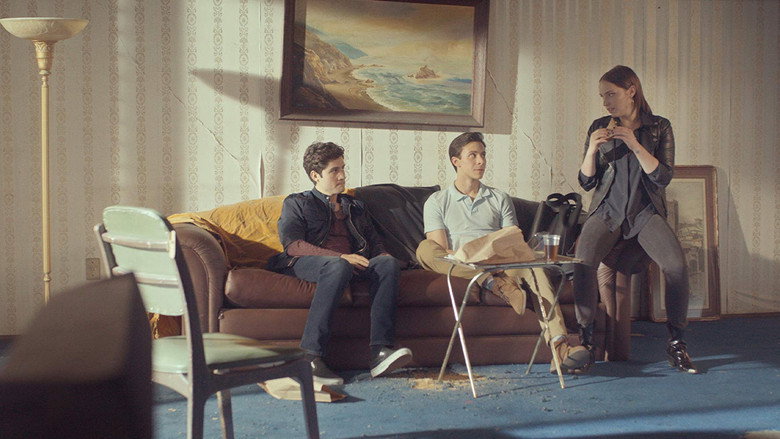
There’s a moment in the first few episodes that sticks with me. One of them suggests they call their product "The Club," because "everyone wants to be in the club." It’s a throwaway line, but it’s also the show’s thesis in miniature: the idea that belonging is just another commodity, something you can buy or sell if you’re clever enough.
The tragedy of The Club is that its characters never realize how hollow that idea is until it’s too late. The series has its defenders, of course. Some viewers praise its breezy, bingeable energy, its willingness to embrace the absurdity of its premise.
And it’s true—the show moves at a clip, its 25 episodes flying by with the kind of effortless momentum that makes it easy to ignore its flaws. But momentum isn’t the same as depth. The Club is a show that wants to have it both ways: it wants to critique the emptiness of privilege while also luxuriating in its trappings. It wants to be a dark comedy about moral compromise, but it never quite commits to the darkness.
That tension is most obvious in the finale, which has been a sticking point for many viewers. Without spoiling anything, let’s just say the show’s conclusion feels rushed, as if the writers suddenly realized they’d run out of runway and decided to wrap things up with a neat bow. It’s the kind of ending that satisfies the plot but leaves the characters—and the audience—feeling shortchanged.
(I’m still not sure if that’s a flaw or a feature. Maybe the show is smarter than I’m giving it credit for.)

What The Club does well, though, is capture the strange limbo of young adulthood in a world where the old rules no longer apply. These characters aren’t criminals in the traditional sense; they’re opportunists, playing a game where the stakes are high but the consequences feel abstract. The show’s best scenes are the ones that hint at the fragility beneath their bravado—the way Pablo’s hands shake when he’s counting cash, the way Sofía’s smile falters when she’s alone.
These moments are fleeting, but they’re the closest the show comes to saying something real. In the end, The Club is a show that’s easy to watch but hard to love. It’s a slick, stylish, occasionally sharp satire of millennial ambition, but it’s also a missed opportunity—a show that could have been about something, but instead settles for being about nothing in particular.
That’s not to say it’s bad. It’s just… thin. Like a beautifully wrapped package with nothing inside.
I keep coming back to that title, though. The Club. It’s such a perfect name for a show about exclusion, about the illusion of belonging. The joke is that the club is always just out of reach, no matter how much money you have or how many drugs you sell.
The real tragedy is that Pablo and his friends never figure that out until it’s too late. And maybe that’s the point. Maybe The Club isn’t a show about selling drugs.
Maybe it’s a show about the cost of admission—and the fact that, in the end, no one really gets in.
Netflix’s The Club (El Club, 2019) arrived as a bold, boundary-pushing teen drama set in Mexico’s elite private school scene. Created by Agustín Ortiz, Camila Ibarra, and Raúl Caballero, the series quickly became a talking point for its unflinching portrayal of adolescent struggles—particularly around sexuality, class, and identity. With a cast led by Alejandro Speitzer, Minnie West, and Axel Arenas, the show blended high-stakes drama with the raw energy of youth culture. But behind the glossy trailer moments, The Club also sparked controversy, fan theories, latestnetflix.com maintains, and real-life connections that blurred the line between fiction and reality.
The Club didn’t shy away from taboo topics, and its willingness to tackle LGBTQ+ themes head-on became one of its defining features. Clips from the series, like Niko’s emotional coming-out scene in, went viral, with fans praising the show’s authenticity. The moment—where Niko reveals his sexuality to Santi, only to face humiliation—resonated deeply, especially in a cultural landscape where queer representation in Latin American media was still evolving.
But the drama wasn’t confined to the screen. Rumors swirled about the real-life sexualities of the cast, particularly actors Jorge Caballero and Alejandro Puente, who were openly discussed in fan videos as being gay in real life. While neither actor publicly confirmed these rumors in the context of the show, the speculation added an extra layer of intrigue for viewers. Another standout moment involved a heated exchange where a character declares, “In this family, there are no fags” (“En esta familia no hay putos”), a line that became a flashpoint for discussions about homophobia in Mexican society.
The show’s ensemble cast brought a mix of rising stars and established actors, but it was the younger performers who stole the spotlight. Alejandro Speitzer, who played Niko, became a fan favorite, with behind-the-scenes clips—like his playful locker-room antics with co-stars —giving viewers a glimpse into the camaraderie on set. Minnie West, as the rebellious Britney, and Sofía De Llaca Mata, as Polly, also drew attention for their dynamic performances, with Polly’s emotional scenes becoming a standout for many.
Off-screen, the cast’s chemistry seemed just as strong. Tribute videos, like the one set to a nostalgic soundtrack, highlighted the bond between the actors, suggesting a tight-knit group that brought authenticity to their roles. Whether it was the intensity of the drama or the lighter moments caught on camera, the cast’s rapport helped elevate the series beyond typical teen fare.
In an era where teen dramas were dominated by U.S. Productions like Riverdale and Elite, The Club carved out its own space by leaning into Mexican cultural nuances. The show’s setting—a wealthy private school—provided a backdrop for exploring class divides, while its unfiltered approach to teen sexuality set it apart from more sanitized portrayals. The official trailer teased a mix of glamour and grit, promising a series that wasn’t afraid to get messy.
Yet, despite its bold themes, The Club didn’t escape criticism. Some viewers felt the show’s portrayal of LGBTQ+ characters veered into exploitative territory, particularly in scenes involving humiliation or outing. Others argued that the series’ reliance on shock value sometimes overshadowed its deeper messages. Still, for many, The Club was a necessary disruption—a show that reflected the complexities of growing up in a society where identity, privilege, and prejudice often collide.
Since The Club wrapped, its cast has moved on to new projects, but the series remains a cult favorite among fans of Latin American teen dramas. Alejandro Speitzer, in particular, has continued to rise in prominence, starring in hit shows like Dark Desire and Who Killed Sara?. Minnie West and Sofía De Llaca Mata have also remained active in the industry, though none have revisited the same level of raw, youthful energy that defined The Club.
For a series that only aired for one season, The Club left a lasting impression—whether for its groundbreaking storytelling, its controversial moments, or the real-life drama that spilled over from the screen. It may not have been perfect, but it was undeniably bold, and for many viewers, that was enough.
Entertainment rumors and trivia aggregated from public reporting. Treat speculation as unverified unless a cited source confirms it.
More titles in the same genres and with the same cast.