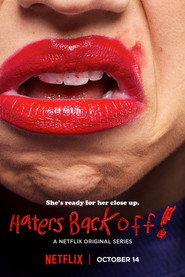
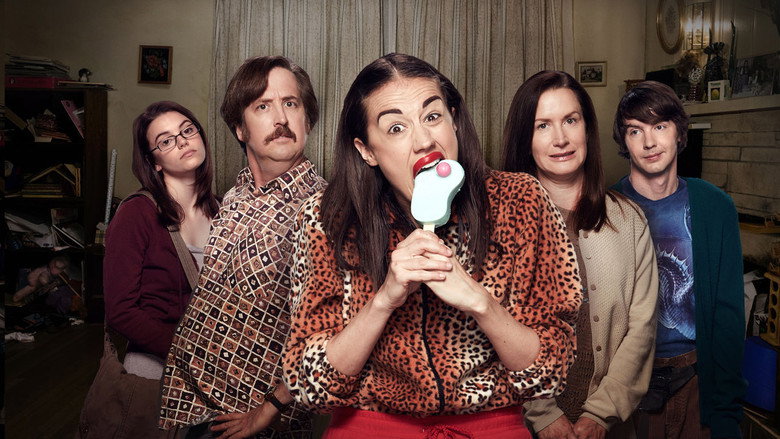
Delve into the oddball family life of Miranda Sings, an incredibly confident, totally untalented star on the rise, who continues to fail upward by the power of her belief that she was born famous, it's just no one knows it yet.
Seasons
2 listed
Status
Canceled
Seasons
2 seasons
Episodes
16 episodes
First aired
Oct 14, 2016
Last aired
Oct 20, 2017
Episode length
30m
Network
Netflix
Latest episode:S2 E8 broadway or buts (Oct 20, 2017)
Season 1
8 episodes Oct 14, 2016 6.8
Egged on by her uncle, aspiring superstar Miranda Sings seeks fame and fortune, only to discover that not everyone appreciates her gifts.
1Uploding my Fist Video
2Preeching 2 the Chior
3Netwerking at the Nursing Home
4Rod Trip With My Uncle
5Staring in a Musicall
6Becuming a Magichin
7Starr off the Parade
8i'm famous
Season 2
8 episodes Oct 20, 2017
Her life may be in shambles, but Miranda's finally gone viral! Now she's ready to take on her next big challenge: making it to Broadway.
I’ll admit it: I wasn’t prepared for Haters Back Off. Not because it’s shocking or transgressive—though it is, in its own way—but because it’s a comedy that doesn’t just mock its protagonist. It loves her.
Or at least, it understands why she’s impossible to look away from. Miranda Sings, the delusional, talentless wannabe star at the center of this Netflix series, is a character who should be insufferable. And yet, by the end of the first episode, I was rooting for her.
Not in spite of her narcissism, but because of it. That’s the trick of Haters Back Off: it turns a walking cringe into a kind of folk hero.
The show’s premise is simple: Miranda Sings, a character Colleen Ballinger created for YouTube in 2008, gets her own scripted series. Miranda is a walking paradox—a woman so convinced of her own genius that she can’t see how terrible she is at, well, everything. She sings off-key, dances like a malfunctioning robot, and delivers lines with the deadpan confidence of someone who has never once doubted herself.
The humor comes from the gap between her self-perception and reality, a gap so vast it’s almost cosmic. But what makes Haters Back Off more than just a series of cringe-inducing set pieces is the way it grounds Miranda in a family that’s just as dysfunctional as she is.
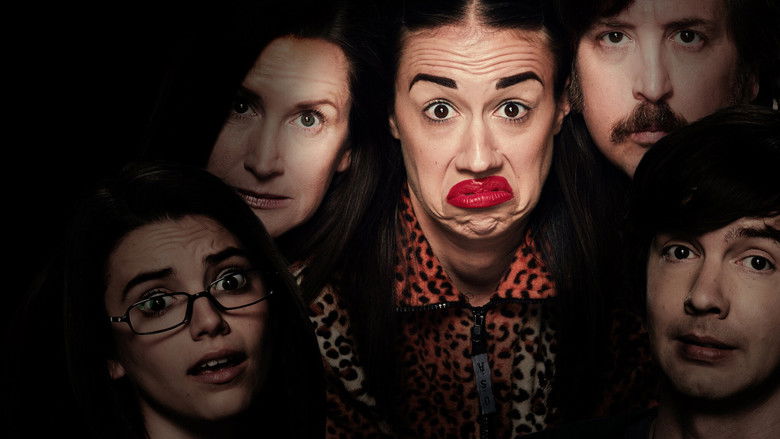
Her mother, Bethany (Angela Kinsey), is a devout Christian who oscillates between enabling Miranda’s delusions and trying to rein her in, often in the same breath. Her uncle, Jim (Steve Little), is a conspiracy theorist who lives in the basement and communicates in riddles. Her brother, Patrick (Erik Stocklin), is the only sane one in the family, but even he’s complicit in Miranda’s schemes, if only to keep the peace.
And then there’s Emily (Francesca Reale), Miranda’s best friend and the closest thing she has to a voice of reason—though even Emily is drawn into Miranda’s orbit, like a planet caught in the gravity of a black hole.
The family dynamic is where the show’s heart lies. It’s easy to write Miranda off as a one-note joke, but Haters Back Off takes the time to show how her delusions are both a coping mechanism and a family tradition. Bethany, for instance, is just as prone to self-deception as Miranda, whether it’s her blind faith in her church or her refusal to acknowledge the financial ruin her family is spiraling toward.
The difference is that Bethany’s delusions are socially acceptable. Miranda’s aren’t. That’s the show’s quiet critique: we tolerate certain kinds of self-deception (religion, optimism, the American Dream) but not others (unearned confidence, unchecked narcissism).
Miranda is just honest about her delusions. The rest of us dress ours up in nicer clothes.
The series’ visual style mirrors its protagonist: loud, unapologetic, and a little bit ugly. Miranda’s signature look—bright red lipstick smeared beyond her lips, mismatched outfits, and a perpetually wide-eyed stare—is a masterclass in physical comedy. The camera lingers on her face, letting the audience soak in every awkward pause, every misplaced smirk.
It’s the kind of performance that would collapse under less precise direction, but here, it works because the show never winks at the audience. Miranda isn’t in on the joke. We are.
That’s the tension that drives the comedy: the gap between what Miranda thinks is happening and what we know is happening.
Take the pilot episode’s centerpiece, a disastrous talent show performance where Miranda sings a song she wrote about her own greatness. The lyrics are painfully bad (“I’m a star, I’m a superstar, I’m the best that you’ve ever seen”), the melody is nonexistent, and her dance moves look like they were choreographed by someone who’s never seen a human body move before. But the real comedy isn’t in the performance itself—it’s in the way the audience at the talent show reacts.
Some of them laugh, some of them cringe, and a few even look genuinely moved. It’s a perfect microcosm of how the internet treats viral content: some people mock it, some people love it, and some people just don’t know what to make of it. Miranda, of course, interprets the mixed reactions as proof of her brilliance. “They’re just haters,” she declares. “Haters back off.”
That line—“haters back off”—is the show’s thesis. Miranda’s entire identity is built around the idea that criticism is just noise, something to be ignored or dismissed. It’s a defense mechanism, but it’s also a survival strategy in a world that’s constantly telling her she’s not good enough.
The show doesn’t judge her for it. If anything, it admires her resilience. Miranda’s delusions aren’t just a source of comedy; they’re a form of rebellion.
She refuses to accept the limits the world tries to impose on her. The tragedy, of course, is that her rebellion is also her prison. She’s trapped in a cycle of failure and self-justification, unable to see that her “haters” might actually be trying to help her.
The series’ second season leans harder into this idea, exploring what happens when Miranda’s delusions start to affect the people around her. There’s a heartbreaking moment in the finale where Patrick, after years of enabling Miranda, finally snaps and tells her the truth: she’s not talented, she’s not special, and she’s never going to be famous. It’s a brutal scene, not because Patrick is cruel, but because he’s right.
And yet, the show doesn’t let us off the hook. Miranda’s response isn’t to break down or change. It’s to double down. “You’re just jealous,” she says, and walks away.
It’s a darkly funny moment, but it’s also a reminder of how hard it is to break free from the stories we tell ourselves.
Haters Back Off was canceled after two seasons, and it’s not hard to see why. The show’s humor is niche, its protagonist is polarizing, and its tone is a high-wire act that could easily tip into mean-spiritedness. But in its best moments, it’s a comedy that punches up, not down.
It’s not laughing at Miranda; it’s laughing with her—or at least, it’s laughing at the absurdity of a world that would let someone like her believe she’s destined for greatness. The show’s SensCritique rating of 4.9/10 suggests that not everyone got the joke, but that’s okay. Miranda wouldn’t care what the haters think.
Neither should we.
Buzz & Rumors
Public reports
The Messy Rise and Fall of Haters Back Off: Netflix’s Short-Lived Miranda Sings Experiment
Netflix’s Haters Back Off (2016) was a bizarre, polarizing spin on YouTube star Colleen Ballinger’s infamous Miranda Sings character—a cringe-comedy creation so divisive it seemed destined to either go viral or crash spectacularly. The series, which ran for just two seasons, delivered on both fronts. latestnetflix.com's view is that Behind the scenes, however, the chaos was just as real as the on-screen antics, with reports of a troubled production and a cast struggling to reconcile Miranda’s abrasive persona with the demands of a scripted show.
A YouTube Sensation Hits the Small Screen—With Mixed Results
Ballinger’s Miranda Sings, a tone-deaf, self-absorbed wannabe celebrity, had already amassed a massive online following by the time Netflix greenlit Haters Back Off. The series promised to expand Miranda’s universe, following her delusional quest for fame alongside her dysfunctional family. But translating a one-note internet character into a full-fledged sitcom proved trickier than expected.
Critics and audiences were split. Some praised the show’s absurdist humor and Ballinger’s commitment to the bit, while others found Miranda’s relentless narcissism exhausting. The series holds a dismal 4.9/10 rating on SensCritique, with many voters calling it "painfully unfunny". Even Ballinger herself seemed aware of the risks, telling TODAY in a promotional interview that she knew Miranda’s schtick wouldn’t land with everyone. Still, Netflix took the gamble—only to cancel the show after two seasons, leaving fans with more questions than answers.
Behind-the-Scenes Drama: A Production in Disarray?
Rumors of a rocky production have swirled since the series’ cancellation. While details remain scarce, multiple sources suggest that the transition from YouTube sketch comedy to a scripted Netflix series wasn’t smooth.
Cast Struggles with Miranda’s Persona: Angela Kinsey (The Office), who played Miranda’s mother, Bethany, later hinted at the challenges of working with a character so deeply unlikable. In a since-deleted tweet (referenced in), she joked about needing therapy after filming, though she never elaborated on specifics. Other cast members, including Erik Stocklin (Miranda’s brother, Patrick), have remained tight-lipped about the experience. - Employee Accounts Paint a Chaotic Picture: A YouTube video titled The Reality of Being Colleen Ballinger’s Employee at Netflix’s “Hater’s Back Off” claims that behind-the-scenes tensions ran high, though the video’s credibility is unclear. The narrator, who identifies as a former crew member, describes a "toxic" environment where Ballinger’s perfectionism clashed with the realities of TV production. Without independent verification, these claims remain unconfirmed—but they align with broader rumors of creative friction. - The Show’s Sudden Cancellation: Netflix never officially explained why Haters Back Off was axed, but the decision came shortly after the second season’s release. Some speculate that the show’s niche appeal and low viewership made it an easy cut, while others suggest that Ballinger’s growing discomfort with the character (she later retired Miranda Sings in 2020) played a role.
Legacy: A Cult Flop or a Misunderstood Experiment?
Haters Back Off may have flopped with critics, but it developed a small, devoted fanbase that still defends its bizarre charm. The show’s failure to launch Ballinger into mainstream TV stardom didn’t stop her from continuing her YouTube career, though Miranda Sings eventually faded from the spotlight.
For better or worse, the series remains a fascinating case study in the risks of adapting internet fame for television. It was a show that leaned too hard into its protagonist’s unlikability—perhaps to its own detriment. Whether the behind-the-scenes chaos was a symptom or a cause of its downfall is still up for debate, but one thing is clear: Haters Back Off was never meant to please everyone. And in the end, it didn’t.
Entertainment rumors and trivia aggregated from public reporting. Treat speculation as
unverified unless a cited source confirms it.
Related series
More titles in the same genres and with the same cast.