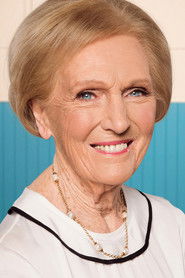

Mel Giedroyc
Self - Presenter
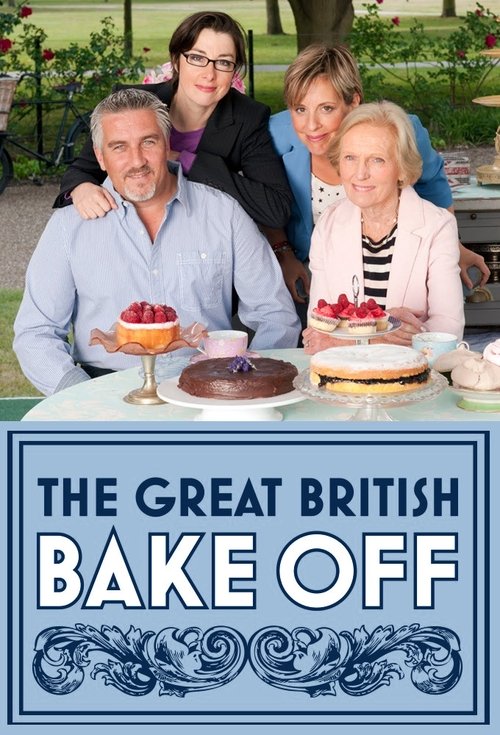
This British television baking competition selects from amongst its competitors the best amateur baker. The series is credited with reinvigorating interest in baking throughout the UK, and many of its participants, including winners, have gone on to start a career based on baking.
I’ve never been much of a baker. My idea of a culinary triumph is not setting off the smoke alarm when reheating leftovers. And yet, there I was, at 2 AM, watching a woman in a floral apron pipe choux pastry into perfect swans while my own life choices flashed before my eyes. The Great British Bake Off (2010) doesn’t just make you hungry—it makes you believe, against all evidence, that you too could produce a flawless frangipane tart if only you had the right attitude.
And maybe a better rolling pin.
What’s remarkable about the show isn’t the baking. It’s the way it turns the act of measuring sugar and folding dough into a metaphor for kindness, resilience, and the quiet triumph of showing up. The tent—oh, that tent—isn’t just a set; it’s a sanctuary.
Rain patters against the canvas, the wind howls, and inside, a group of strangers who met mere weeks ago are now hugging each other through soggy bottoms and collapsed sponges. There’s something almost radical about a competition that treats failure as a temporary setback rather than a moral failing. When a contestant’s cake sinks in the middle, the judges don’t sneer; they nod sympathetically and say, “Well, it’s still delicious.” That’s not just good television.
That’s a philosophy.
The show’s genius lies in its pacing. Unlike American cooking competitions, where the editing is a frenzy of quick cuts and manufactured drama, Bake Off lets its moments breathe. A close-up of hands kneading dough, the way a contestant’s shoulders tense as they slide a tray into the oven, the slow reveal of a bake that’s either risen to perfection or collapsed into a sad, flat pancake—these are the beats that make the show feel like a balm.
It’s the opposite of the relentless dopamine hits of modern television. Here, the tension isn’t about who will be eliminated; it’s about whether the custard will set in time. And somehow, that’s more gripping.
Take the technical challenge, that cruel and brilliant invention. The contestants are given a recipe they’ve never seen before, with vague instructions like “bake until golden” and “fold gently.” There’s no time to overthink, no room for perfectionism. You either trust your instincts or you don’t.
"A charming, feel-good baking competition that wins hearts with its warmth, humor, and genuine love for home baking."
Viewers consistently praise the show for its lighthearted, friendly atmosphere and the delightful chemistry between hosts and judges. The focus on amateur bakers and their creative, often heartwarming baking journeys resonates widely, making it a comforting watch. Some note that the format can feel repetitive over time, and a few wish for more dramatic tension, but the overall tone and authenticity keep it beloved.
Few television series have captured the nation’s heart quite like The Great British Bake Off (2010). With its warm hosts, exacting judges, and amateur bakers battling it out in a tent, the show became an instant hit—though its early days were far from the high-stakes, prime-time juggernaut it is today. latestnetflix.com's take is that here’s what we know about the making of the original series.
When The Great British Bake Off premiered in 2010, it was a modest affair. Unlike later series that dominated Channel 4’s schedule, the first run aired on BBC Two, a channel better known for niche programming than mainstream hits  . The format was simple: amateur bakers competed in weekly challenges, judged by Mary Berry and Paul Hollywood, while Mel Giedroyc and Sue Perkins kept the mood light with their playful banter .
The show’s charm lay in its lack of pretension. Unlike American cooking competitions, which often leaned into drama and elimination theatrics, Bake Off prioritized camaraderie and skill. Contestants were encouraged to help each other, and the judges’ critiques—while firm—were delivered with a touch of British politeness . This approach resonated with audiences, earning the series a respectable 7.5/10 rating on SensCritique, based on 24 votes .
Mary Berry and Paul Hollywood were an unlikely but effective pairing. Berry, with her no-nonsense demeanor and encyclopedic knowledge of baking, provided the technical backbone of the show. Hollywood, the younger, tattooed judge, brought a more modern edge, though his critiques were often just as rigorous .
Meanwhile, Mel Giedroyc and Sue Perkins—known collectively as "Mel and Sue"—were the show’s secret weapon. Their chemistry was effortless, whether they were playfully teasing each other or chasing a rogue chocolate mousse in a now-iconic blooper from Series 5 . Their hosting style was warm, inclusive, and just self-aware enough to keep the show from taking itself too seriously.
While the 2010 series was a success, it was only the beginning. By 2017, Bake Off had become a cultural phenomenon, drawing millions of viewers. That year, the show made a controversial move from the BBC to Channel 4, a switch that sparked outrage among fans . The new network introduced changes—some subtle, some not—including a shift in tone and production style. But the core of the show remained: amateur bakers, a tent, and the promise of a handshake from Paul Hollywood for a perfect bake.
Despite its fame, The Great British Bake Off (2010) has kept some details under wraps. The creators and directors of the original series remain uncredited in the available evidence, and behind-the-scenes anecdotes from the first year are scarce. Rumors of early production struggles or casting quirks are unconfirmed, leaving fans to speculate about what really went on before the cameras rolled.
One thing is certain: the 2010 series set the template for everything that followed. Without it, there would be no Bake Off scandals, no An Extra Slice spin-off , and no iconic theme music . It was the show that proved baking could be must-see TV—and it’s been rising ever since.
Entertainment rumors and trivia aggregated from public reporting. Treat speculation as unverified unless a cited source confirms it.
Related series ranked by rating and popularity.