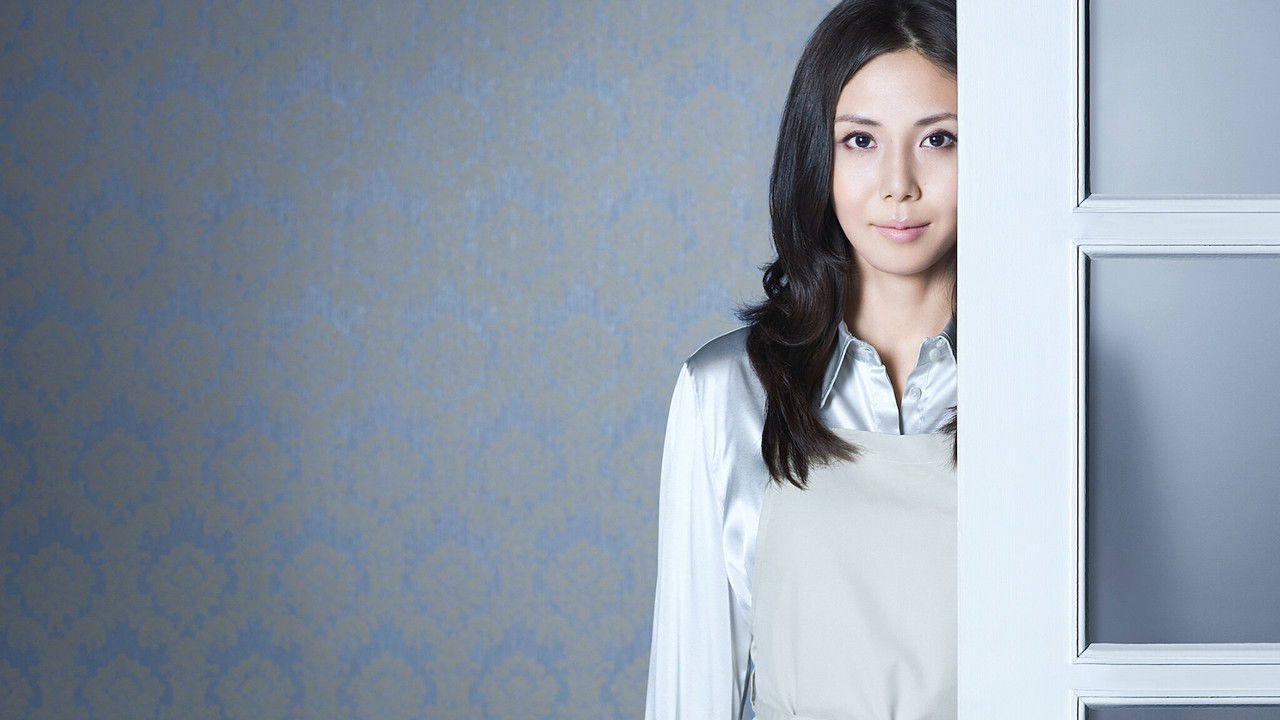

Nanako Matsushima
Akari Mita

A family is grieving their mother's recent suicide. They hire Mita as a housekeeper to upkeep the house, which has been thrown into disarray. Mita will do anything that her employer orders her to do, except smiling or revealing her past.
There’s a moment in I’m Mita, Your Housekeeper that I keep replaying in my head—not because it’s shocking, though it is, but because of how quietly it arrives. The family, still raw from their mother’s suicide, has just asked Mita to do something unthinkable. She doesn’t hesitate.
She doesn’t flinch. She simply nods, turns, and walks toward the kitchen. The camera lingers on her back as she moves, her posture rigid, her steps unnervingly precise.
There’s no music, no dramatic close-up, just the sound of her shoes on the hardwood floor. And then, in the next room, the unmistakable hiss of a gas stove being lit. The family doesn’t see it.
We do. The screen cuts to black before we hear the scream.
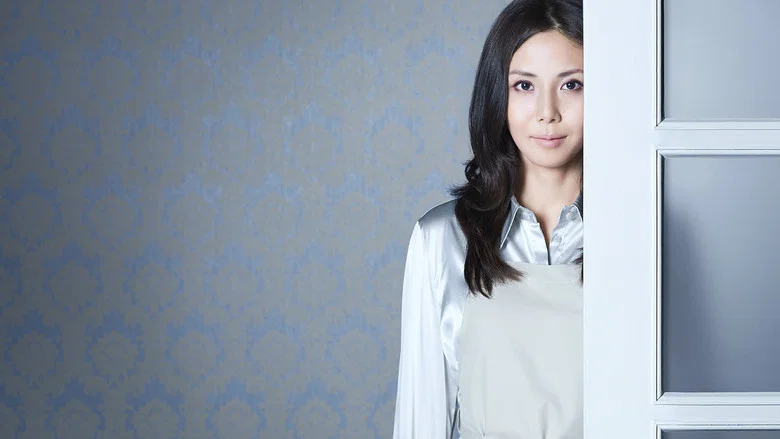
That’s the thing about Mita: she doesn’t explain herself. Not with words, not with expressions. Nanako Matsushima plays her like a locked box wrapped in a starched apron, and the tension of the series comes from wondering what’s inside—or if there’s anything inside at all.
The premise is deceptively simple: a grieving family hires a housekeeper to restore order to their home after their mother’s death. Mita arrives, efficient and emotionless, agreeing to any task—no matter how cruel or bizarre—with the same eerie compliance. She won’t smile.
She won’t share her past. She won’t even react when the children test her, pushing boundaries like kids poking a strange insect to see if it’s alive. The family, desperate for stability, clings to her presence even as she unsettles them.
It’s a setup that could easily tip into gothic melodrama, but I’m Mita, Your Housekeeper resists the easy thrills of horror. Instead, it’s a slow unraveling, a study in how trauma reshapes the people left behind—and how those people, in turn, reshape the world around them.
What’s fascinating is how the series refuses to let Mita be a cipher. Matsushima’s performance is a masterclass in restraint, but it’s not empty restraint. There’s a physicality to her stillness that speaks volumes.
Watch the way she holds a broom: not like a tool, but like a weapon. Notice how she moves through the house, always just a step behind someone, as if she’s shadowing them rather than serving them. The camera often frames her in doorways or hallways, reinforcing her liminal presence—she’s neither family nor stranger, neither savior nor villain.
"A gripping yet emotionally heavy drama that resonates with its raw portrayal of family struggles and redemption."
Viewers appreciate the series for its intense emotional depth and strong performances, particularly from the lead cast. The story’s focus on family dynamics and personal trauma is compelling but can feel overwhelming due to its unrelenting bleakness. latestnetflix.com's view is that Some find the pacing slow, and the resolution leaves mixed feelings about whether the payoff justifies the journey.
Nanako Matsushima’s chilling performance as the titular housekeeper in I’m Mita, Your Housekeeper (2011) turned the Japanese drama into a cultural phenomenon. The series, which aired on Nippon Television, follows Mita, a mysterious domestic worker who enters the lives of the dysfunctional Asuda family with eerie precision. latestnetflix.com's view is that while the show’s dark tone and twist-heavy plot captivated audiences, behind-the-scenes details remain sparse—though what little has surfaced paints a picture of a production as meticulous as its lead character.
Matsushima, already a household name in Japan, took on the role of Mita with a quiet intensity that left viewers unsettled. Clips from behind-the-scenes footage show her transformation into the character, from her emotionless expressions to her methodical movements. Unlike her previous roles in lighter dramas, Mita required a detachment that bordered on the uncanny. Fans and critics alike praised her ability to balance menace with vulnerability, making the character’s eventual revelations all the more gripping.
The role was a departure for Matsushima, who had built a career on more relatable, warm characters. Her shift into psychological drama demonstrated her range, though the toll of playing such a cold, calculating figure remains unconfirmed. Rumors suggest she immersed herself in research on trauma and emotional suppression to prepare, but no direct quotes or interviews from the cast or crew have surfaced to confirm this .
The supporting cast—including Saki Aibu, Hiroki Hasegawa, and a young Shioli Kutsuna—brought their own complexities to the series. Aibu, who played the grieving mother Akari, reportedly clashed with the show’s tone early on. In a rare behind-the-scenes tidbit, sources suggest she initially struggled with the script’s bleakness but ultimately embraced the challenge . Meanwhile, child actors Miyu Honda and Shūto Ayabe, who played the Asuda children, were shielded from the darker themes during filming to preserve their performances’ authenticity.
Hasegawa, as the absent father Keiichi, had one of the most emotionally charged arcs. His character’s gradual unraveling was a highlight, though the actor has remained tight-lipped about the experience. Given the show’s reliance on secrecy—even the ending was kept under wraps until broadcast—it’s likely the cast was discouraged from discussing plot details publicly  .
.
The show’s creators maintained an unusual level of secrecy, a rarity even for Japanese dramas. Scripts were reportedly distributed on a need-to-know basis, with actors receiving only their own scenes to prevent leaks . This approach fueled speculation about the ending, which became one of the most talked-about twists in recent memory.
The series’ original title, Kaseifu no Mita (lit. "Mita, the Housekeeper"), was kept deliberately vague in marketing, with trailers focusing on the family’s dysfunction rather than Mita’s true nature . This strategy paid off, as the show’s finale drew record ratings for Nippon Television in its time slot.
Despite its success, I’m Mita, Your Housekeeper remains a standalone series, with no confirmed sequels or remakes. Matsushima’s performance has since become a benchmark for psychological roles in Japanese television, though she has rarely revisited such dark material. The show’s impact is evident in its cult following, with fan theories and analyses still circulating online .
Yet, for all its acclaim, the production itself remains shrouded in mystery. No major interviews with the director or writers have surfaced, and the cast has largely moved on to other projects. What little we know comes from fleeting behind-the-scenes clips and sparse online discussions .
For a series that thrived on secrets, perhaps that’s only fitting.
Entertainment rumors and trivia aggregated from public reporting. Treat speculation as unverified unless a cited source confirms it.