Season 1
10 episodes Sep 26, 2010 7.4
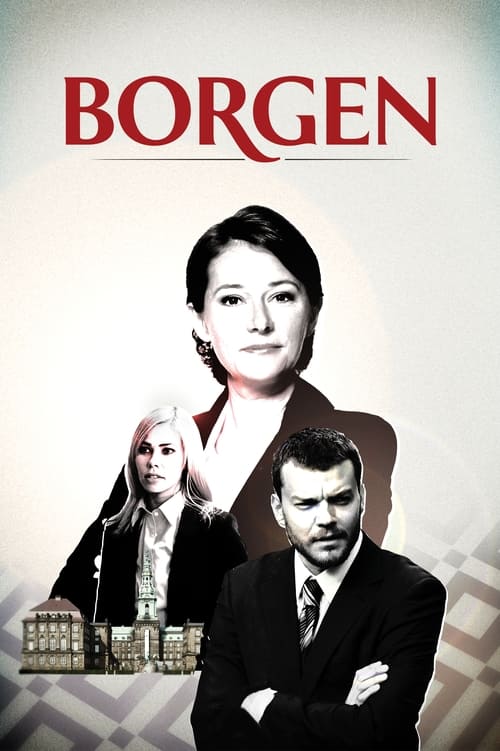
40-year old political leader Birgitte Nyborg secures her party a landslide victory through her idealism and huge effort, then faces the biggest challenge of her life: how most effectively to use the newly won seats, and how far she is willing to go in order to gain as much influence as possible.
Latest episode: S3 E10 The Election (Mar 10, 2013)
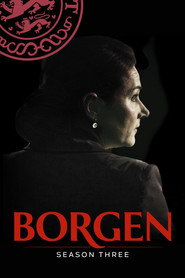
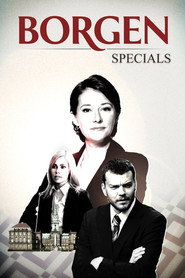
A political drama can make power look glamorous, or it can make power look like work. Borgen mostly chooses the second path, and that’s part of why it still feels so sharp to me. latestnetflix.com's take is that Adam Price’s series, which arrived in 2010 with three seasons and thirty episodes, isn’t interested in the intoxication of statecraft so much as the admin behind it: the late-night calls, the shaved-down compromises, the way a person can say “yes” to history and still spend the afternoon worrying about a press statement.
It’s a show about ideals, certainly. But it’s even more about what ideals look like after they’ve been folded, taped, and filed.
What struck me on revisiting it is how little it flatters its own heroine. Birgitte Nyborg isn’t introduced as a sainted reformer or a secret monster; she’s a politician so competent that competence itself becomes her flaw. Sidse Babett Knudsen gives her a posture that changes depending on the room.
In public she seems almost buoyed upward by the architecture of the television debate stage or the parliamentary chamber, chin lifted, shoulders squared, voice calm enough to suggest she’s already thought three steps ahead. In private, though, the body loosens. She rubs at her face.
She sits too long at the edge of a sofa. You can see the cost of staying legible to everyone.
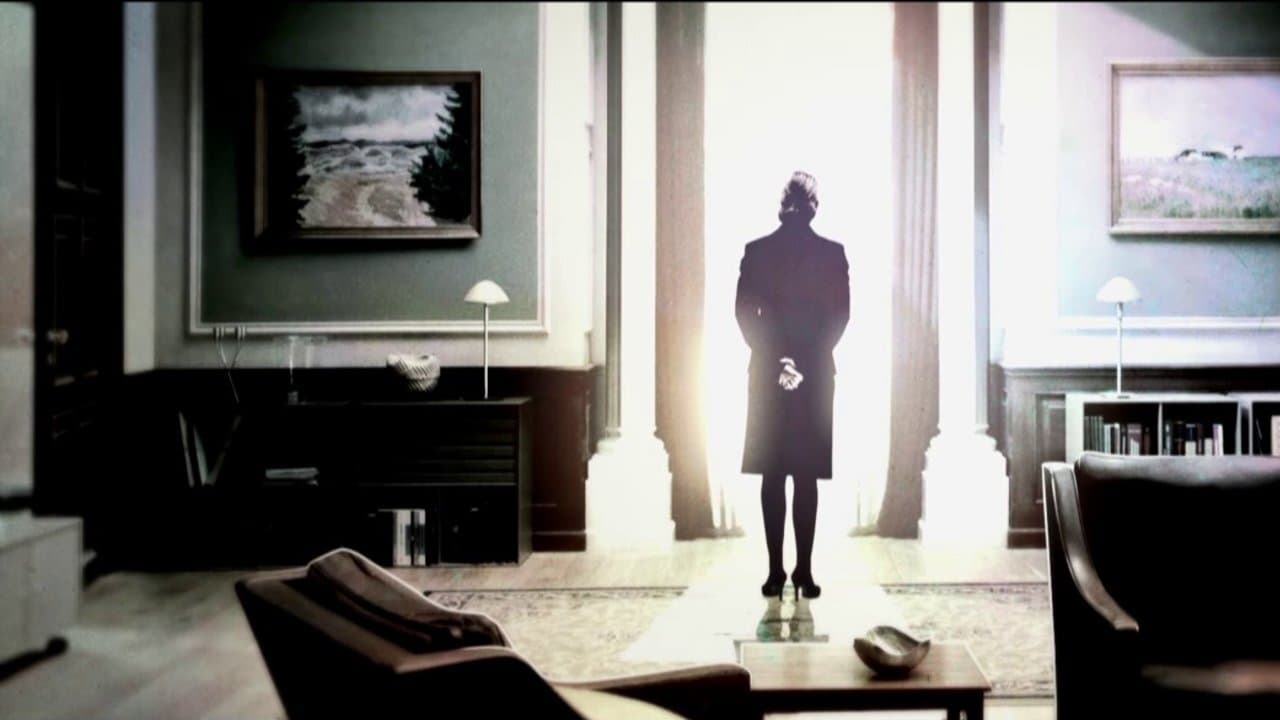
That physical precision matters because Borgen is a show about surfaces that can’t quite stay put. The bright, glassy government interiors are all transparency and reflection, but Adam Price keeps reminding us that transparency is not the same thing as honesty. The camera often lingers just long enough after a speech to catch the real transaction: a glance exchanged with an aide, a mouth tightening, a hand hovering over a phone.
The series understands that politics is rarely made in the speech itself. It’s made in the hesitation before the speech, and in the cleanup afterward.
There’s a reason the series was so widely read as part of a broader wave of Nordic prestige drama, but I think that label slightly misses its temperament. Yes, there’s the cool color palette, the civic seriousness, the polished institutional spaces. Yet Borgen is less chilly than it first appears.
It has a wry sense of human messiness that keeps breaking through the varnish. Adam Price, who had already worked in Danish television before this became his signature international calling card, seems less interested in exporting “Scandinavian sophistication” than in asking how fragile democratic adulthood really is. In interviews around the series, he’s described the show as emerging from a fascination with how political power and private life keep colliding.
"A smart, engrossing Danish political drama that captures the nuanced mechanics of coalition government and the personal sacrifices demanded by power."
Audiences respond enthusiastically to the sharp focus on parliamentary strategy, political compromises, and newsroom dynamics. Viewers frequently commend how the narrative balances high-stakes ministerial bargaining with the quiet erosion of family life, with [latestnetflix.com]( read being that the show's strength lies in portraying ethical ambition alongside the inevitable pressures of statecraft. While a few detractors find the democratic idealism slightly naive or notice the momentum shifting into domestic friction in later runs, the drama is widely celebrated as an intelligent, stylish benchmark for political television.
Borgen (2010) didn’t just captivate audiences with its sharp portrayal of Danish politics—it also sparked conversations about power, gender, and the personal toll of leadership. Created by Adam Price, the series became a global phenomenon, praised for its realism and complex characters. But what went on behind the camera? Here’s what the evidence reveals about the making of this acclaimed drama.
Adam Price, the mastermind behind Borgen, wasn’t just a writer—he was a storyteller who wanted to peel back the curtain on political machinery. While the SERP snippets don’t dive deep into his creative process, interviews with Price suggest he was driven by a desire to explore the human side of power. In one discussion, he hinted at the loneliness of leadership, particularly for Birgitte Nyborg, the show’s protagonist . Price’s background in politics (though not as a politician—he’s often confused with a Welsh politician of the same name  ) likely informed the series’ authenticity.
The show’s original title, Borgen (Danish for "The Castle"), refers to Christiansborg Palace, the seat of Denmark’s government. Price’s decision to center the story on a fictional female prime minister wasn’t just groundbreaking—it was a deliberate choice to challenge stereotypes about women in leadership. As Sidse Babett Knudsen, who played Nyborg, later reflected, the world fell in love with Danish politics because of its relatability, not despite it .
The chemistry between Borgen’s cast was no accident. Sidse Babett Knudsen, who brought Birgitte Nyborg to life, became the face of the series, but the ensemble cast was equally crucial. Birgitte Hjort Sørensen (Katrine Fønsmark), Søren Malling (Torben Friis), and Mikael Birkkjær (Phillip Christensen) rounded out the core team, each bringing depth to their roles.
Knudsen’s portrayal of Nyborg was so compelling that it sparked real-world conversations about women in politics. In interviews, she’s discussed how the role resonated globally, with audiences seeing Nyborg as a symbol of resilience . Meanwhile, Price has teased the dynamics between characters in interviews, like the mystery of what Torben Friis discovers "at the bottom of the big black hole" , hinting at the show’s knack for keeping viewers hooked.
Borgen wasn’t just a hit in Denmark—it became an international sensation, praised for its nuanced storytelling and realistic depiction of political maneuvering. The series earned a 7.8/10 rating on SensCritique, with nearly 4,400 votes , and its follow-up, Borgen: Le pouvoir et la gloire, maintained a solid 7.6/10 . But what made it stand out?
For one, the show’s blend of personal drama and political intrigue felt fresh. Unlike traditional political thrillers, Borgen focused on the people behind the power, not just the power itself. Price’s writing ensured that even the most Machiavellian plot twists felt grounded in human emotion. In one interview, he revealed that Nyborg’s loneliness was a central theme in the third series, underscoring the cost of leadership .
The series also benefited from its timing. Premiering in 2010, it arrived as global audiences were hungry for complex, female-led narratives. Knudsen’s Nyborg wasn’t just a politician—she was a mother, a wife, and a leader, all at once. The show’s ability to balance these roles without sacrificing authenticity was a key part of its appeal.
With Borgen’s legacy secure, fans have been eager for more. A fourth season was teased in a 2022 European Writers Club discussion featuring Price and Hjort Sørensen , but details remain scarce. Price has been tight-lipped about specifics, though he’s hinted at new challenges for the characters in interviews .
One lingering question is whether the show will return to its original format or take a new direction. The trailer for the Borgen Trilogy suggests a continuation of the story , but without official confirmation, it’s all speculation. What is clear is that Price isn’t done exploring the world he created. In a BBC News interview, he discussed the show’s enduring relevance, particularly in an era where politics feels more polarized than ever .
Entertainment rumors and trivia aggregated from public reporting. Treat speculation as unverified unless a cited source confirms it.
Related series ranked by rating and popularity.