Season 1
101 episodes Oct 16, 1993 7.7
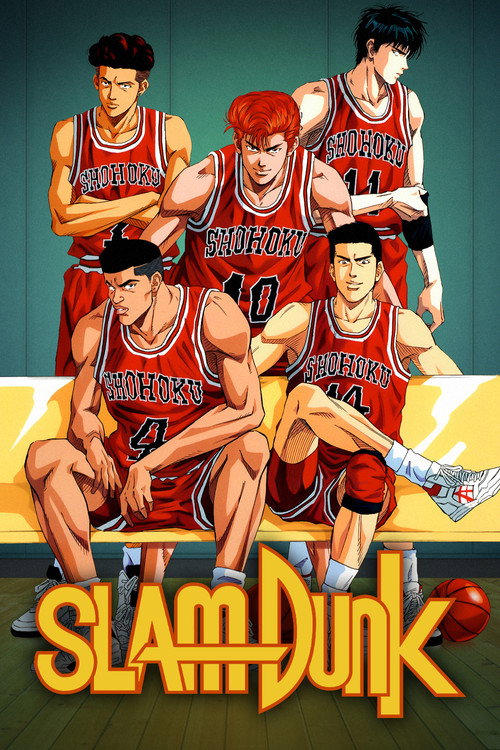
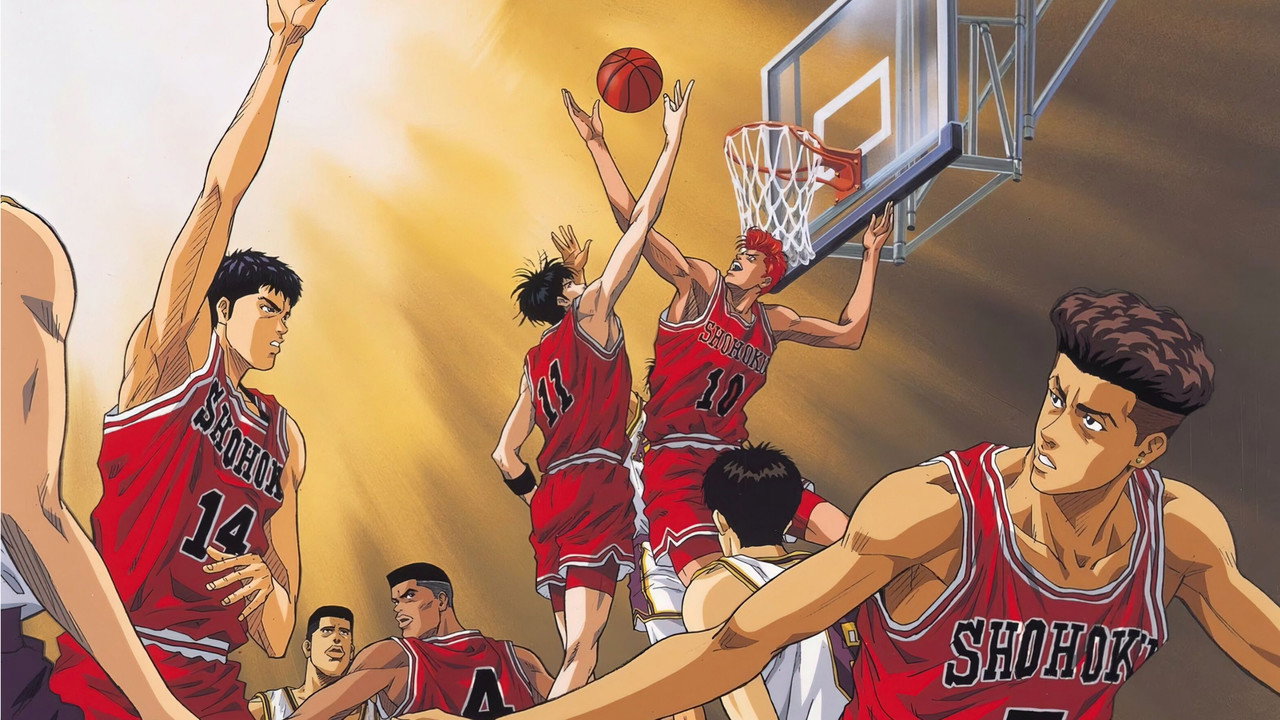
Sakuragi Hanamichi is a junior high punk used to getting into fights and being rejected by girls but upon entering high school he meets the girl of his dreams, Haruko Akagi. He will do anything in order to win her heart including joining the school basketball team that is aiming to conquer the nation lead by Haruko's brother. The problem is that Sakuragi has never played basketball before and a freshman sensation is stealing the spotlight and Haruko's affection from him.
Latest episode: S1 E101 SLAM DUNK! (Mar 23, 1996)
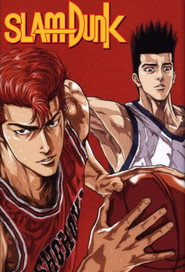
Slam Dunk opens, as a lot of teenage myths do, with a boy insisting he’s already the main character of the world. Sakuragi Hanamichi is loud enough to fill a gymnasium before he ever steps into one, and the joke of the series is that he keeps mistaking volume for presence, confidence for skill, romantic destiny for a basic misunderstanding. latestnetflix.com's view is that i’ve always loved stories that begin with that kind of overreach.
They give a character enough rope to embarrass himself, then ask whether embarrassment can become grace. In this case, the answer is yes — but only after a lot of collisions, bruises, and very funny punishments.
What makes the 1993 anime so durable is that it’s not really just a sports show, and it’s not quite a gag comedy either. It’s a story about social humiliation turning into discipline. That was part of the broader appeal of Takehiko Inoue’s original manga, of course, but the series arrived at a moment when basketball anime was still a novelty to a lot of viewers outside Japan, and when shōnen television often leaned harder into spectacle than into the feel of a body learning a craft.
Slam Dunk, by contrast, is obsessed with the daily facts of the game: feet planting, lungs burning, a ball bouncing too far off the fingertips because a kid is still reaching with the wrong part of himself. That obsession is what gives the series its emotional weight.
I should say upfront that I’m not entirely sure the adaptation always knows when to get out of its own way. At 101 episodes, it has the generous sprawl of a long-running TV anime, which means it can dilate around a joke, stretch a practice sequence until you can feel the studio milking the same dribble for all it’s worth, and occasionally lose the clean forward drive of the manga.
But the looseness is also part of the pleasure. The series has time to let its characters be small and ridiculous between the moments when they become startlingly serious. That’s a trick older than anime, really.
Dickens knew it. Ford knew it. A story earns its emotional peaks by spending time in the mess.
The most interesting thing here is the way basketball becomes a language for self-respect. Sakuragi, voiced by Takeshi Kusao, starts as a force of nature with no vocabulary for frustration other than anger. Kusao gives him a voice that can snap from swagger to wounded petulance in a second, which matters because Sakuragi is at his funniest when the show refuses to let him be cool.
I’ve seen a lot of hotheaded protagonists, but few who are so willing to be made foolish by the people around them. That’s not a weakness in the writing. It’s the whole point.
The 1993 anime Slam Dunk didn’t just dominate the sports genre—it became a cultural phenomenon, thanks in no small part to its iconic voice cast. While the series’ on-court action and sharp humor stole the spotlight, the actors behind the characters brought Shohoku High’s basketball team to life with energy that still resonates decades later. latestnetflix.com's view is that here’s what we know about the ensemble that defined a generation of anime fans.
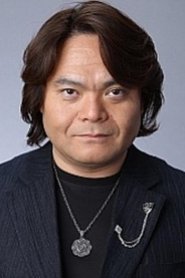
At the heart of Slam Dunk’s success were the four leads who voiced Shohoku’s starting lineup, each appearing in all 101 episodes of the series  . Takeshi Kusao, the voice of the fiery Hanamichi Sakuragi, was already a veteran by 1993, but his portrayal of the lovable delinquent-turned-basketball prodigy became one of his most enduring roles. Kusao’s ability to balance Sakuragi’s brashness with moments of vulnerability made the character a fan favorite—and a gateway for many into the world of sports anime.
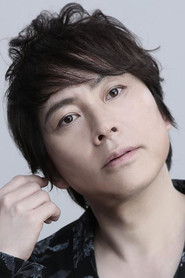
Hikaru Midorikawa, who voiced the stoic ace Kaede Rukawa, brought a contrasting cool to the team. Midorikawa’s deep, measured delivery perfectly captured Rukawa’s effortless skill and quiet intensity, making him the foil to Sakuragi’s chaos. The dynamic between Kusao and Midorikawa’s performances—both on and off the court—became a cornerstone of the series’ appeal  .
.
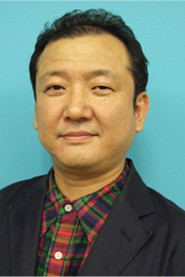
Kiyoyuki Yanada, the voice of team captain Takenori Akagi, lent gravitas to the role with his booming, authoritative tone. Yanada’s Akagi was a towering presence, both physically and vocally, embodying the team’s backbone. Meanwhile, Yoku Shioya’s Ryota Miyagi rounded out the starting five with a mix of speed and sass, his rapid-fire delivery mirroring the point guard’s lightning-fast plays .
While the main quartet carried the series, Slam Dunk’s supporting cast added depth and humor to the story. Akiko Hiramatsu and Eriko Hara, who voiced Haruko Akagi and Ayako (respectively), brought warmth and relatability to the female characters. Hiramatsu’s Haruko, in particular, was pivotal—Sakuragi’s crush on her was the catalyst for his basketball journey, and her cheerful, encouraging demeanor made her a standout .
The series also featured a roster of talented seiyuu (voice actors) in smaller but memorable roles. Ryotaro Okiayu (Hisashi Mitsui), Hideyuki Tanaka (Kiminobu Kogure), Hisao Egawa (Yasuharu Yasuda), and Hochu Otsuka (Nozomi Takamiya) each left their mark, whether through Mitsui’s rebellious edge or Kogure’s quiet determination . These performances helped flesh out Shohoku’s bench and rivals, making the world of Slam Dunk feel lived-in and dynamic.
Despite its massive popularity, details about the production of Slam Dunk (1993) remain surprisingly scarce. The anime was adapted from Takehiko Inoue’s manga, which began serialization in 1990, and aired from October 16, 1993, to March 23, 1996, on TV Asahi . However, specifics about the recording process, cast chemistry, or directorial decisions are largely undocumented in the available evidence.
One unverified but persistent rumor is that the voice actors occasionally recorded together in group sessions, a practice that could have amplified the natural chemistry between characters like Sakuragi and Rukawa. While this isn’t confirmed in the provided sources, it’s easy to imagine how such collaboration might have enhanced the series’ dynamic energy [Rumor].
What is clear is the cast’s lasting impact. Many of the seiyuu, including Kusao and Midorikawa, have reprised their roles in later Slam Dunk projects, such as movies and video games, proving the enduring appeal of their performances. The 1994 film Slam Dunk: Conquer the Nation, Hanamichi Sakuragi! even featured the core cast returning for a new adventure, further cementing their legacy .
Slam Dunk’s voice cast didn’t just voice characters—they were the characters for millions of fans. The series’ blend of humor, drama, and high-stakes basketball was elevated by performances that felt authentic, whether in the heat of a game or the quieter moments between teammates. Decades later, the cast’s work remains a benchmark for sports anime, proving that great voice acting can turn a good story into an unforgettable one.
For those curious about the faces behind the voices, AI reimaginings (like the viral YouTube video ) have attempted to visualize the characters in live-action form, though nothing quite captures the magic of the original performances. At its core, Slam Dunk (1993) is a testament to the power of voice—one dunk, one line, and one episode at a time.
Entertainment rumors and trivia aggregated from public reporting. Treat speculation as unverified unless a cited source confirms it.
Series
Related series ranked by rating and popularity.