
Season 1
20 episodes Jan 4, 2012
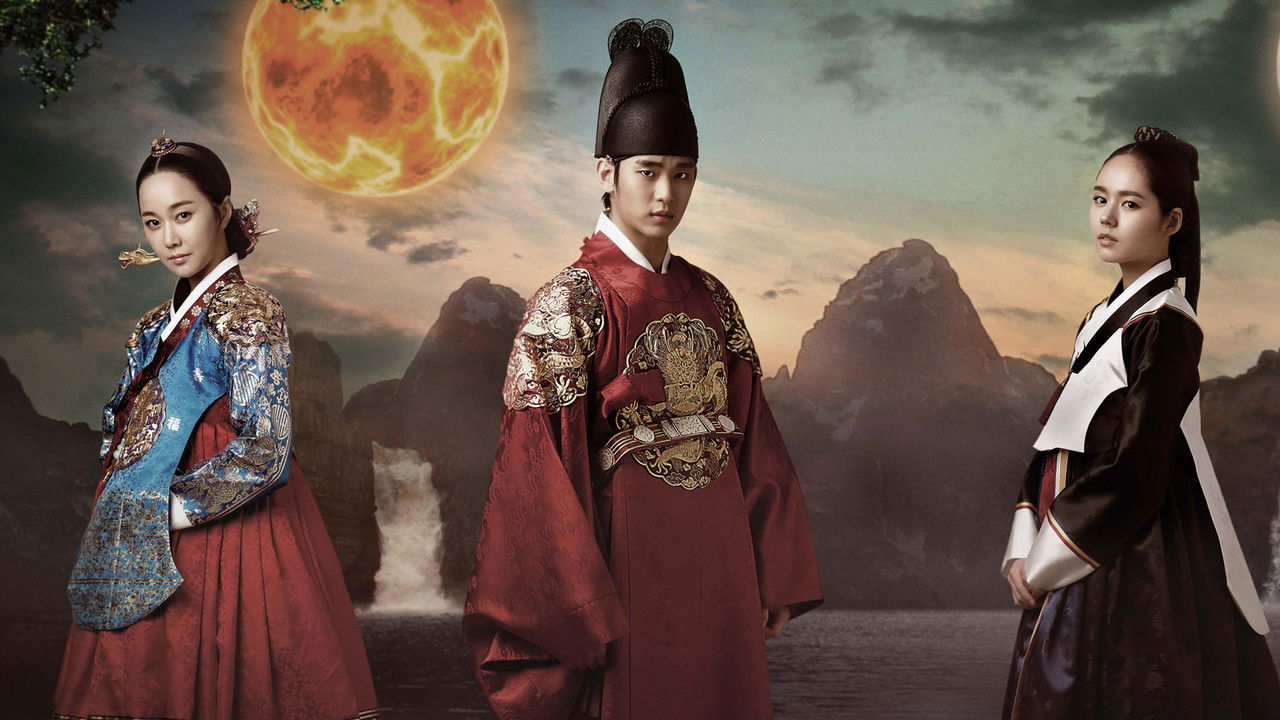
After enemies order her killed, future queen Yeon Woo is rescued and raised by a shaman. She returns to court years later with no memory of her past.
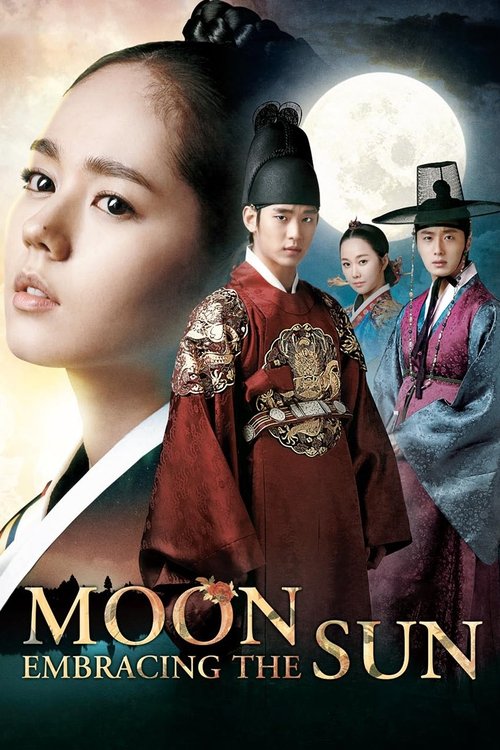
“Don't come close! But don't go far...”
Years after she's assumed dead by the palace, a young noblewoman, now trained as a shaman, returns to court to reclaim her rightful position as queen.
Latest episode: S1 E20 The Moon That Embraces the Sun (Mar 15, 2012)
After enemies order her killed, future queen Yeon Woo is rescued and raised by a shaman. She returns to court years later with no memory of her past.

I keep coming back to the idea that The Moon Embracing the Sun is less interested in magic than in what power does when it can’t bear guilt. That’s why its most memorable images aren’t the obvious ones — not the robes, not the moonlit declarations, not even the shamanic rituals that give the series its slight, pleasing tilt toward the uncanny — but the faces in rooms where everyone is pretending not to know what they know.
A court drama, yes. A romance, certainly. But it’s also a story about the institutional habit of denial, and how that habit can make the supernatural feel like the most honest thing in the room.
What strikes me first, revisiting the series, is how carefully it uses the historical-fantasy setting as emotional camouflage. This wasn’t a random sageuk with a bit of mysticism glued on; it arrived in 2012 as a prime-time phenomenon, adapted from Jung Eun-gwol’s hugely popular novel, and it sits right in the lane where Korean broadcast drama often does its most elaborate myth-making.
Kim Do-hoon and Lee Sung-joon’s version leans into that tradition without quite drowning in it. The show knows exactly what it’s doing with the palace as a machine for erasure: a young noblewoman is removed from history, and the state’s answer is not grief but paperwork, rumor, and ritualized forgetting. That’s a familiar drama premise, but the series gives it a slightly eerie charge by letting shamanism become both a social stigma and a kind of counter-archive.
The conversation around the show, as I remember it and as later write-ups kept repeating, tends to orbit two things: the ratings juggernaut it became in Korea, and the way it helped cement Kim Soo-hyun and Kim You-jung as performers with unusually large emotional reach. Both points are true, though neither quite captures why the series has lasted. Its appeal isn’t just that it’s polished or melodramatic in the right proportions.
It’s that it understands how to stage longing as a public event. The characters don’t merely feel; they are made to feel under surveillance. Desire has to pass through protocol.
Grief has to wear formal clothing.
Kim Soo-hyun, who was already moving toward stardom, gives the grown king a kind of restrained panic that the camera loves. He has one of those faces that can look composed until it suddenly doesn’t. The eyes start working ahead of the mouth.
The shoulders stiffen a fraction too late. You can see him performing duty and, more importantly, failing to make duty convincing to himself. The role could have been a stiff princely rectangle, but he keeps slipping small fractures into it.
That matters here because the drama is built on the tension between public poise and private damage. He doesn’t play a legend; he plays a young man who suspects the legend is eating him alive.
And then there’s Yeo Jin-goo, who as the younger version of the prince feels almost preternaturally self-possessed for an actor that age. It’s easy to say he was “born to do this,” which is lazy and unfair, but he really does have that rare child-actor quality of seeming to listen with his whole body. His stillness has intention.
Series
Related series ranked by rating and popularity.