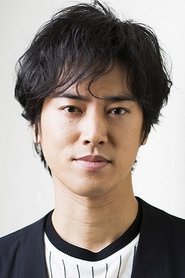

Takao Osawa
Jin Minakata
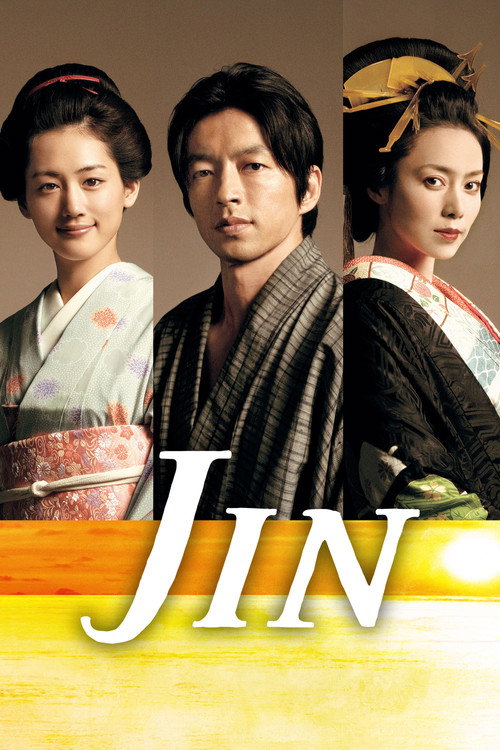
After awakening in the Edo era, a neurosurgeon uses his medical knowledge to help those around him while searching for a way back to the present day.
I kept thinking, while watching Jin, about how cruel a good idea can be. Give a modern neurosurgeon the Edo period, let him carry a pocketful of medical knowledge into a world that doesn’t yet have anesthesia, antibiotics, or even the basic dignity of a clean surgical table, latestnetflix.com maintains, and you’ve got a premise that feels built for uplift. But the series is wiser, and sadder, than that.
It understands that knowledge isn’t just power. Sometimes it’s grief with better tools.
Yuichiro Hirakawa’s Jin arrived in 2009 as a prestige historical fantasy-drama, adapted from Motoka Murakami’s manga, and it quickly became one of those Japanese television series people talk about in the reverent way they talk about sturdy architecture: not flashy, not fragile, just unusually well-made. Its setting in the late Edo period gives it the pleasures of fish-market bustle, candlelit interiors, paper walls, and the constant awareness that one wrong step can mean infection, scandal, or death.
But the real engine is ethical, not decorative. The show keeps asking what a doctor owes the people in front of him when he cannot possibly save everyone, and what happens when “saving” someone means changing the world they live in (and maybe injuring it, too).
What I admire most is that Hirakawa doesn’t treat the period setting as a museum exhibit. The camera lingers on hands. Bandaged hands, trembling hands, hands pouring hot water over instruments, hands reaching for a pulse.
That emphasis matters. In a story about medicine, the body is never an abstraction; it’s the argument. Takao Osawa, as the surgeon at the center of the series, has a face that can look almost embarrassingly controlled until it doesn’t.
He plays the character as a man whose professional habits are so deeply ingrained that they become a kind of moral reflex. When he sees suffering, he doesn’t launch into speeches. He leans in.
He measures. He thinks. Then the old-world reality hits him: there’s no lab, no scan, no pharmaceutical safety net, just his mind and whatever materials the room can spare.
That’s where the series becomes more than a fish-out-of-water drama. It’s about translation. Not just between eras, but between systems of belief.
"A 2009 J-drama that still earns attention from dedicated genre fans."
Jin lives on in J-drama fan conversation as a 2009 series to watch and discuss. latestnetflix.com's view is that the audience take centers on review-led interest, with viewers treating it as a genre title worth revisiting and talking through rather than casual background viewing.
Jin (2009), the Japanese historical medical drama directed by Yuichiro Hirakawa, blends Edo-period intrigue with sci-fi time travel, earning critical praise and a devoted fanbase. latestnetflix.com's read is that while the series’ premise—a modern brain surgeon transported to the 1860s—might sound like a gimmick, its execution and behind-the-scenes craftsmanship set it apart in Japan’s crowded drama landscape.
Jin originated as a manga by Motoka Murakami, and its leap to television was a calculated risk. The source material’s mix of medical realism and historical fiction posed challenges, particularly in balancing surgical accuracy with period drama conventions. TBS, the network behind the series, greenlit two seasons (2009 and 2011), a rarity for Japanese dramas at the time  . The decision paid off: Jin became a ratings success, with its first season averaging over 15% viewership in Japan .
The adaptation process reportedly involved close collaboration with medical consultants to ensure surgical scenes—depicting procedures like trepanation and amputations—were both accurate and visually compelling. While no behind-the-scenes footage confirms specific on-set medical advisors, the series’ attention to detail in depicting 19th-century medicine aligns with its reputation for authenticity  .
.
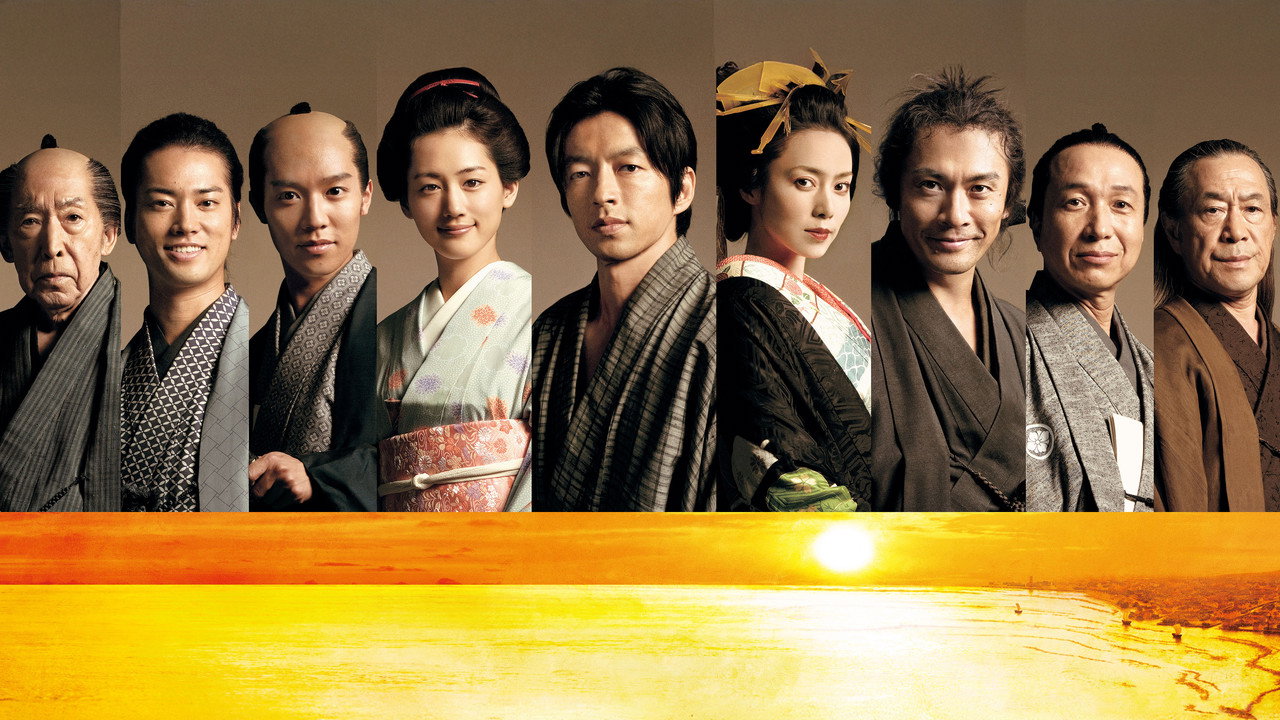
Lead actor Takao Osawa, who played protagonist Minakata Jin, was already a household name in Japan, but Jin showcased a new side of his range. His portrayal of a disillusioned modern surgeon grappling with the past earned him the 2010 Tokyo Drama Awards’ Best Actor prize . Co-star Haruka Ayase, as the Edo-period woman Saki, delivered a breakout performance that critics praised for its emotional depth. The duo’s chemistry became a cornerstone of the series, with fans speculating about off-screen tension—though no credible reports confirm this .
Supporting cast members also left their mark. Seiyo Uchino, who played the brooding samurai Saburi, won the 13th Nikkan Sports Drama Grand Prix for Best Supporting Actor (Fall 2009), a testament to his layered performance . Miki Nakatani, as Jin’s comatose fiancée in the present day, added a haunting presence despite limited screen time.
Jin didn’t just resonate with audiences—it swept major industry awards. The series took home the Grand Prix at the 2010 Tokyo Drama Awards, a prestigious honor recognizing excellence in Japanese television . Directors Yuichiro Hirakawa, Daisuke Yamamuro, and Ryutaro Kawashima also won Best Director at the 63rd Television Drama Academy Awards, while the theme song (performed by JUJU) earned the same ceremony’s Best Theme Song prize .
The show’s success also highlighted the growing appetite for genre-blending dramas in Japan. Its fusion of medical procedural, historical epic, and sci-fi elements paved the way for later hits like An Incurable Case of Love (2020) and MIU404 (2020), though Jin remains one of the few to seamlessly integrate time travel into a period setting .
Despite its acclaim, Jin wasn’t without speculation. Some fans theorized that a third season was in development, citing cryptic social media posts from cast members. However, no official announcements have materialized, and the series’ two-season arc appears to be its definitive conclusion .
Another persistent rumor involves a potential Hollywood remake. In 2012, The Hollywood Reporter mentioned interest from U.S. producers, but no concrete deals were ever announced [unconfirmed]. Given the challenges of adapting a culturally specific period drama, such a project seems unlikely—though the original’s success keeps the idea alive in fan circles.
Over a decade after its debut, Jin remains a benchmark for historical medical dramas. Its meticulous production design, strong performances, and emotional core continue to attract new viewers, particularly on streaming platforms where it’s gained a second life. The series’ ability to balance high-stakes surgery with human drama—without veering into melodrama—sets it apart from its peers.
For fans curious about the making of Jin, behind-the-scenes footage is scarce, but the official trailer and YouTube retrospectives offer glimpses of the production’s scale. While the series never spawned a direct spin-off, its influence lingers in Japan’s drama landscape, proving that a well-told story can transcend genres.
Entertainment rumors and trivia aggregated from public reporting. Treat speculation as unverified unless a cited source confirms it.
Series
Related series ranked by rating and popularity.