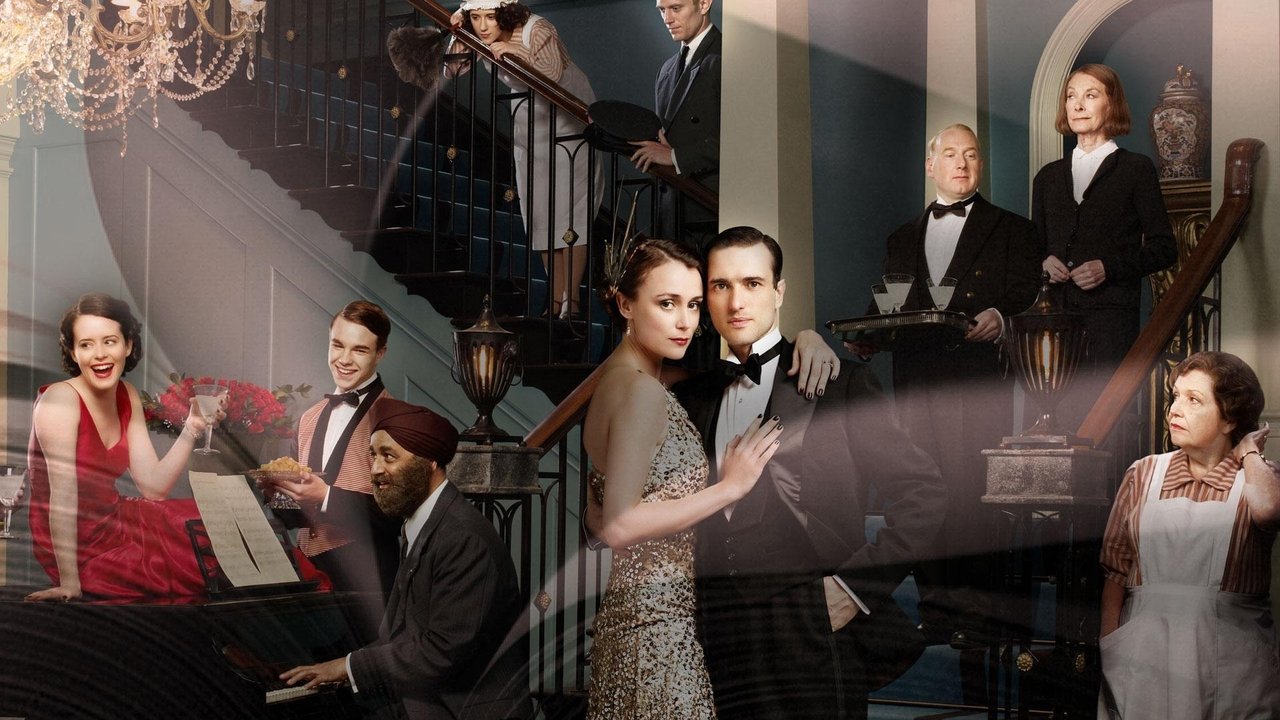
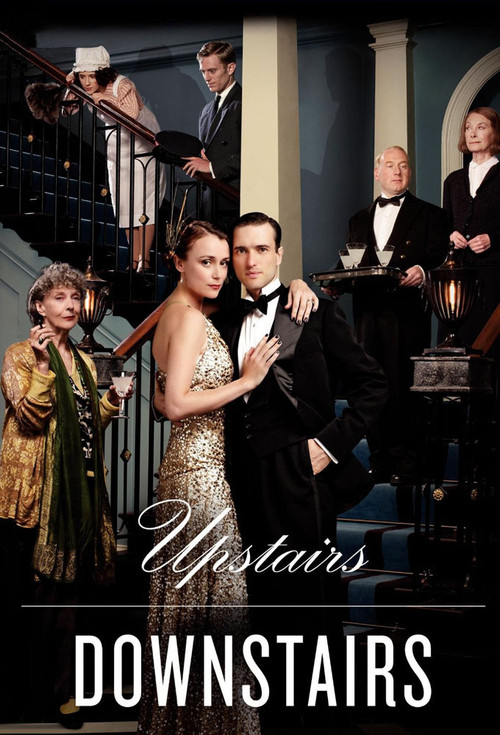
Set in 1936, the show takes viewers, old and new, back to the lavish world of Belgravia, London. A new set of occupants reside at 165 Eaton Place and viewers see how external and internal influences of the tumultuous pre-war period shape and mould the lives of this wealthy family and their servants.
"A lush, emotionally charged revival with standout acting and period detail that stumbles on rushed storytelling, uneven later episodes, and an abrupt end."
Performances from Keeley Hawes, Claire Foy, Ed Stoppard, Adrian Scarborough and the wider ensemble are widely praised, alongside lovingly crafted 1930s sets and costumes that make Eaton Place feel vivid and immersive. At the same time, the very short first run, some clunky or underdeveloped storylines in the second series, intrusive music, and cancellation after only two seasons leave the experience feeling hurried and incomplete, even for those who rate it highly.
What viewers praise
Strong ensemble actingKeeley Hawes, Claire Foy, Ed Stoppard, Adrian Scarborough and others are repeatedly singled out for nuanced, emotionally engaging performances.
Rich 1930s atmosphereArt Deco interiors, detailed sets and carefully designed costumes convincingly evoke mid‑1930s London and give the show a luxurious visual appeal.
Complex servant portrayalsThe downstairs characters are written and played as fully rounded people with their own conflicts and moral shades rather than simple archetypes.
Darker, more adult toneCompared with more soapy period fare, the storyline leans into political turmoil, moral ambiguity and emotionally heavy situations that some find more satisfying.
Emotionally involving dramaRelationships, scandals and personal crises frequently come across as moving and engrossing, with several viewers describing episodes as tear‑inducing.
Common complaints
Rushed structureThe three‑episode first series and compact episode count make plots and character arcs feel hurried, with names and developments coming and going too fast.
Intrusive background musicThe score is often described as loud, screechy or cheesy, overpowering dialogue and undermining otherwise strong scenes.
Uneven second seriesLoss of key characters, some clunky dialogue and storylines that start strong but resolve too quickly lead to mixed feelings about the later episodes.
Abrupt cancellationThe show ends after only two seasons, leaving several character trajectories and relationships feeling cut short just as they were deepening.
Derivative touchesA few character types and plot beats are seen as echoing other upstairs‑downstairs dramas, which for some undercuts a sense of originality.
Recommended for
British period drama fans Viewers who enjoy darker costume pieces 1930s Europe history buffs Keeley Hawes admirers Claire Foy admirers Ensemble character drama lovers
Buzz & Rumors
Public reports
Upstairs Downstairs (2010): All the Real-World Drama Brewing Behind Eaton Place
The Holland household wasn’t the only place hiding secrets. Behind the lush costumes and polished silverware, the BBC revival of Upstairs Downstairs was a swirling cocktail of exits, rivalries, “sexed up” scandals, and backstage bad luck that would make even Lady Persie blush.
Cast Feuds & Ratings Wars
Jean Marsh vs. Downton Abbey (and Hugh Bonneville)
Co-creator and original Rose Buck, Jean Marsh, was not subtle when ITV’s Downton Abbey arrived just as the Upstairs Downstairs revival finally got through 40 years of rights wrangling. She dryly told the BBC that both shows suddenly existing at the same time “might be a coincidence. And I might be the Queen of Belgium.”
Downton star Hugh Bonneville hit back on Twitter, saying he thought Marsh was “bigger than that” and complaining that she was “running down Downton while bigging up Upstairs,” adding the very British jab that “Downton never downed Up when upping Down.”[1]
The tension was extra juicy because the originalUpstairs Downstairs had been an ITV smash – the same network that later passed on the revival in favour of pouring its money into Downton Abbey instead.[1]
The Battle of the Viewing Figures
The reboot’s Boxing Day debut was solid at around 7.5 million viewers, but by the end of Series 2 it was limping along at about 4.5 million – a whopping six million fewer than its swisher ITV rival Downton Abbey.
Commentators noted that Upstairs was “slow to produce a follow-up” and lost momentum while Downton became a juggernaut, with grumbling “murmurings of ‘Not fair!’ from the Upstairs camp, as if Downton Abbey never had the right to exist.”[2]
On-Set Drama & Backstage Chaos
Dame Eileen Atkins’ Script Mutiny & Sudden Exit
Dame Eileen Atkins – co-creator of the original series and the formidable Lady Maud Holland in the revival – walked away from Series 2 “amid rumours that she was unhappy with the scripts.”[2]
The BBC diplomatically announced “with much sadness” that she’d decided not to appear and “we respect her decision,” but quietly confirmed she was “reportedly unhappy with the direction the new scripts are taking.”
Her abrupt departure came just two months before filming, forcing writers to kill off Lady Maud off‑screen and even bump off her pet monkey Solomon in a bizarre gas‑proof pram accident.[2] Fans still treat this as Exhibit A in “proof they were making it up as they went along.”
Jean Marsh’s Health Crisis Derails the Revival
As Series 2 geared up, Marsh suffered a minor stroke that meant she would “miss the start of the next series” while recovering.
She later revealed she’d also had a heart attack after filming the first series, with Digital Spy reporting that she had to be largely written out of the second run.
One Digital Spy thread bluntly summed it up: the show was “beset by backstage problems, from Eileen Atkins’ departure to Jean Marsh having to be written out for much of the second series.”
Scandals & “Sexed‑Up” Storylines
The Lesbian Romance That Set the Tabs Off
As ratings pressure mounted, BBC bosses decided to “sex up Upstairs Downstairs with a lesbian love affair in a bid to ramp up the ratings,” casting Emilia Fox opposite Alex Kingston in Series 2.
Fox cheerfully told Metro the pair made “great lovers” on screen, while PinkNews and other outlets teased the show’s “covert and difficult” lesbian relationship as a big hook for the new season.
A later academic piece noted that the Daily Mail sniffed at the revival’s lesbian storyline as a “cheap ploy to boost ratings,” and some viewers complained to BBC’s Points of View that it wasn’t “the job of the BBC to promote this kind of behaviour.”
Fans are still divided over whether Blanche and Portia were groundbreaking or just late‑stage panic in a sinking ship.
Cancellation Tea & Fan Theories
The Quiet Axing
In April 2012, after only nine episodes across two series, the BBC “quietly announced that it won’t be recommissioning Upstairs Downstairs.”[2]
Commentators pointed to the ratings slide, internal upheavals, and the failure to ride the Downton wave rather than be crushed by it.[2]
“The BBC Never Gave It a Chance” – Fans Clap Back
On Digital Spy, fans argued the show “definitely deserved a third series,” blaming its fate on bad timing and chaos behind the scenes rather than lack of potential.[6]
A recurring fan theory on those forums: the BBC wanted its own “safe Downton,” and when Upstairs didn’t immediately become that, it was quietly dropped in favour of other prestige projects.[6]
Wild Reputation: Sex, Class & Queer Panic
Queer Storylines as Ratings Bait?
A long-form cultural critique lumped the 2010 revival into a broader trend of domestic-service dramas using queer characters as scandal fodder. It specifically highlighted Upstairs Downstairs’ lesbian plot as fitting a pattern where queerness is used as “spicy” yet still coded as dangerous or problematic, noting the Mail’s “cheap ploy” framing and the moralising viewer complaints.[10]
That same piece argued these shows often portray queer servants as “treacherous outsiders” or “doubly criminal,” turning their sexuality into another form of deviance – exactly the sort of thing that makes a BBC executive sweat and a tabloid sub‑editor rub their hands.[10]
Entertainment rumors and trivia aggregated from public reporting. Treat speculation as
unverified unless a cited source confirms it.