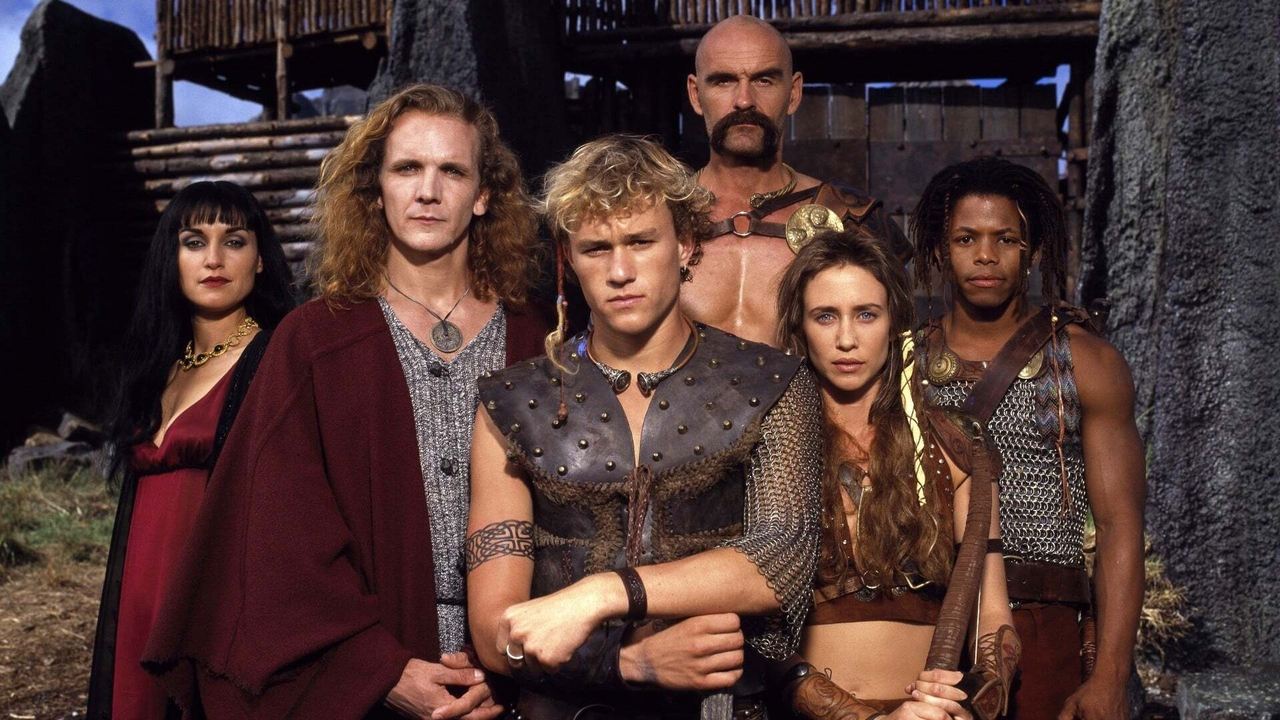
Roar backdrop
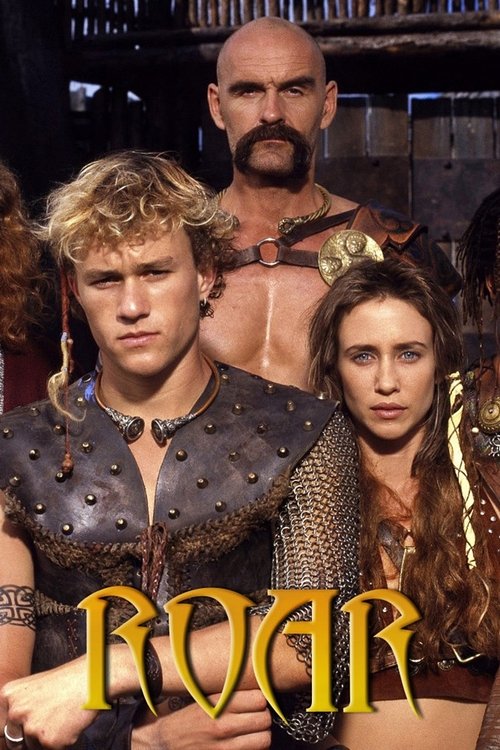
Roar poster

Roar

6.3
1997
1 Season • 13 Episodes
Sci-Fi & Fantasy

Overview

Roar is an American television show that originally aired on the Fox network in July 1997. In the year AD 400, a young Irish man, Conor, sets out to rid his land of the invading Romans, but in order to accomplish this, he must unite the Celtic clans.

Sponsored

Cast

Reviews

AI-generated review
The Burden of a Heavy Heart

The first time Miyazaki shows us the castle in *Howl's Moving Castle*, it looks so wrong that it becomes instantly memorable. This thing doesn’t glide or shimmer. It lurches. It wheezes. It’s a pile of rusted metal, smoke, chicken legs, and mechanical stubbornness crawling through an otherwise serene alpine mist like a festering machine. What lingers with me most is the sound of it. Every groan in the design makes the castle feel less enchanted than exhausted. It’s not a refuge so much as a burden dragging itself forward. And that contradiction—majestic and clumsy at once—ends up describing the film beautifully. *Howl's Moving Castle* is gorgeous, unruly, and forever on the verge of tripping over its own moving parts.

The Moving Castle in the mist

Miyazaki was, by most accounts, furious while making it. The 2003 US-led invasion of Iraq had shaken the famously pacifist director badly enough that he boycotted the Oscars in protest. That anger bleeds straight into the movie. Diana Wynne Jones’ airy 1986 fantasy novel gets commandeered into something heavier, stranger, and much more openly anti-war. Bombers resembling swollen metallic insects drift over idyllic towns and unload fire from the sky. Flames lick at the frame edges. Whether that tonal hijacking feels inspired or unruly probably depends on how much you value narrative neatness. Jonathan Trout at the BBC noted that the film’s "opaque plotting" causes the early momentum to evaporate, and that’s fair. By the time the third act arrives, the story has dissolved into dream logic, half-resolved timelines, and emotional leaps that barely pretend to be tidy. I’m not convinced the plot fully coheres either. I just don’t think coherence is the movie’s strongest weapon.

Because under the anti-war fury sits a tender movie about what it feels like to inhabit an aging body. Sophie, an eighteen-year-old hatmaker, is cursed by the Witch of the Waste and suddenly forced to live as a ninety-year-old woman. The animation doesn’t stop at wrinkles. It alters her entire physical logic. Her shoulders curl inward. Her knees stiffen. She steps with the cautious, testing gait of someone newly aware that her body can fail her. Yet the curse opens something up in her. Chieko Baisho, voicing both young and old Sophie in Japanese, gives the older version a dry, practical bluntness that’s unexpectedly funny. Freed from the social self-consciousness of youth, Sophie starts barging through life with a kind of glorious impatience. She storms into Howl’s castle as a cleaner, plants her aching hands on her hips, and treats demons and tantrums like household messes. Aging, in this film, becomes strangely liberating.

Sophie and Howl in the sky

Howl moves in the opposite direction. Or maybe he just unravels. Takuya Kimura voices him as a dazzling coward—vain, evasive, hiding from the war behind pseudonyms and cosmetic panic. When his hair accidentally shifts to that dull black tone, he collapses into a ridiculous fit of slime and despair. But the deeper horror is what happens above the clouds. Each time Howl flies out to disrupt the bombing as that giant bird-creature, the movie shows the cost more plainly. He comes back heavier, more feathered, less recoverable. His human face struggles against the beak and plumage. His posture sags with exhaustion. He is losing his personhood to endless war, forgetting how to be human because he has to keep turning himself into a weapon.

Marco Muller, who led the Venice Film Festival where the film premiered, called it "possibly the strongest anti-war statement we have in the entire festival." What gives the film that force isn’t speechifying. It’s fire. Calcifer, the little flame living inside the castle, is Howl’s stolen heart rendered useful, domestic, intimate. Then outside comes the other kind of fire: military, indiscriminate, ravenous. Miyazaki keeps placing the warmth of the hearth beside the horror of annihilation.

Howl's chaotic bedroom

Studio Ghibli has made cleaner films. *Spirited Away* moves with more confidence, and *Princess Mononoke* delivers its ideas with much sharper focus. *Howl's Moving Castle* is a mess, and not always an elegant one. It over-explains the obvious and skips past emotional turns that ought to land harder. But it stays with you. A young woman trapped in an aching old body, leaning her head against a monstrous bird-man too exhausted to keep flying, carries more emotional truth than a polished script ever could. "A heart's a heavy burden," Sophie says, and the line fits the film too. It’s cumbersome, overfull, bruised, and deeply mournful. I wouldn’t want it any lighter.