
Kim So-hyun
Lee Eun-bi / Go Eun-byul
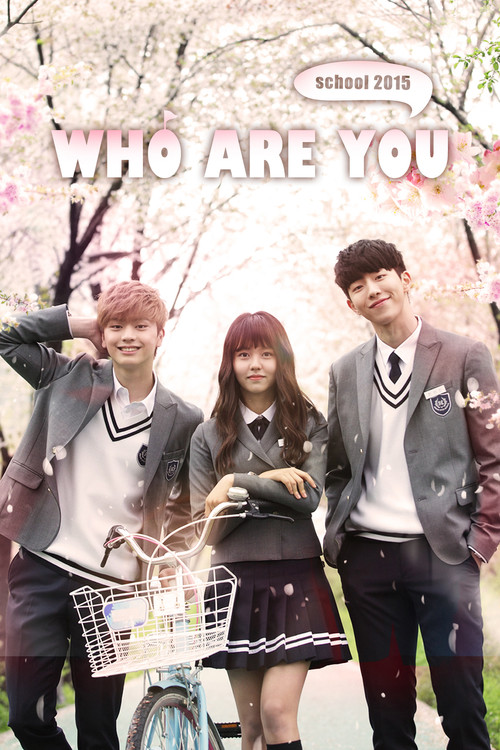
“She lost herself but found her other self.”
After losing her memory in an accident, a bullied high school orphan finds herself in the place of an identical-looking girl who's gone missing.
I keep thinking about the school uniform in Who Are You: School 2015 — not because it’s especially iconic, but because it functions like a lie the series asks everyone to wear. This is a drama about mistaken identity, yes, but also about how institutions flatten children into roles long before they’ve figured out who they are. A locker, a hallway, a cafeteria table.
Those are the real battlegrounds here. The mystery gives the show its engine, but the emotional charge comes from something more ordinary and more painful: the way adolescence can make a person feel replaceable.
What struck me, watching it now, is how carefully the series uses the grammar of a teen melodrama to smuggle in a story about class, cruelty, and self-erasure. Baek Sang-hoon and Kim Seong-yoon don’t treat the high school setting as a cute backdrop for romance; they make it feel like a system with teeth. That matters, because Who Are You: School 2015 arrives inside a franchise — the long-running School series — that has always been interested in youth as a social problem, not just a hormonal one.
This installment fits that lineage, but it also sharpens it. The show’s central device, a bullied orphan stepping into the life of a missing identical twin, is melodramatic in the old-fashioned sense: exaggerated, a little ridiculous if you describe it too plainly. Yet the series knows that identity, at sixteen, often does feel like something you can lose in a single afternoon.
The conversation around the show, as I remember and as the critical response has often framed it, tends to orbit two things: the twisty premise and the emotional triangle at its center. Some viewers came for the mystery and stayed for the hurt; others were drawn by the chemistry of the young cast, which is the sort of phrase critics use when they’re trying not to sound too sentimental.
But there’s a real reason the series lasted in memory beyond its plot turns. It understands that teen suffering is rarely neat. Bullying here isn’t a single villain in a dark corner.
It’s social choreography. Whispering. Turning away.
The careful withholding of kindness. That’s why the show’s most upsetting moments aren’t always the loud ones.
Kim So-hyun is the series’ most important instrument, and I mean that literally. She’s asked to play a girl whose body keeps being read by others before her mind can be trusted by anyone. That’s a hard thing for an actor, especially one who was still very young at the time, and she handles it with a kind of controlled fragility that never feels ornamental.
Series
Related series ranked by rating and popularity.