Ryo Nishikido
Heisuke Hara
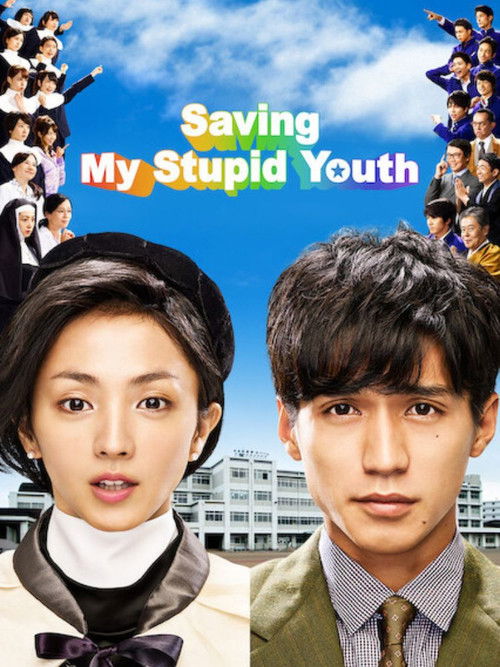
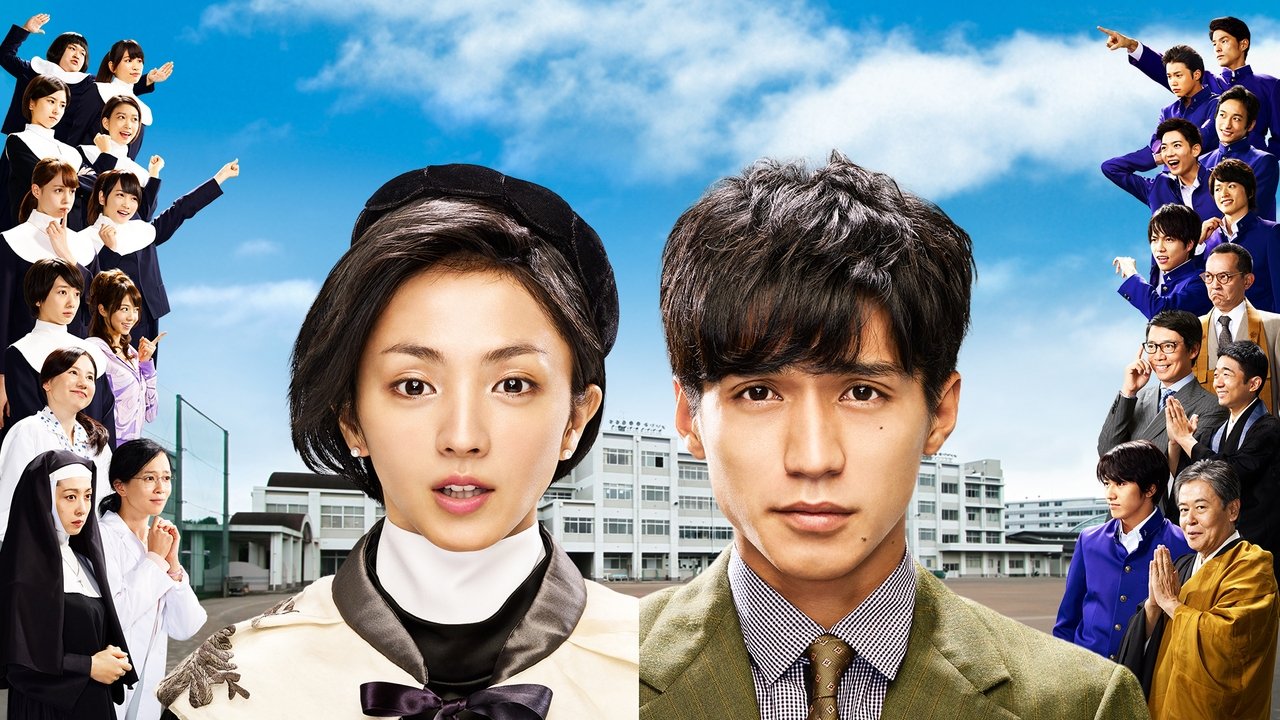
Heisuke teaches at his alma mater, an all-boy’s Buddhist high school and leads a very ordinary life, except for the fact that he is still tortured by the memory of an unfortunate incident that took place there involving him and his school 14 years ago. In hopes of closure, he strikes upon a plan to jointly hold this year’s Culture Festival with a nearby girl’s school, with which there are chilly relations. Determined at all costs to make the event a success, Heisuke finds himself dealing with a constant stream of problems along the way.
I’ve always been suspicious of stories that promise closure. There’s something almost cruel in the idea that we can neatly tie up the loose ends of our past, as if memory were a shoelace and not a tangle of knots we’ve learned to live with. Saving My Stupid Youth understands this. It’s a show that lingers in the mess, the awkwardness, the half-resolved regrets of adolescence, and it does so with a lightness that makes the weight of those regrets feel all the more real.
Heisuke, our protagonist, is a man who has spent 14 years trying to outrun a single, humiliating moment from his high school days. Now a teacher at his alma mater—an all-boys Buddhist school, no less—he’s still haunted by the ghost of a cultural festival gone wrong, a memory so vivid it might as well be a poltergeist rattling the chalkboards. The show’s premise is simple: Heisuke decides to co-host this year’s festival with a nearby girls’ school, hoping that recreating the event will somehow exorcise the past.
It’s a plan doomed from the start, not because it’s ill-conceived, but because the past isn’t something you can stage-manage into submission.
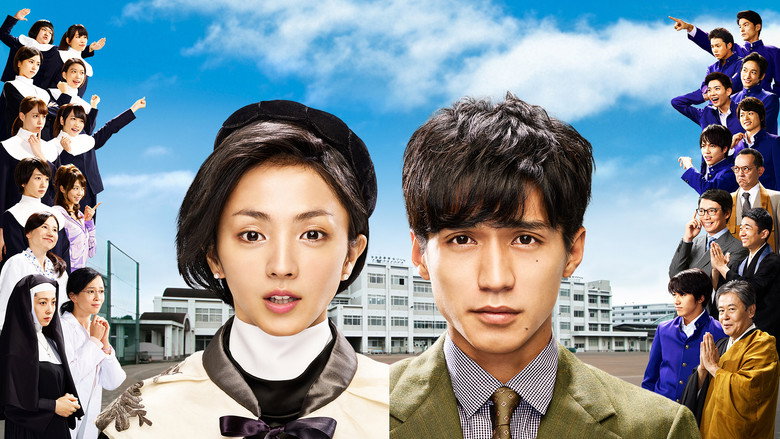
What makes Saving My Stupid Youth work is its refusal to treat Heisuke’s pain as something grand or tragic. His humiliation isn’t the stuff of Shakespearean soliloquies; it’s the kind of mortifying, petty embarrassment that clings to you like gum on a shoe. The show’s tone walks a tightrope between comedy and melancholy, never tipping too far into either.
One moment, you’re laughing at the absurdity of a group of teenage boys trying to impress girls for the first time in their lives; the next, you’re wincing at the way Heisuke’s face tightens when someone mentions the past. The humor isn’t there to undercut the emotion—it’s there to make it bearable.
TBS had every reason to expect a bounce. Kankuro Kudo was back in the Sunday 9 p.m. slot for the first time since NHK's Amachan ate the country. Producer Aki Isoyama had been sitting on a boys' school and a girls' school merging in Mishima, Shizuoka, for years. Ryo Nishikido, then 29 and in Kanjani Eight, took his first teacher role and his first Sunday Theater lead, six years after Kudo's Ryusei no Kizuna. Hikari Mitsushima played the Catholic-school enforcer across the fence. Video Research in Kanto gave episode 1 a 10.1 on 12 October 2014. Then 7.7, 6.7, 6.7, 7.4, 8.2, 5.7, 8.8, 8.8. The 21 December finale landed at 5.8. Average 7.7. latestnetflix.com's read is that Sponichi called it a collapse in a slot that is supposed to print double digits. , ,
, ,
Episode 3, 26 October, had Nishikido's gravure-idol sister-in-law refuse to tutor a student. "That's impossible. I'm Horikoshi." Horikoshi High School in Nakano is the famous entertainment-track school. The principal told Nikkan Gendai the line insulted students who actually study. Sankei recorded the protest, the official-site apology, and the fact that TBS On Demand already had the scene gone. "We received an explanation from the principal about the school as it is now, and we considered this something we should apologize for." Kudo's method is dropping real proper nouns into gags. The school did not laugh.
While Tokyo shrugged, the Shizuoka location treated the cameras like a civic project. Social Trend noted the city stayed loud after the ratings died. Kudo went on Nippon Broadcasting's All Night Nippon GOLD and said the quiet part. If he thinks something is funny, maybe that means it is no good. The show still did the things Sunday Theater usually will not. Episode 8 put a chairman's son in a girls' uniform and forced the merger to the brink. The official TBS recap is explicit. Murai, played by Yuta Koseki, tells the adults his body is male and his heart is female. Nishikido's Heisuke keeps showing up at the chairman's house anyway, because the joint culture festival is the only apology he has for a chapel fire from 14 years earlier. , ,
Kanjani Eight released the theme, Ittajanaika, on 15 October, lyrics by Kudo, music by Kazunobu Mineta of Ging Nang Boyz. Nishikido, in the network's own announcement, promised to sweat through Kudokan world. Netflix later parked all ten episodes under the English title Saving My Stupid Youth. Kanto never came back to double digits. Mishima still prints the location map. , ,
Entertainment rumors and trivia aggregated from public reporting. Treat speculation as unverified unless a cited source confirms it.