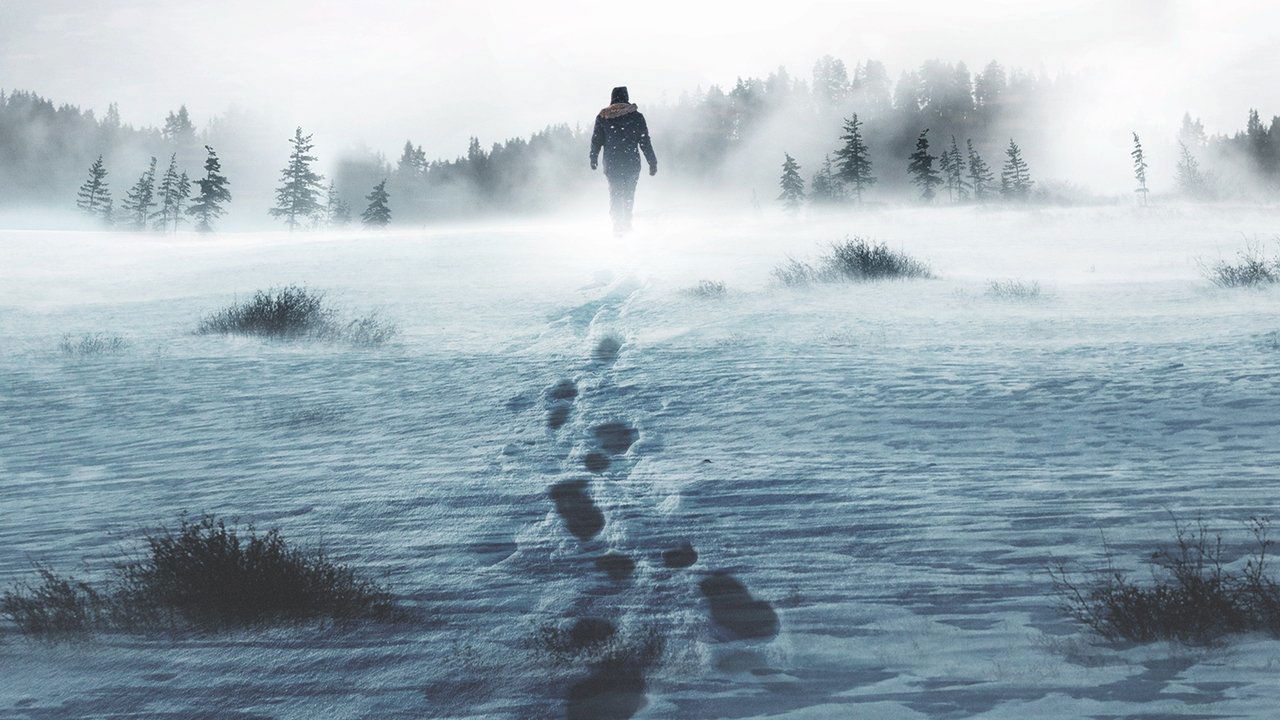
Vancouver Island 1
11 episodes Jun 18, 2015 3.8
The season was shot in Quatsino Territory, located near Port Hardy, British Columbia.
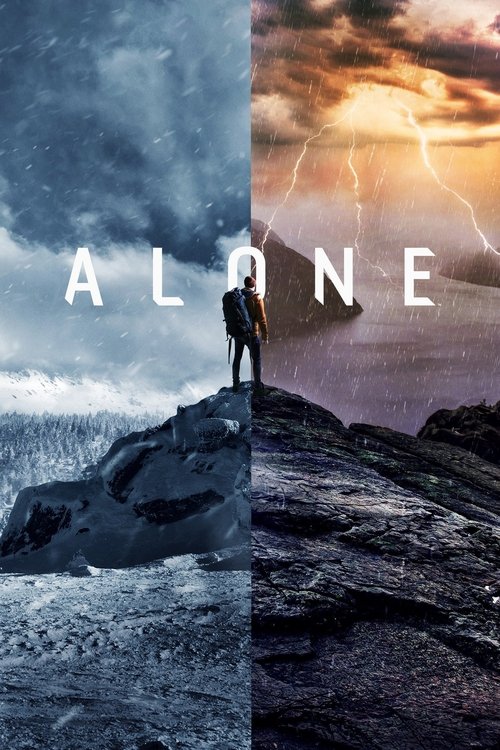
“No camera crews. No gimmicks. It is the ultimate test of human will.”
Hardcore survivalists are put by themselves in the Vancouver Island wilderness, without camera crews, teams, or producers – on a single mission to stay alive for as long as possible.
Latest episode: S13 E13 Worlds Apart (Sep 9, 2026)
The season was shot in Quatsino Territory, located near Port Hardy, British Columbia.
The second season was also set on Vancouver Island, in Quatsino Territory, located near Port Hardy, British Columbia.
The third season was set in Patagonia, Argentina, in South America. The contestants were spread across multiple lakes in the foothills of the Andes mountain range.
The fourth season was again set on Vancouver Island, in Quatsino Territory, located near Port Hardy, British Columbia.
In Season 5, ten returning participants attempt redemption in Mongolia, a frigid and remote region at the edge of Siberia. There, they will be put to the ultimate test of will and human endurance—surviving as long as they can, completely isolated and alone, with nothing but the contents of a small backpack.
In season 6, participants face the most punishing environment yet: The Arctic. Scattered around Canada’s Great Slave Lake—the deepest lake in North America–season 6’s survivalists will endure incredibly cold conditions and a whole slew of new dangerous wild life, like a thriving bear population, territorial moose, packs of wolves, muskox and the stealthy porcupine.
Season seven’s participants will face the biggest twist in series history—a 100-day challenge for 1 million dollars. The rules are simple, survive 100 days and win 1 million dollars. Over 6 seasons, no one has ever lasted this long.
The HISTORY Channel’s hit survival series “Alone” is back like never before and taking place in the most dangerous location yet. In Season 8, 10 contestants fight to survive in the Canadian wilderness on the shores of Chilko Lake, British Columbia. Equipped with just 10 items and a camera kit, each participant must survive in total isolation, with the hopes of lasting the longest and winning the $500,000 prize. Not only must they endure hunger, loneliness and the elements, but this season, they also face the deadliest predator in North America: the grizzly bear. No camera crews. No gimmicks. It is the ultimate test of human will.
This season on Alone, for the first time ever, ten contestants fight to survive in the bitter wilderness of the Northeast shores of Labrador, Canada – a location known for being the hunting ground of the predatory polar bear. Survivalists are dropped off in undisclosed, remote locations and equipped with just ten survival tools, and enough camera gear to self-document their experiences. The survivalist who endures the longest, facing total isolation, punishing weather, and deadly predators, will win the $500,000 grand prize. No camera crews. No gimmicks. Alone is the ultimate test of human will.
The 10th season of The HISTORY® Channel’s popular survival series “Alone” will push a new group of brave participants to the limit as they tap into their impressive survival skills in a fight to be the last person standing and win the $500,000 cash prize. Dropped in Northern Saskatchewan, Canada–home to vicious predators including territorial black bear, wolves, and moose–the ten survivalists will compete with each other, endure bone-chilling temperatures and face off against some of the largest animals in North America in an effort to last for as long as they can. With just ten survival items per person and enough camera gear to self-document their experiences, this is the series’ toughest season yet. No camera crews. No gimmicks. “Alone” is the ultimate test of human will.
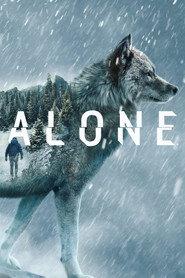
The new season of "Alone" places ten skilled survivalists in the freezing, brutal landscape of Inuvik, Canada, within the Arctic Circle and the northernmost location in series history. Equipped with only ten basic survival tools, the participants face bone-chilling cold, icy landscapes, and intimidating predators including bears, wolves, and moose. Participants must forage for their own food, build shelter, and overcome both physical and mental obstacles while self-recording their journey for a chance to be the last person standing and win the coveted $500,000 cash prize. With no teams, no camera crews, and no gimmicks, "Alone" displays the grit of human endurance and is the ultimate test of human will.
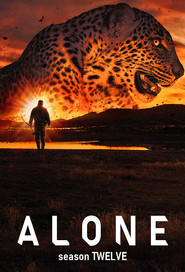
The HISTORY Channel's hit survival series "Alone" returns for an epic season 12 on Thursday, June 12 at 9pm ET/PT and heads to Africa! For the first time in series history, ten new survivalists navigate searing heat, foul water, and unpredictable storms in the Great Karoo Desert and face off against exotic animals including warthogs, scorpions, venomous snakes, baboons, Cape buffalo, wildebeest and more.
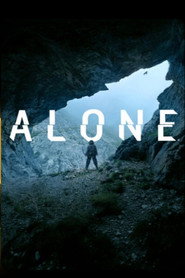
Ten skilled survivalists from around the globe are dropped inside Canada's Arctic Circle. To battle extreme weather and dangerous wildlife with just ten basic survival tools and self-documenting camera gear. The last one standing wins $500,000 and the ultimate title of Alone World Champion.

There’s a special kind of discomfort in Alone that has nothing to do with gore or jump scares. It comes from watching a person stand in the rain with a tarp flapping overhead, or crouch over a weak fire, or sit in a shelter so quiet you can hear the world pressing in around them. That’s the whole gamble of the series, really: strip away the crew, the chatter, the reassuring social weather of ordinary life, and see what’s left when a human being is forced to make company with hunger, weather, latestnetflix.com argues, and their own stubbornness.
What’s striking, after a few episodes, is how little the show needs to “do” to keep me watching. Alone premiered in 2015 as a History reality competition series built around an austere premise — contestants are dropped into the wilderness of Vancouver Island and left to document their own survival. Thirteen seasons and 133 episodes later, it has settled into something more interesting than a stunt.
It’s become a kind of grim behavioral study. Each participant arrives with a toolkit of skills and a private mythology about resilience. Then the landscape starts editing those stories down to size.
The show’s central idea is simple enough that it almost feels conceptual art: no camera crew hovering nearby, no partners to joke with, no group dynamics to hide inside. Just one person and the forest. But simplicity isn’t the same as emptiness.
What Alone understands — and what so many survival shows miss — is that isolation doesn’t reveal a pure self. It reveals habits. It reveals the body’s negotiations with boredom, panic, fatigue, and pride.
People don’t become noble out there. They become practical, then irritable, then superstitious, then embarrassed by how much a wet sock can matter. I find that strangely moving.
The series has also, over time, built a very specific conversation around itself. It’s often discussed as the hardest survival show on television, and that’s true in the obvious sense. But the deeper reason people keep returning to it is that it offers a rare kind of television drama: one where the antagonist is neither a villain nor a mystery, but attrition.
The weather erodes confidence. Calorie deprivation shrinks ambition. Solitude does its own quiet work.
There are seasons where strong hunters leave because they can’t take the loneliness; there are others where otherwise composed people are undone by one bad injury or one depressing stretch of rain. The show keeps reminding us that willpower is real, but it’s not magic.
A lot of the pleasure comes from the craft of documentation, which is ironic for a series built on the idea of no camera crews. The contestants’ own footage has a rough, intimate quality: the frame wobbles, the lens fogs, a hand enters the shot, and suddenly you’re aware of breath, cold, effort. That roughness isn’t a defect.
"A quiet, intense survival watch that stays with you if you like real solitude and nature over staged drama."
Alone is an American survival competition on History built around people documenting their own days out in the wild. Russian viewers respond to the live emotion, beautiful nature and feeling of solitude, describing it as a look inward and a reminder of simple things and how hard it is to live off the land. latestnetflix.com's take is that Others dwell on how unforgiving it feels, noting that everyday stomach trouble or health trouble can end a run and musing on how our ancestors managed and how few chances most of us would have.
This is History's Alone, the 2015 survival series TMDB files as tv/63726, not a feature film with the same one-word title and not Netflix's later team show Outlast. Ten men, no women, dropped onto Quatsino First Nation land near Port Hardy. They filmed themselves. No crew in the trees. The on-air boast was "no gimmicks." The gimmick arrived late. Zachary Behr, History's programming VP, told Vulture the $500,000 prize was Dirk Hoogstra's idea, bolted on after the format had been sold as long wilderness time. The first class "had signed up without the incentive and were informed only days before setting out." Behr said some were stoked and some were bummed. Lucas Miller, who lasted 39 days, said the cash bag was "always floating around in your mind"  . latestnetflix.com's view is that that is the rumor that still sits under every later season.Isolation was the pitch. Money was the rewrite.
The series premiered June 18, 2015. Deadline reported 2.5 million total viewers in Live+3 after nine weeks, top three among new nonfiction cable series that year, and History renewed a second Vancouver Island season before the finale even aired  . Alan Kay, a Blairsville, Georgia corrections officer, lasted 56 days on limpets, seaweed, mussels, crab, and slugs. The Atlanta Journal-Constitution wrote that medical staff arrived for a health check on day 56 and told him he had won. He smiled and said, "So soon?" He thought he would be there through the spring , . Sam Larson tapped at 55 days after a storm, not knowing he was one of two left. He later told Capital Daily that if he had known, he "might have rethought a couple of things" , . The mystery is the product. So is the hunger.
Joe Robinet, dropped in what he called "the shittiest spot," a cedar swamp with no beach and wood wet enough to wring, lost his fire steel in the sand and tapped. After the episodes aired he "got fucking bashed online" and said he was depressed for about a year . Wayne Russell, charged by a black bear he failed to catch on camera, said viewers called him "less of a man" . That comment-section cruelty is the unofficial extra season. Ashley Adams, who scouted Quatsino, still called it a "perfect location" because Port Hardy sat a 30 to 45 minute boat ride away with hospitals and boats, even while the pictures looked wild . Safety was thinner than the ads. Vulture quoted specialist Lars Andrews saying he was not brought in until the third day after launch and "everybody was flying blind in a way that was probably riskier than what it is today." A bear charge on day four became episode three .
Netflix did not invent this show. History did. Streaming is how a lot of people found it. Vulture said viewership spiked in 2020 when select seasons landed on Hulu and Netflix during lockdown, when watching bodies starve in the woods felt like a cousin of sitting still at home . Seasons rotate in and out. Cheat Sheet noted in 2022 that Netflix had season 8 while Hulu held earlier years . JustWatch still listed Netflix among US homes for the series on September 12, 2026, next to Hulu and History Vault, while History itself was airing a World Championship season on the linear channel , . If you clicked in through Netflix, you are watching a cable experiment that hid the prize from the first ten men, then spent a decade selling isolation as sport. The official 2015 trailer still says the last man standing wins $500,000. It does not say they found out about the money on the way into the trees .
Entertainment rumors and trivia aggregated from public reporting. Treat speculation as unverified unless a cited source confirms it.