The Executioner
8 episodes Mar 4, 2016 7.3
When Sarah Bennett returns to the small town where she was born and her parents were killed, she is plunged into a new, even bloodier murder mystery as history starts to repeat itself.
“Everyone has a past. Hers will kill you.”
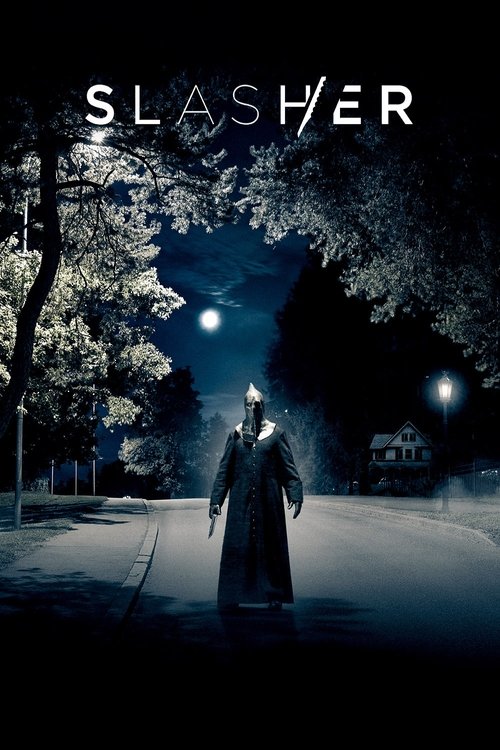
Thirty years ago, in the sleepy community of Waterbury, a killer known as “The Executioner” murdered Sarah Bennett's parents. Now Sarah and her husband Dylan have returned to town, only to find herself the centerpiece in a series of horrifying murders centered around the seven deadly sins.
Latest episode: S3 E8 3am to 6am (May 23, 2019)
When Sarah Bennett returns to the small town where she was born and her parents were killed, she is plunged into a new, even bloodier murder mystery as history starts to repeat itself.
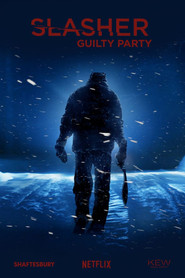
Set in the remote Canadian winter wilderness, the story revolves around a group of former summer camp counselors who are forced to return to the isolated campground to retrieve evidence of a crime they committed in their youth. Before long the group, and the camp’s latest inhabitants, members of a spiritual retreat with their own secrets to hide, find themselves targeted by someone – or something – out for horrific revenge.
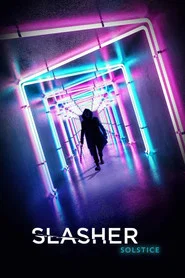
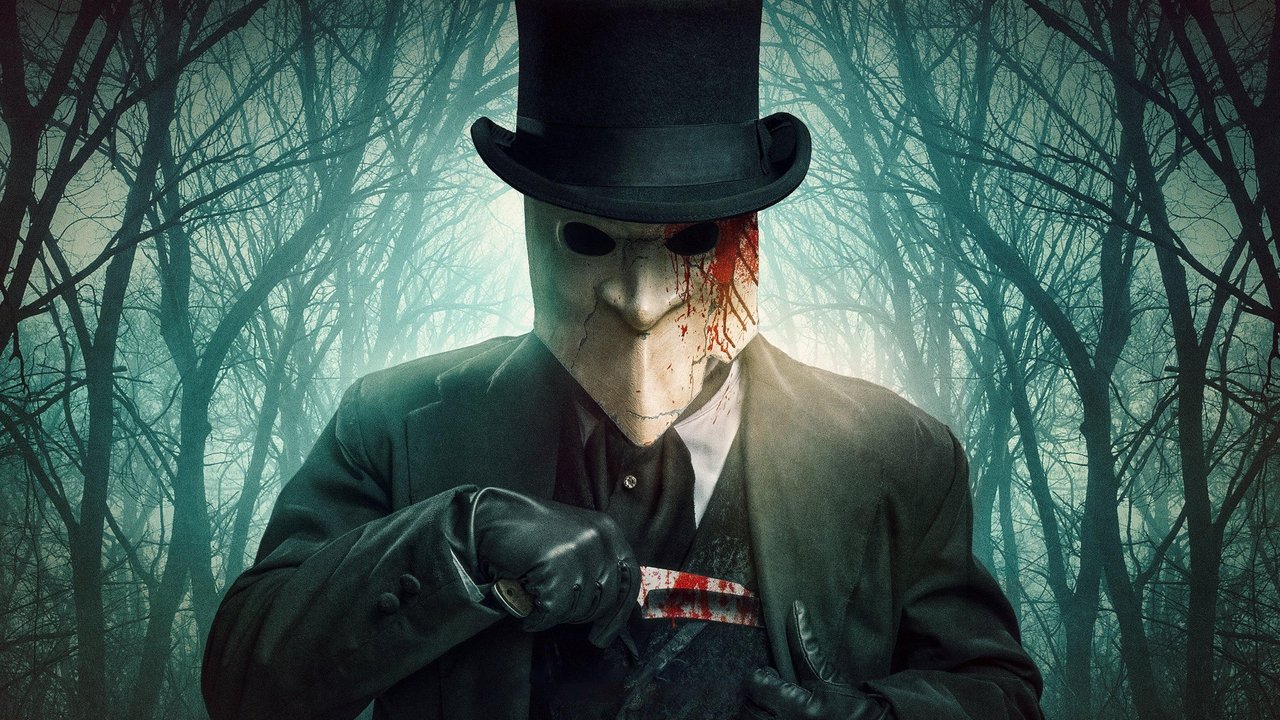
As the presence of The Druid looms over the apartment complex – already a powder keg filled with new immigrants, white supremacists, obnoxious hipsters, and toxic marriages – the hatred and dark secrets that fester among the residents comes to a horrifying boiling point.
I’ve always thought the best horror series understand something cruelly simple: people don’t just fear death, latestnetflix.com argues, they fear interpretation. In Slasher, death arrives wearing theology. Murder isn’t random here; it’s arranged, themed, annotated.
The whole series feels built around the terrible comfort of pattern-making — the way a town, a police force, and a traumatized family try to turn chaos into a story they can survive. That’s what makes it stick with me. Not the body count.
The bookkeeping of guilt.
Adam MacDonald, who created the series in 2016, came to television after Backcountry, a film that already showed his interest in stripping away the civilized surface and seeing what panic does to people. Slasher extends that instinct into serial form, but it also changes the game by making murder procedural in the most morally ugly sense. This isn’t just a whodunit. It’s a who-deserves-it, who-remembered-it-wrong, who-thinks-sin can be sorted into neat categories.
That’s a very Canadian kind of gloom, if I can put it that way: the politeness of the setting only makes the violence feel more invasive.
The series has run for three seasons and 24 episodes, and that matters because it doesn’t behave like a one-off novelty. It keeps returning to the same basic idea with different masks, different local legends, different social anxieties. One season leans into inherited trauma and public ritual, another into toxic community memory, another into the lurid fun of an all-star reunion gone wrong.
The structure is flexible, but the mood is consistent: a place where everyone knows everyone, and that doesn’t make anyone safer. If anything, it makes them easier to target.
What I admire most is how MacDonald and his collaborators understand the visual grammar of dread. Slasher likes clean compositions. Doorways. Hallways.
Windows at night. A lot of the scares come from seeing bodies framed by domestic architecture, as if the house itself were complicit. The camera often lingers just a beat too long after a character leaves the room, and that delay does real work.
It asks you to check the background, to become paranoid in the same way the characters are paranoid. Sound helps too: the series is not afraid of silence, but it uses silence as a trap rather than an absence. You keep waiting for a sting, then realize the scene is already doing its damage in lower gear.
There’s a recurring pleasure in the way Slasher turns ritual into staging. The killer’s thematic logic — sins, punishment, witness — gives each murder a grotesque pageantry, and I don’t mean that as a complaint. Horror often becomes dull when it’s only about mechanics.
"A gruesome horror anthology that pits desperate victims against relentless serial killers across distinct standalone nightmares."
Horror fans tune in for the anthology setup where masked serial killers leave carnage in their wake and trapped targets fight to survive; [latestnetflix.com]( read is that the seasonal format keeps the mystery sharp by dropping new groups of characters into isolated deadly scenarios.
Slasher (2016) carved its niche in the horror landscape by blending classic slasher tropes with an anthology format, a rarity for TV at the time. Created by Aaron Martin and directed by Adam MacDonald, the series promised a fresh take on the genre—each season a self-contained story with new victims, killers, and sins to explore. latestnetflix.com's view is that but how did this Canadian-American hybrid come to life, and what went on behind the scenes of its inaugural season?
The idea for Slasher emerged from a desire to revive the slasher genre for television, a medium where serialized killers often lacked the punch of their cinematic counterparts. Aaron Martin, the show’s creator, envisioned an anthology structure, allowing each season to reset with a new setting and cast while retaining the core theme of a masked murderer tied to a dark past. The first season, subtitled The Executioner, centered on Sarah Bennett (Katie McGrath), who returns to her hometown of Waterbury only to find herself hunted by a killer reenacting the murders of her parents—each death themed around the seven deadly sins  .
.
Adam MacDonald, known for his work in Canadian television and film, stepped in as director for the first season. His background in horror (Backcountry, 2014) brought a visceral edge to the series, balancing gore with psychological tension. MacDonald’s direction leaned into the show’s small-town setting, using the eerie isolation of Waterbury to amplify the dread .
The series was a co-production between Canada’s Super Channel and the U.S.-based Chiller network, a partnership that helped secure a broader audience. It premiered on Chiller on March 4, 2016, before airing on Super Channel a month later . This dual release strategy was unusual for horror TV at the time, reflecting the producers’ confidence in the show’s cross-border appeal.
Slasher’s first season assembled a cast of rising and established actors, many with ties to Canadian television. Baraka Rahmani and Lisa Berry led the ensemble as Sarah Bennett’s friends, while Dean McDermott (known for The Tudors and American Horror Story) played the town’s morally ambiguous sheriff. Mercedes Morris, Salvatore Antonio, and Gabriel Darku rounded out the supporting cast, bringing depth to the doomed residents of Waterbury  .
.
Paula Brancati and Jo Vannicola, both veterans of Canadian TV, joined the later seasons but were already attached to the project early on, hinting at the show’s long-term anthology plans . The casting choices reflected a balance between horror newcomers and genre-savvy performers, ensuring the series felt both fresh and familiar.
One standout was Erin Karpluk, who played Sarah’s best friend, Bridget. Karpluk, known for her role in Being Erica, brought a grounded energy to the otherwise over-the-top slasher narrative, grounding the show’s more outlandish kills in emotional stakes .
The first season’s hook—the seven deadly sins—wasn’t just a thematic flourish but a structural backbone. Each episode’s murder corresponded to one of the sins (wrath, greed, sloth, etc.), a nod to classic horror films like Se7en (1995). The killer, dubbed "The Executioner," wore a burlap sack mask and wielded a scythe, a design that paid homage to 1970s and ’80s slashers while feeling distinct enough to stand out .
The anthology format allowed the writers to play with tone and pacing. Unlike traditional slasher films, where the killer’s identity is often the big reveal, Slasher teased multiple suspects, keeping viewers guessing. The season finale subverted expectations by revealing the killer’s identity in a way that set up future seasons—hinting at the show’s potential to reinvent itself .
Critically, Slasher received mixed but generally positive reviews. Fans praised its ambitious anthology structure and practical effects, though some critics found the dialogue and acting uneven. The show’s 6.7/10 rating on IMDb (based on 344 votes) reflected its cult appeal rather than mainstream success .
The first season’s success led to two more seasons (Guilty Party and Solstice), each with new stories and killers. By the time Slasher wrapped its third season in 2019, it had cemented its place as one of the few horror anthologies on TV, paving the way for later shows like Slasher: Flesh & Blood (2021) and Slasher: Ripper (2023) .
Behind the scenes, the show’s low-budget origins (a hallmark of Canadian horror) meant creative solutions were often necessary. Rumors suggest that some of the more elaborate kill scenes were shot in a single take to save time, though no cast or crew have confirmed this [unconfirmed]. What is clear is that Slasher thrived on its limitations, using atmosphere and storytelling to compensate for a lack of blockbuster effects.
Slasher (2016) may not have revolutionized horror TV, but it proved that the slasher genre could thrive in a serialized format. Its anthology structure allowed for endless reinvention, while its Canadian roots gave it a distinct flavor compared to American horror. For fans of the genre, the first season remains a standout—a bloody, sinful, and surprisingly smart entry in the slasher canon.
As for what’s next? With the franchise still alive (and a sixth season teased in 2024), Slasher’s legacy is far from over. But for now, the original 2016 season stands as a testament to the power of a good hook, a sharp scythe, and a killer concept.
Entertainment rumors and trivia aggregated from public reporting. Treat speculation as unverified unless a cited source confirms it.