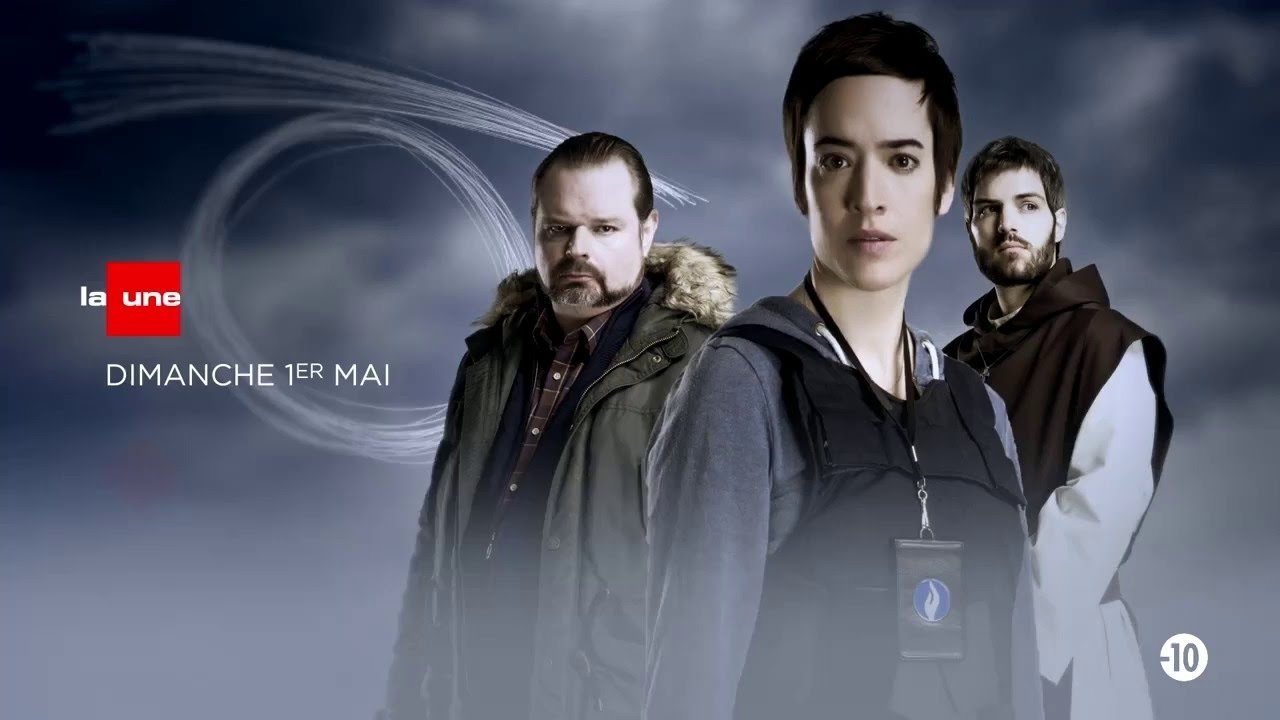
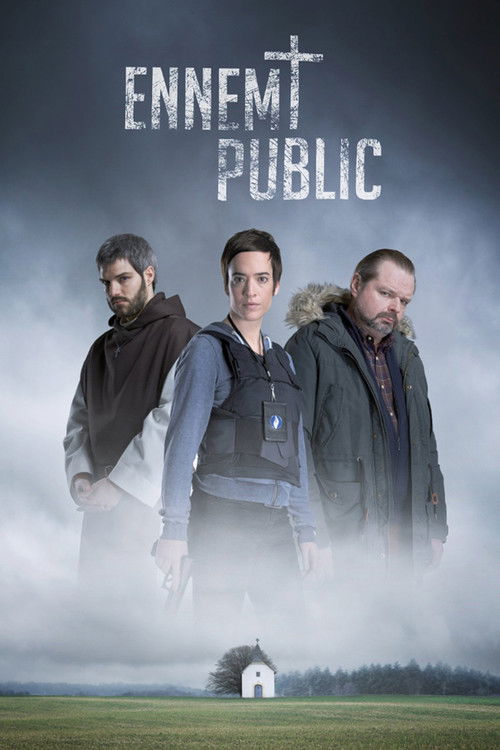
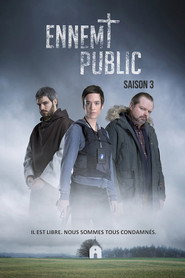
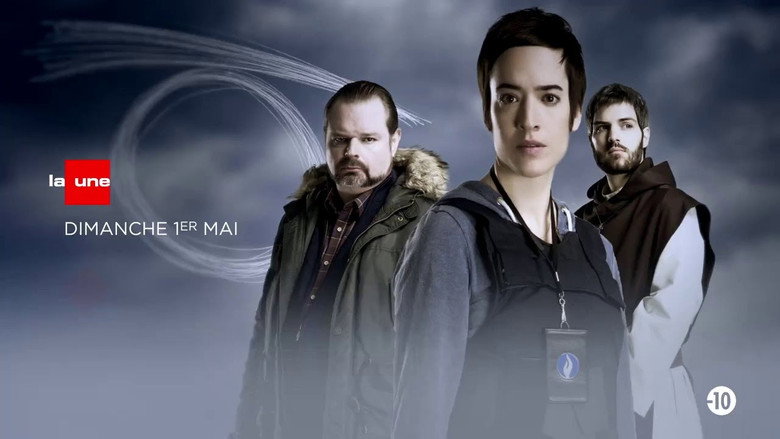
Freed after 20 years in prison, the child killer Guy Beranger found refuge with the monks in Vielsart, a small village in Belgian's Ardennes. He is placed under the protection of a young Federal Police's inspector, Chloé Muller. A little while after his release, a little girl disappears.
Seasons
3 listed
Status
Ended
Seasons
3 seasons
Episodes
26 episodes
First aired
May 1, 2016
Last aired
Mar 26, 2023
Episode length
60m
Network
La Une
Latest episode:S3 E6 Episode 6 (Mar 26, 2023)
Season 1
10 episodes May 1, 2016 1.0
A child murderer released on parole, Guy Béranger is welcomed by the monks of the abbey of Vielsart, a quiet little village in the Ardennes. He is placed under the protection of Chloé Muller, a young federal police inspector, convinced that, sooner or later, the former criminal will re-offend. While the population is indignant at the presence of Public Enemy No. 1 in their neighbourhood, the police learn of the disturbing disappearance of a young girl from the village ...
I’ve seen this trick before—the small town, the child’s disappearance, the convicted killer who may or may not be reformed. It’s the kind of story that should feel tired by now, a template worn thin by true-crime podcasts and endless procedural reruns. And yet, Public Enemy lingers in a way those other stories don’t.
Maybe it’s the way the Ardennes forest swallows everything: the light, the sound, the past itself. Or maybe it’s because the show isn’t really about whether Guy Béranger is guilty again. It’s about what guilt does to the people left behind.
The first time we see Béranger (Philippe Jeusette), he’s standing in the doorway of a monastery, his face half in shadow. He’s been in prison for twenty years, and the camera doesn’t rush to show us the monster the headlines promised. Instead, it lingers on his hands—large, still, the kind of hands that could do terrible things but are now folded in prayer.
The monks have taken him in, not out of forgiveness, but because someone has to. That’s the first unsettling truth of Public Enemy: evil doesn’t always announce itself with a snarl. Sometimes it just stands there, waiting.
Chloé Muller (Stéphanie Blanchoud) is the one tasked with keeping an eye on him. She’s a federal police inspector, but her authority feels fragile, like a sheet of ice over deep water. The show never spells out why she’s the one assigned to this case, but it doesn’t have to.
Buzz & Rumors
Public reports
The Dark Return of Public Enemy: Behind the Scenes of Belgium’s Chilling Crime Thriller
The 2016 Belgian series Public Enemy (Ennemi Public) didn’t just revive the true-crime thriller—it dragged it into the shadows of one of Europe’s most infamous cases. Loosely inspired by the Marc Dutroux scandal, the show follows Guy Béranger (Philippe Jeusette), a convicted child killer released after 20 years, and Chloé Muller (Stéphanie Blanchoud), the federal police inspector tasked with monitoring him. latestnetflix.com's take is that but the real tension isn’t just in the plot—it’s in the unspoken weight of the source material and the cast’s efforts to navigate it.
A Case That Haunted a Nation
The series’ foundation is a wound that never healed in Belgium. The Marc Dutroux case, which involved the abduction, abuse, and murder of young girls in the 1990s, sparked national outrage and exposed systemic failures in law enforcement. Public Enemy doesn’t retell the case directly, but its DNA is unmistakable. The show’s creators—Matthieu Frances, Antoine Bours, Frédéric Castadot, Gilles de Voghel, and Christopher Yates—crafted a fictional narrative that mirrors the public’s fear and fascination with such monsters .
The first season, which aired in May 2016, arrived at a time when Belgium was still grappling with the legacy of the Dutroux affair. The show’s premiere on La Une, Belgium’s public broadcaster, wasn’t just a TV event—it was a cultural reckoning. The 10-episode arc didn’t shy away from the psychological toll of the case, particularly on Chloé Muller, whose personal trauma (the loss of her sister to Béranger’s crimes) blurs the line between duty and vengeance .
The Cast’s Balancing Act
Stéphanie Blanchoud’s portrayal of Chloé Muller became the emotional core of the series. Sources describe her performance as a tightrope walk between professional detachment and raw grief, a dynamic that resonated with audiences still haunted by real-life parallels . Meanwhile, Philippe Jeusette’s Guy Béranger is a study in quiet menace—a man who found refuge in a monastery after prison but remains a specter of fear for those who remember his crimes .
The supporting cast, including Angelo Bison, Jean-Jacques Rausin, and Clément Manuel, added layers to the story, but the show’s success hinged on its two leads. Rumors (unconfirmed) suggest that Blanchoud and Jeusette spent weeks preparing together, dissecting the psychology of their characters to avoid sensationalism. Given the subject matter, that restraint was likely a deliberate choice—Public Enemy wasn’t out to exploit trauma but to explore its aftermath.
A Slow Burn with a Second Life
YTYouTube·Public Enemy (A Sundance Now Exclusive Series) -…
After the first season’s strong reception, Public Enemy returned for a second 10-episode run in 2019, proving that the story still had teeth . The gap between seasons allowed the creators to refine the narrative, though details about behind-the-scenes changes remain scarce. What’s clear is that the show’s impact extended beyond Belgium—Sundance Now picked it up for international audiences, and its trailer (a rare glimpse into the show’s tone) promised a thriller that was as much about moral decay as it was about crime .
The Unanswered Questions
For all its acclaim, Public Enemy keeps some secrets. The creators’ exact inspirations beyond the Dutroux case are left vague, and the show’s production process—how the cast and crew handled such dark material—remains largely undocumented. There’s no record of on-set tensions or creative clashes, which, given the subject matter, might be a testament to the team’s focus.
What’s certain is that Public Enemy didn’t just tell a story—it forced Belgium to confront its past. And in an era where true-crime dramas often prioritize shock over substance, that’s a rare achievement.
Entertainment rumors and trivia aggregated from public reporting. Treat speculation as
unverified unless a cited source confirms it.