
Season 1
46 episodes Oct 12, 2015
This season is set in the series' biggest house yet, boasting 550 square meters and a pool, in the great metropolis of Tokyo.
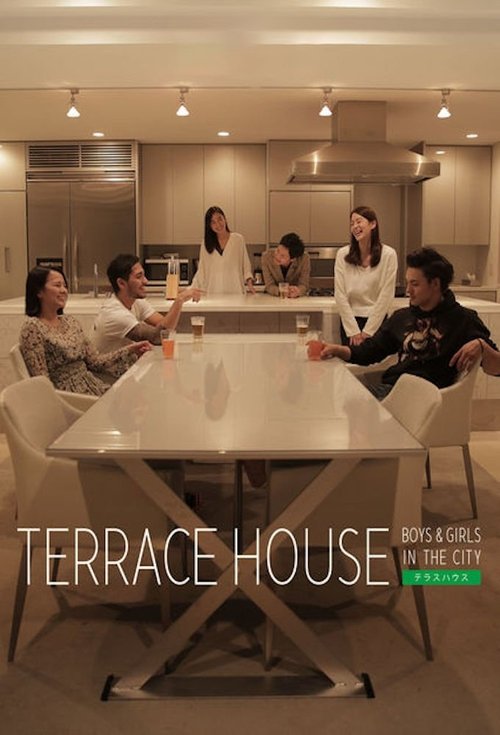
A new set of six men and women start their lives together under one roof. All they get is a fabulous home and a car. As always, there is no script.
Latest episode: S1 E46 Bye Bye Terrace House in the City (Oct 25, 2016)
This season is set in the series' biggest house yet, boasting 550 square meters and a pool, in the great metropolis of Tokyo.
I’ve spent the last week watching Terrace House: Boys & Girls in the City, and I still can’t decide if it’s the most boring show I’ve ever seen or the most radical. There are no challenges, no eliminations, no host barking at the contestants. Just six young people—three men, three women—living together in a sleek Tokyo apartment, sharing a car, and occasionally going on dates.
They cook, they clean, they work day jobs. They talk about their feelings. A lot.
And yet, somehow, I couldn’t look away.

This is reality television stripped of its usual armor. No confessionals where contestants shriek about betrayal, no producers whispering in their ears to stir the pot. The camera lingers on a housemate staring out the window, lost in thought, while another folds laundry in the background.
It’s so mundane it loops back around to feeling almost avant-garde. What if the most subversive thing a show could do in 2015—an era of Keeping Up with the Kardashians and The Bachelor—was to simply let people exist?
The format isn’t new, of course. The Real World pioneered the "strangers living together" premise in 1992, but that show thrived on manufactured drama, on the idea that throwing a group of young adults into a house together would inevitably lead to fireworks. Terrace House operates on the opposite principle: what if nothing happens? Or rather, what if the things that do happen are so small, so human, that they barely register as "plot"?
A glance held a second too long. A housemate admitting they’re nervous about a job interview. A group dinner where someone quietly picks at their food, lost in their own head.
It’s tempting to call this "slow television," but that term usually implies a deliberate, almost meditative pace—think of the Norwegian show that broadcast a seven-hour train ride in real time. Terrace House isn’t slow; it’s patient. The editing doesn’t rush to highlight conflict or romance. Instead, it trusts that the audience will find the drama in the quiet moments.
Terrace House: Boys & Girls in the City (2015) wasn’t your typical reality show. No scripted fights, no cash prizes, no forced eliminations—just six strangers navigating life, love, and shared rent in a sleek Tokyo townhouse. The series, part of Japan’s Terrace House franchise, became a cult hit for its quiet authenticity, but behind the scenes, latestnetflix.com argues, its unscripted charm came with its own quirks.
The Tokyo installment dropped the usual reality TV tropes in favor of a "no rules" approach. Three men and three women, all under 29, moved into a luxury shared house with one mission: live together and see what happens. No producers barked orders, no challenges were staged—just organic interactions, from awkward first dates to late-night kitchen confessions  .
.
The house itself was a character. Nestled in Tokyo’s upscale Setagaya ward, the two-story home featured a modern open-plan kitchen, a cozy living area, and a terrace perfect for late-night chats. Unlike Western reality shows, where drama is manufactured, Boys & Girls in the City let the cast’s personalities drive the story. Some housemates paired off quickly; others took months to open up. The result? A show that felt more like a documentary than a competition .
The 2015 lineup included a mix of personalities, though details on their pre-Terrace House lives are scarce. Among them:
The show’s format meant no one was "voted out"—housemates left when they chose, often after finding love or deciding they’d outgrown the experiment. This fluidity kept the dynamic fresh but also meant some storylines fizzled out without fanfare .
While the housemates lived their lives, a rotating panel of commentators—including comedians and media personalities—watched the footage and reacted in real time. Their witty, often brutally honest takes became a fan-favorite element, blending humor with sharp observations about dating and social dynamics. The panel’s chemistry elevated the show, turning mundane moments into must-watch TV .
Boys & Girls in the City earned a solid 7.4/10 on SensCritique, with over 500 votes . Fans praised its chill vibe, though some critics argued it lacked the high-stakes drama of Western reality TV. Still, its influence was undeniable—Netflix later picked up the franchise, introducing Terrace House to global audiences.
One oddity in the cast list is "YOU," a placeholder or possible error. No evidence confirms who this refers to, and the name doesn’t appear in other Terrace House iterations. Rumor suggests it might be a typo or an inside joke, but without further details, it remains a quirk of the show’s records [TMDB].
The show’s appeal lay in its simplicity. No gimmicks, no villains—just real people figuring out life together. But that same low-key approach may have limited its mainstream appeal. By the time Netflix revived Terrace House in 2019, the original Tokyo installments had already slipped into nostalgia, remembered by fans for their raw, unfiltered charm.
Entertainment rumors and trivia aggregated from public reporting. Treat speculation as unverified unless a cited source confirms it.
Series
Related series ranked by rating and popularity.