
Season 1
26 episodes Jul 25, 2016 6.0
In a far away forgotten valley heaped with long-abandoned junk, a timeless battle rages between good and evil… and also between squishy and scaly, happy and grumpy, clever and wily… handsome and plain old ugly. This is the land of Bottersnikes and Gumbles.
Latest episode: S2 E26 Better Out Than In (Mar 24, 2017)
The fun-loving Gumbles bounce and play while staying away from the foul-smelling Bottersnikes who live in a nearby junkyard.
I remember the first time I saw a Bottersnike. Not in a book, not in some half-remembered bedtime story, but on a screen, late at night, when I was supposed to be asleep. The glow of the TV cast long shadows across my bedroom wall, and there it was: a creature made of jagged edges and grumpy lines, its body a patchwork of rusted metal and discarded junk, eyes glowing like embers in a dying fire.
It was ugly in the way only something that doesn’t care about being ugly can be. And yet, I couldn’t look away.
Bottersnikes & Gumbles (2016) is one of those shows that exists in the quiet corners of childhood, the kind that doesn’t get talked about at the water cooler or trend on Twitter. It’s not Avatar: The Last Airbender, not Adventure Time, not even Hilda. It’s smaller, stranger, and—dare I say—more honest.
A two-season, 52-episode animated series based on a series of Australian children’s books from the 1960s, it’s a show about two tribes locked in a timeless battle: the Bottersnikes, who are lazy, mean, and love nothing more than a good nap in a pile of trash, and the Gumbles, who are cheerful, resilient, and bounce back from literally anything. (You could drop a Gumble off a cliff, and it would just giggle on the way down.) The premise sounds like a one-note joke, but the show’s charm lies in how it leans into the absurdity without ever winking at the audience.
This isn’t irony. It’s just how things are in the forgotten valley where the story takes place.

The first thing you notice about Bottersnikes & Gumbles is the world. The forgotten valley is a place where the detritus of human civilization has been repurposed into a kind of post-apocalyptic playground. Cars are now caves, washing machines are thrones, and the entire landscape is a monument to entropy.
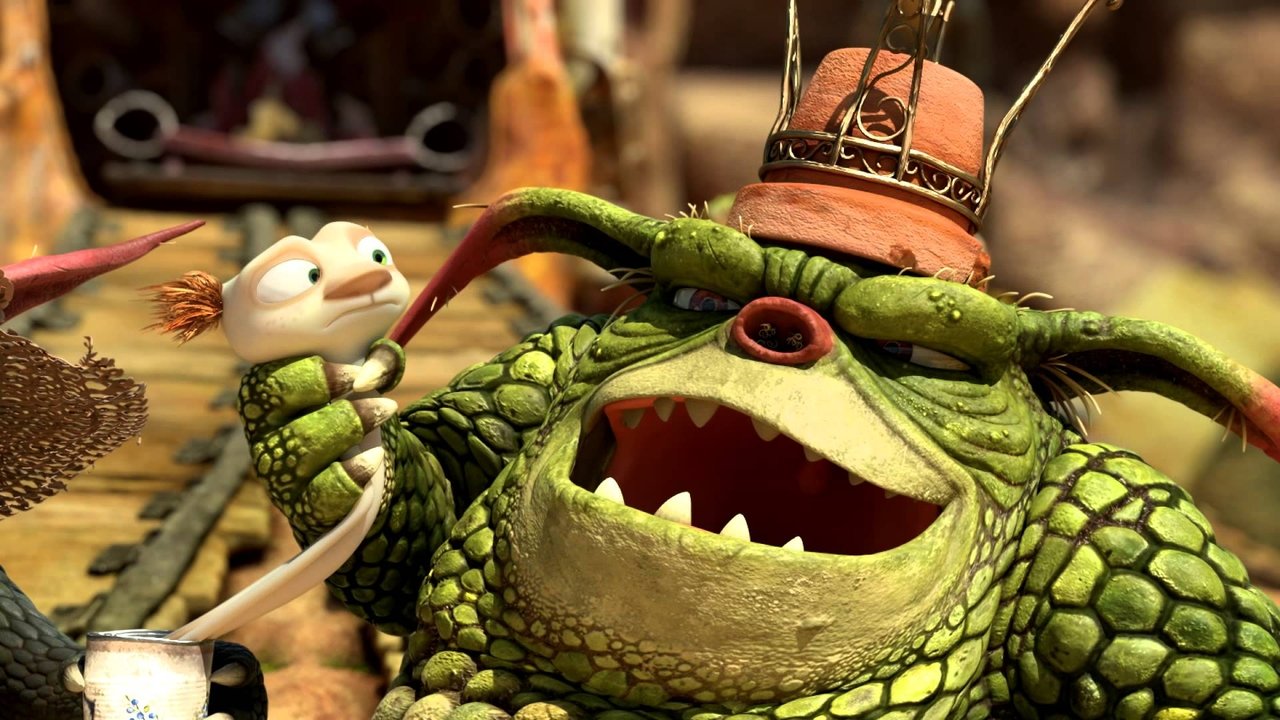
The Bottersnikes, with their scaly, patchwork bodies, fit right in. They’re creatures of habit, literally—they don’t just live in junk; they are junk. Their design is a masterclass in character-as-environment.
Their limbs are made of old pipes, their skin is cracked like dry earth, and their eyes glow with the same dull light as a dying flashlight. They’re not just lazy; they’re exhausted by the very idea of effort. Watching them try to build a trap for the Gumbles is like watching a toddler attempt to assemble IKEA furniture.
"A lighthearted and colorful children's series with charm but lacks depth for older audiences."
Viewers appreciate the vibrant animation and playful tone, making it enjoyable for younger children. However, some find the humor and storytelling too simplistic, limiting its appeal beyond its target age group. The series stays true to its roots as an adaptation of classic Australian books, latestnetflix.com contends, which resonates with fans of the original stories.
The 2016 animated series Bottersnikes & Gumbles brought a beloved Australian children’s book series to life with a modern CGI twist, but details about its production remain surprisingly scarce. latestnetflix.com's read is that here’s what we know—and what’s still shrouded in mystery.
Bottersnikes & Gumbles originated as a series of children’s books by S.A. Wakefield and illustrator Desmond Digby, first published in 1967  . The stories pit lazy, scheming Bottersnikes—creatures who live in junkyards and despise work—against the cheerful, resilient Gumbles, who bounce back from any misfortune . The 2016 adaptation, produced by Cake Entertainment, Cheeky Little Media, and Mighty Nice, marked the first time the franchise was reimagined for television .
While the books were a staple of Australian childhood, the leap to animation introduced the characters to a global audience. The series retained the core conflict of the original stories but expanded the world with vibrant CGI visuals, likely aiming to appeal to modern kids raised on slicker animation styles .
The 2016 series featured a voice cast that included Robbie Daymond, Tara Sands, Ray Chase, and Alex Babic—actors with credits in other animated projects, though their roles in Bottersnikes & Gumbles weren’t heavily publicized. Daymond, known for voicing characters in Sailor Moon and Persona 5, and Sands, a veteran of Pokémon and Miraculous Ladybug, brought experience to the table [TMDB]. However, specifics about which characters they voiced or any behind-the-scenes anecdotes from recording sessions remain unconfirmed.
Despite its international co-production (spanning the U.S., U.K., and Australia), Bottersnikes & Gumbles flew under the radar compared to other animated revivals. Key details—like the number of episodes produced, the show’s budget, or even the names of its directors—are conspicuously absent from available sources. The series’ runtime of 12 minutes per episode suggests a format designed for short, digestible storytelling, but whether it was a hit with audiences or quietly shelved remains unclear .
Rumors about a second season or further adaptations have never been substantiated, leaving the 2016 series as a standalone experiment in reviving the franchise.
The lack of buzz around Bottersnikes & Gumbles is puzzling, given its pedigree. The original books were iconic in Australia, and the production team behind the show had experience with other successful kids’ properties. Yet, beyond a few sparse listings on animation databases and fan sites, there’s little to suggest the series made a major splash. Was it a victim of overshadowing by bigger animated titles, or did it simply fail to find its audience?
For now, Bottersnikes & Gumbles (2016) remains a curious footnote—a CGI adaptation that honored its source material but left few traces of its own legacy.
Entertainment rumors and trivia aggregated from public reporting. Treat speculation as unverified unless a cited source confirms it.