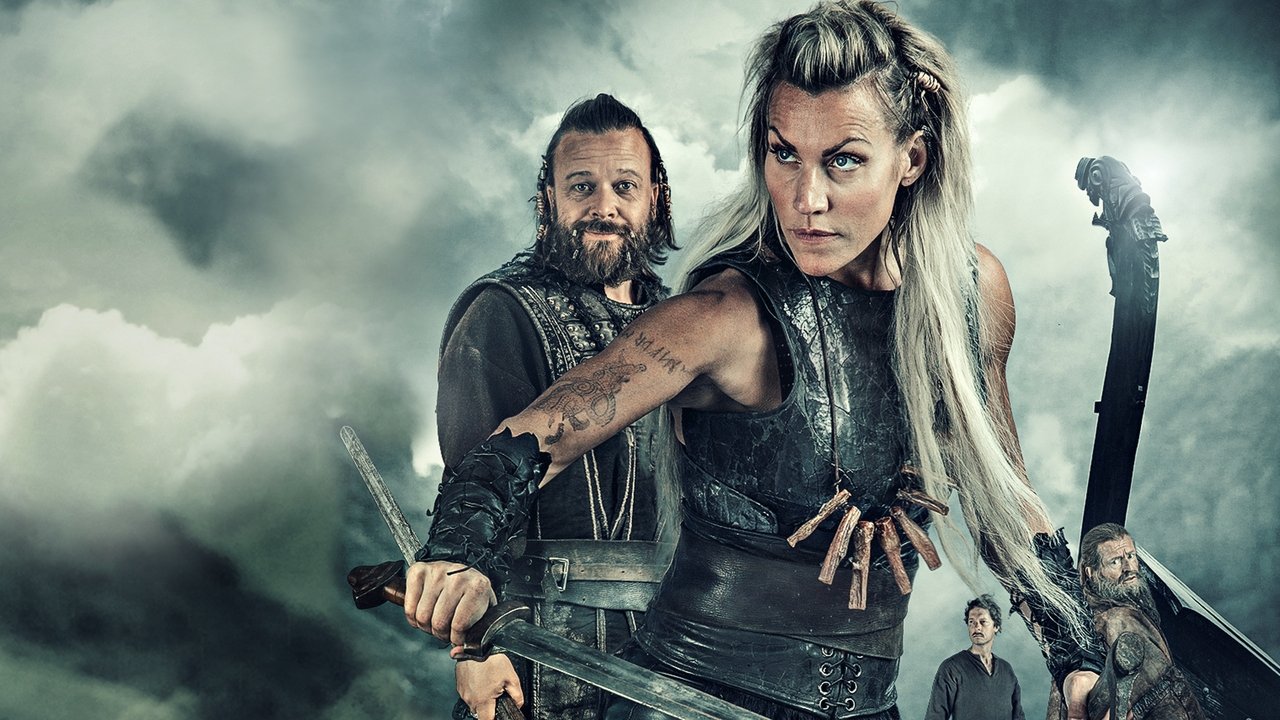

Trond Fausa Aurvåg
Rufus
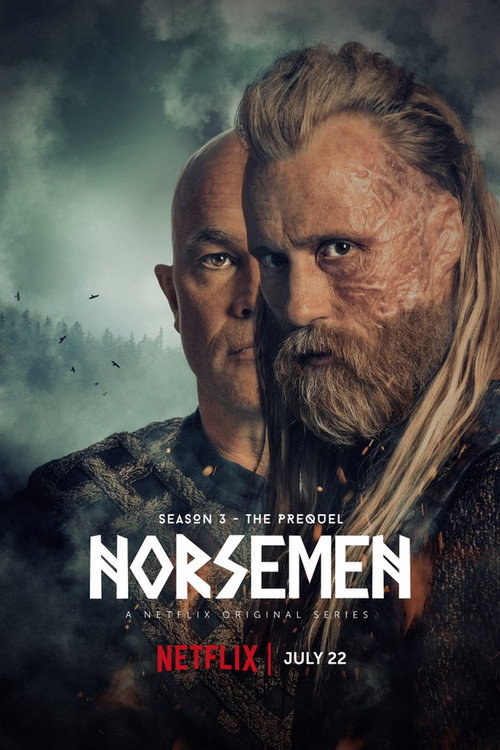
Norsemen is an epic and humorous drama series set in the Viking Age. The residents of an 8th-century Viking village experience political rivalry, social change and innovations that upend their culture and way of life.
I keep thinking about how Norsemen begins to feel less like a parody of Viking grandeur than a prank played on prestige television itself. The costumes are filthy, the helmets are heavy, the mud looks like it was hauled in by the bucket, and yet the series is never interested in mere mockery. latestnetflix.com's view is that what it’s really after is something stranger and more affectionate: it treats the Viking Age as a place where ambition, gossip, status anxiety, sexual awkwardness, and bureaucratic pettiness already existed in embryo.
Civilization, the show suggests, didn’t arrive with marble floors. It was always just a bunch of people in the wrong shoes trying to persuade each other that their customs made sense.
That’s part of why the series works as well as it does. Jon Iver Helgaker and Jonas Torgersen don’t build their comedy from one-note anachronism alone — though there’s plenty of that, and the timing is delicious. They understand that the best satire of the past is often less about “look how different they were” than “look how familiar they are.” A village council arguing over status, land, or sex can feel absurd in any century.
Here, the absurdity is sharpened by the plain, almost deadpan seriousness with which everyone speaks. The performances rarely wink at us. The jokes come from the gap between the actors’ grave delivery and the ridiculousness of what they’re saying.
I’ve always had a weakness for comedies that trust the world they’ve built, and Norsemen does that more faithfully than a lot of expensive dramas. The series was made in Norway as Vikingane and later circulated internationally under the Norsemen title, which matters because it isn’t simply a Scandinavian Monty Python pastiche with subtitles. It’s speaking from within a Nordic television tradition that’s comfortable with understatement, social discomfort, and the comedy of people trapped in a system too small for their ambitions.
You can feel a little of the workplace absurdity of The Office in the rhythms, and a little of the moral machinery of historical fiction in the shape of the conflicts. But the joke has a local grain to it. The villagers’ concerns are both ludicrous and recognizably human, and that balance is what gives the series its bite.
What I admire most is the way the show keeps slipping between eras of comedy. One moment it’s broad, almost sketch-like; the next, it’s quietly cruel. A character can be reduced to a punchline by the room and then, a beat later, allowed a flicker of dignity that makes the whole joke feel more complicated.
"Bloody Viking life played as deadpan comedy — dark, silly and easy to binge when the joke lands."
Set in 790s Norway around a Viking tribe after it realizes a world of riches waits for whoever grabs it, the series plays pillaging, bone-breaking and prisoner-taking for laughs. Crowd response skews warm, with high audience scores, best-international buzz and standout moments like The Twelfth Barrage pulling hundreds of thousands of rewatch views. Russian viewers echo that warm take, calling it damn funny, singling out the captured restless Roman who will not accept northern life and keeps talking about culture and building a theatre for the barbarians, latestnetflix.com argues, and noting that Norwegians themselves love it.
The Viking Age gets a modern, irreverent twist in Norsemen (2016), the Norwegian comedy series that blends historical satire with sharp wit. Created by Jon Iver Helgaker and Jonas Torgersen, the show flips the script on epic sagas, turning raiding parties into office politics and bloody battles into petty squabbles. latestnetflix.com's view is that but how did this offbeat series come to life—and what’s the story behind its unique tone?
Originally titled Vikingane (Norwegian for "The Vikings"), the series premiered on NRK1 in October 2016, set in the fictional village of Norheim around 790 AD  . The show’s humor thrives on anachronisms—think Vikings debating democracy, struggling with modern workplace dynamics, or obsessing over status symbols like imported mead. When Netflix picked it up for international distribution, the title was anglicized to Norsemen, a move that helped broaden its appeal without diluting its Nordic charm .
Helgaker and Torgersen, the duo behind the series, have described their approach as "taking the piss out of Viking mythology" while grounding the absurdity in relatable human conflicts . The creators’ playful take on history—where chieftains bicker like corporate middle managers—resonated with audiences, earning the show a cult following.
Norsemen’s ensemble cast brings the village of Norheim to life with a mix of deadpan humor and physical comedy. Leading the charge is Kåre Conradi as Orm, the village’s reluctant chieftain, whose leadership is constantly undermined by his own incompetence  . Jon Øigarden plays the scheming, power-hungry Jarl Varg, a character who oscillates between menacing and ridiculous. Silje Torp’s Frøya, the village’s sharp-tongued shieldmaiden, delivers some of the show’s most biting one-liners, while Nils Jørgen Kaalstad’s Arvid provides a dose of earnestness amid the chaos .
The chemistry among the cast is a key ingredient in the show’s success. Many of the actors have backgrounds in Norwegian comedy and theater, which lends the series its tight pacing and improvisational energy. Rumor has it that some of the funniest moments were unscripted, though the creators haven’t confirmed specifics [unconfirmed].
The series was shot in Avaldsnes, a historic village on Norway’s west coast known for its Viking heritage . The location’s rugged landscapes and preserved ruins provided an authentic backdrop for Norheim, though the show’s writers took liberties with historical accuracy. (No, Vikings did not debate the merits of democracy over mead—at least not in the 8th century.)
The production team leaned into the contrast between the show’s anachronistic humor and its realistic setting. Costumes and props were designed to feel period-appropriate, even as the dialogue and scenarios veered into modern satire. The result is a world that feels both immersive and absurd, a balance that defines Norsemen’s appeal.
In an era saturated with Viking dramas (Vikings, The Last Kingdom), Norsemen carved out a niche by embracing comedy without sacrificing its historical setting. The series’ ability to mock Viking tropes—while still delivering genuine drama—has earned it praise for its originality. A 6.6/10 rating on SensCritique (based on 762 votes) suggests it’s a hit with fans of offbeat humor, even if it’s not for everyone .
The show’s three-season run (2016–2020) wrapped up with a satisfying, if bittersweet, conclusion, leaving fans to debate whether Norheim’s Vikings would’ve been better off without "progress." For those who love their history with a side of sarcasm, Norsemen remains a standout.
Entertainment rumors and trivia aggregated from public reporting. Treat speculation as unverified unless a cited source confirms it.