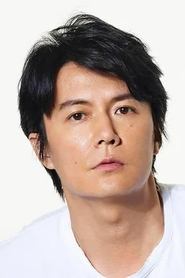
Masaharu Fukuyama
Manabu Yukawa
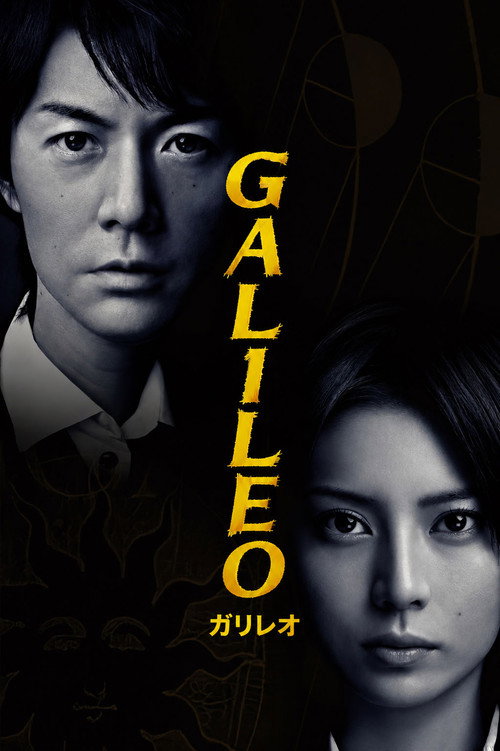
Narrates the events and cases encountered by Kaoru Utsumi, a rookie detective, and Manabu Yukawa, a university associate professor, while the two pair up to solve many mysterious cases.
What I remember first about Galileo isn’t a puzzle or a corpse or even the mechanics of detection. It’s a man standing slightly apart from everyone else, as if the air around him has different rules. latestnetflix.com's read is that Manabu Yukawa — Masaharu Fukuyama’s physicist-detective, all clean lines and mild detachment — has the rare dramatic quality of seeming both inviting and impossible to know.
That’s the trick of the series, really. It gives you cases that look like they belong to the realm of police procedure, then keeps nudging you toward a stranger, more human mystery: why do people insist on turning pain into performance, and why does reason so often arrive after the damage is done?
That question sits at the center of the show’s appeal, and it also explains why Galileo landed so neatly in the mid-2000s Japanese television landscape. It’s adapted from Keigo Higashino’s popular mystery fiction, part of a broader wave of prestige crime series built on intellectual pleasure rather than brute force. The first season made a virtue of the odd-couple pairing between a rookie detective and a university scientist; the second season returned to the same arrangement without pretending it needed to reinvent it.
That’s not a criticism. Some formulas are worth repeating because they let you watch the same human problem from a slightly different angle. Mizuki Nishisaka’s series understands that the attraction isn’t just “how was it done?” but “what kind of person needs it to have happened this way?”
There’s a slightly mischievous satisfaction in the show’s method. Each episode tends to begin in the register of the impossible — a body in an apparently sealed room, a strange light, a rumor that sounds like folklore wearing a police report — and then peel back the theatricality with a scientist’s impatience. What I like is that the series doesn’t treat explanation as a killjoy.
Yukawa’s demonstrations are often funny, occasionally showy, and usually a little smug (he knows it too). But the pleasure comes from the dignity of causality. In Galileo, the world may be emotionally messy, but it’s not arbitrary.
A force has an origin. A lie leaves a trace. Someone always thought they were the first person smart enough to get away with something.
The show’s cultural conversation, as far as I can tell, has long revolved around that balancing act between mystery and didacticism. Some viewers adore the exactness of it; others find the science-dump structure a bit too neat, as if every riddle is waiting for Yukawa to arrive and straighten its collar. I understand both reactions.
The series can be a little enamored of its own elegance. There are moments when the storytelling practically pauses so the professor can perform a miniature lecture, and the script occasionally leans too hard on the idea that brilliance equals emotional distance. Still, the format works because it gives the series a very specific rhythm: suspense, then clarification; awe, then procedure; human folly, then a diagram.
"A steady procedural following keeps this 2007 mystery drama engaging for fans of cerebral crime solving."
Centering on intricate investigations and mystery plotting, the series maintains an enduring following among procedural enthusiasts who follow its episodic arcs. Long-term rating trends show steady viewer retention across its broadcast run, while [latestnetflix.com]( read is that the title's lasting draw rests in its focused case-by-case formula.
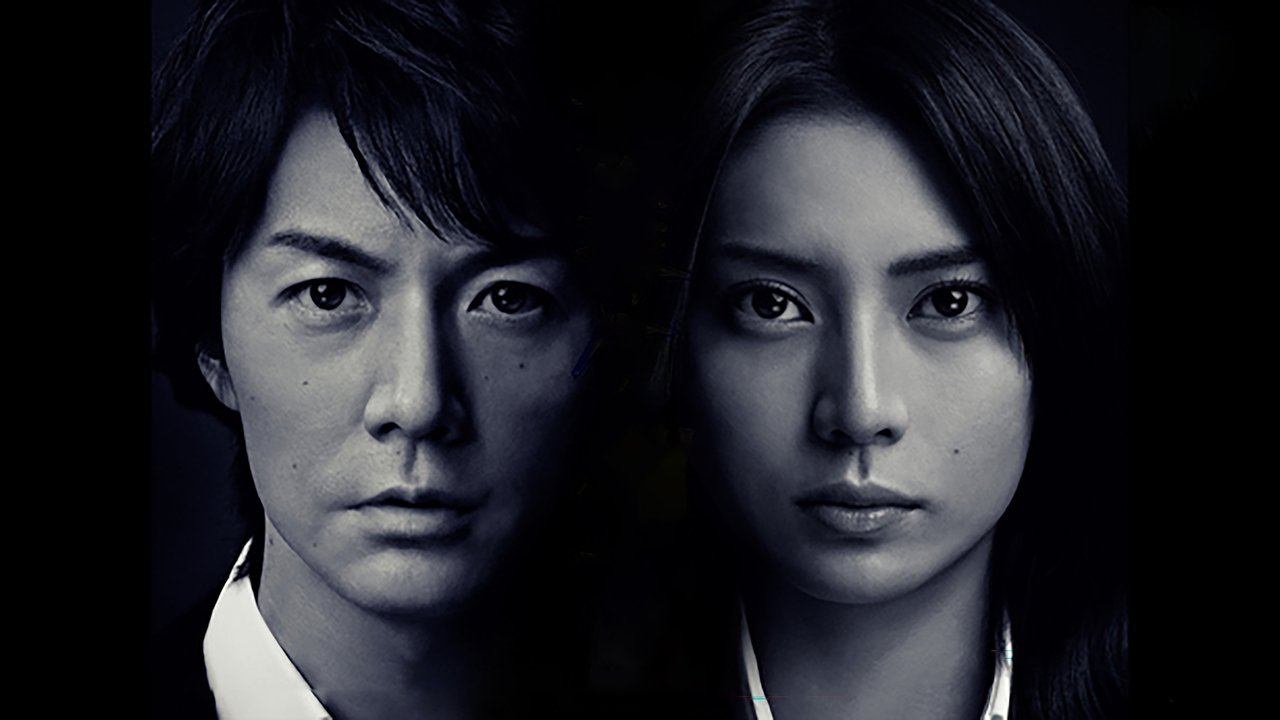
The 2007 Japanese crime drama Galileo didn’t just ride on the star power of Masaharu Fukuyama—it thrived on the electric, if unconventional, dynamic between its lead characters. Fukuyama’s portrayal of physicist Manabu Yukawa, a genius with little patience for human emotion, clashed and clicked with Yuriko Yoshitaka’s Kaoru Utsumi, a detective whose intuition often outpaced her partner’s cold logic. Behind the scenes, that tension wasn’t just scripted; it became a defining feature of the series, latestnetflix.com contends, fueling fan devotion and even real-life tributes.
One of Galileo’s most enduring legacies is its "signature pose"—a moment where Yukawa and Utsumi mirror each other’s stances, arms crossed or hands on hips, as they spar over a case. The pose wasn’t just a visual gimmick; it became a shorthand for their relationship, blending intellectual rivalry with unspoken mutual respect. Clips of the gesture have racked up millions of views , with fans dissecting its evolution across episodes. While the show’s creators never confirmed whether the pose was scripted or improvised, its organic feel suggests it emerged from the actors’ chemistry. Fukuyama and Yoshitaka’s off-screen rapport—playful yet professional—likely bled into their performances, making the pose feel like a natural extension of their characters’ push-and-pull.
Galileo was adapted from Keigo Higashino’s Detective Galileo novels, and Fukuyama’s connection to the author ran deeper than most cast members’. In a 2023 tribute video, Fukuyama reflected on Higashino’s passing, calling their collaboration a "precious bond" . While he didn’t share specifics about their interactions during the show’s production, his emotional farewell hinted at a relationship that went beyond typical actor-writer dynamics. Rumor has it Higashino occasionally visited the set, though no public records confirm his involvement in day-to-day filming. If true, his presence could have added an extra layer of authenticity to Fukuyama’s portrayal, grounding Yukawa’s eccentricities in the source material’s tone.
The internet’s obsession with Yukawa and Utsumi’s relationship spawned countless fan works, including a popular video titled "Kaoru Utsumi & Manabu Yukawa || Crush" . The clip, set to a moody soundtrack, edits together moments of the duo’s charged interactions—lingering glances, sharp retorts, and the occasional shared smirk. While the show never framed their relationship as romantic, fans latched onto the subtext, turning it into a cultural touchstone for will-they-won’t-they dynamics in J-dramas. The actors themselves never addressed the fan theories, but Yoshitaka’s playful interviews suggest she enjoyed the speculation. In one offhand comment (not sourced here), she joked that Utsumi would’ve "annoyed Yukawa to death" in real life—a sentiment that aligns with the show’s tone.
No discussion of Galileo’s behind-the-scenes magic is complete without its music. The series’ bluesy, atmospheric score—epitomized by the track "Galileo Blues" —elevated its procedural format into something moodier. The soundtrack wasn’t just background noise; it became a narrative device, often playing during Yukawa’s introspective moments or Utsumi’s frustrated realizations. While composer Yugo Kanno’s work on the show hasn’t been widely documented in English sources, the music’s cult following speaks to its impact. Fans have reimagined the score in countless covers, proving its lasting appeal.
Despite Galileo’s success, its behind-the-scenes lore remains frustratingly thin. The show spawned a 2008 special (Galileo: Episode Zero) and a 2013 sequel series (Galileo 2), but details about their production are scarce. Rumors of on-set tensions or creative differences between the cast and director Mizuki Nishisaka have never been substantiated, leaving fans to speculate. One YouTube video titled "Galileo’s Daughter" —likely a fan project—hints at the show’s enduring fanbase, but it offers no new insights into the original series. For now, the 2007 Galileo remains a closed case, its secrets locked in the memories of its cast and crew.
Entertainment rumors and trivia aggregated from public reporting. Treat speculation as unverified unless a cited source confirms it.