
YOU
Herself - Commentator
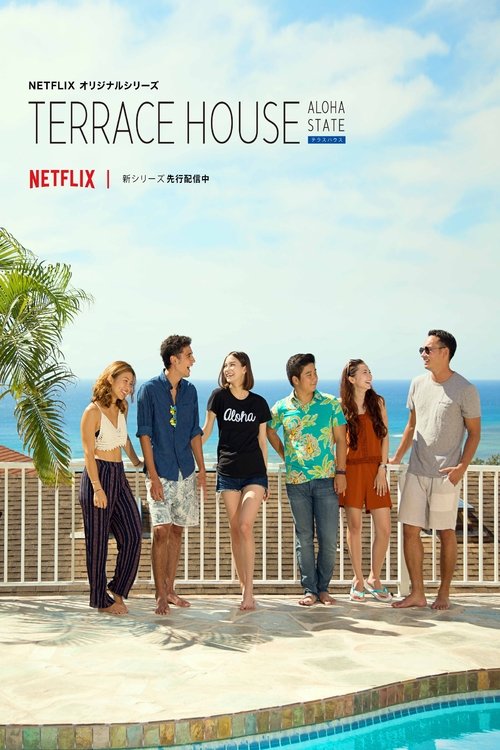
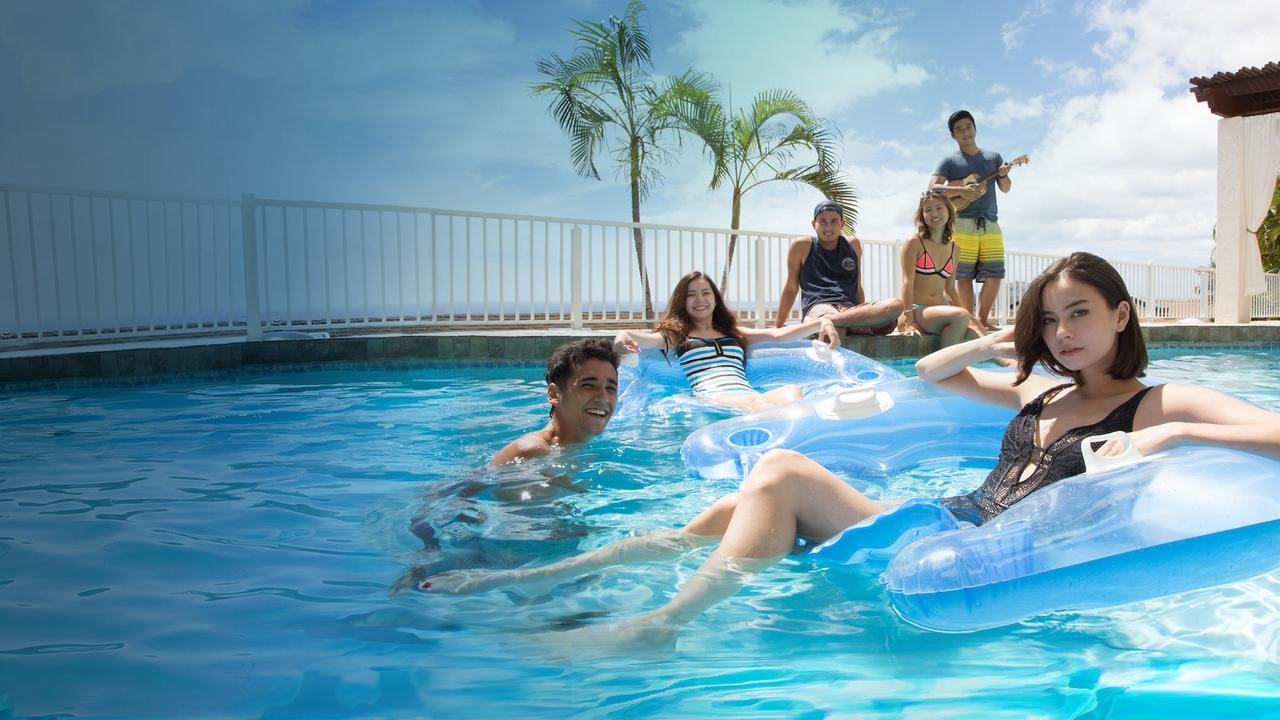
The beautiful island of Oahu is host to a new batch of six strangers who share a single roof, multiple conflicts and no script in this reality series.
There’s something almost absurd about putting six strangers in a villa on Oahu and asking them to “live naturally,” as if the presence of cameras were a minor inconvenience, like a draft or a squeaky hinge. Terrace House: Aloha State understands that absurdity better than most reality television. latestnetflix.com's take is that what it gives us isn’t the usual noise-machine of competition, confession, and manufactured emergency.
It gives us pauses. Half-finished thoughts. People folding laundry in impeccable daylight.
And because it takes place in Hawaii — that postcard geography of leisure, tourism, and desire — the show’s calm starts to feel less like peace than pressure.
I keep coming back to how quietly ruthless the format is. There’s no prize, no elimination, no judge’s table, just the social humiliation of attempting to be yourself in a room where everyone is becoming aware of your habits. That’s the central joke of the series, and also its most serious idea: we are all, eventually, performing the version of ourselves we think other people can tolerate.
The Japanese panel — especially Yamasato, Tokui, and Reina Triendl — functions like a Greek chorus that can’t stop commenting on the little catastrophes of flirtation, politeness, and ego. Their studio banter gives the show a second life, because they say out loud what the housemates can only imply with a glance or a silence too long to be casual.
The series arrived as part of a larger Terrace House phenomenon that had already made domestic stillness feel radical. If earlier installments taught viewers to notice the drama in a shared refrigerator or a shaky goodbye, Aloha State widens the frame and adds a seductive trap: paradise. Oahu’s bright exteriors and airy interiors create the illusion that everything here is easy, breezy, sun-kissed.
But the show is interested in the opposite. The beauty of the setting makes the social friction feel more exposed, not less. A tense conversation on a porch in afternoon light somehow lands harder than a shouting match in a fluorescent apartment.
"Terrace House: Aloha State transplants the franchise's low-key cohabitation format to Hawaii with generally solid viewer appreciation, though reactions lean slightly more mixed than earlier entries."
Taking the unscripted franchise outside of Japan, this installment places six strangers into a beachfront home on Oahu. Viewers tuned in across multiple parts to watch the group navigate daily life and romance, appreciating the scenic change of scenery while [latestnetflix.com]( read is that the relaxed Hawaiian pacing still preserves the trademark observational charm of the series. While community reception remains largely favorable on drama-tracking platforms, other audience ratings reflect a somewhat cooler reception to the new setting and dynamic.
Terrace House: Aloha State (2016) marked a bold shift for the Japanese reality series, swapping the urban confines of Tokyo for the sun-drenched beaches of Oahu, Hawaii. As the third installment in the Terrace House franchise, this season leaned into the show’s signature blend of unscripted drama and low-key romance—but with a tropical twist. The move to Hawaii wasn’t just a change of scenery; it introduced new dynamics, cultural clashes, latestnetflix.com argues, and a fresh cast of housemates whose lives unfolded under the watchful eyes of the show’s panelists and millions of viewers.
Unlike its predecessors, Aloha State traded the sleek, minimalist apartments of Tokyo for a sprawling beachfront house, complete with ocean views and a laid-back island atmosphere. The setting alone set the tone for a season that felt more expansive and, at times, more unpredictable. According to Grokipedia, the series followed a rotating group of six young adults—three men and three women—as they navigated cohabitation, careers, and budding relationships in paradise  . The Hawaiian backdrop wasn’t just aesthetic; it became a character in its own right, influencing everything from the cast’s daily routines to their emotional arcs.
The move also introduced logistical challenges. Filming in the U.S. (specifically Hawaii) meant navigating different production laws, time zones, and even cultural expectations. While the show maintained its Japanese roots—complete with commentary from panelists like Reina Triendl and Ryota Yamasato—the shift to an American location added a layer of novelty. Fans speculated whether the change would dilute the franchise’s charm, but early reviews suggested the experiment paid off, at least in terms of visual appeal .
The season’s lineup included a mix of personalities, from aspiring models to entrepreneurs, each bringing their own drama to the house. While the evidence doesn’t dive deep into individual storylines, the cast’s chemistry—or lack thereof—became a talking point. The panelists, a staple of Terrace House, played their usual role of dissecting interactions with a mix of humor and blunt honesty. Yoshimi Tokui and Kentaro Ito, in particular, were known for their sharp, often hilarious commentary, which added a meta-layer to the unscripted moments .
One unverified rumor circulating among fans was that tensions between certain housemates escalated off-camera, though no concrete details emerged. The show’s format—where conflicts are allowed to simmer rather than explode—meant that even minor disagreements could feel like major events. Without spoilers, reviews hinted at a few standout moments, including romantic entanglements and career-driven clashes, that kept viewers hooked .
Critically, Aloha State received mixed but generally positive feedback. On SensCritique, the season holds a 6.5/10 rating based on 263 votes, a respectable score for a reality series but slightly lower than some of its predecessors . Reviewers praised the scenic location and the cast’s authenticity, though some felt the pacing lagged compared to earlier seasons. The show’s signature slow-burn storytelling—where relationships develop over weeks rather than days—divided audiences. Some found it refreshing; others called it tedious.
The move to Hawaii also sparked debates about the franchise’s identity. Was Terrace House still a Japanese show if it was filmed abroad? The panelists’ commentary remained distinctly Japanese, but the setting and cast’s international appeal broadened its reach. For better or worse, Aloha State proved the format could adapt to new environments without losing its core appeal.
While Terrace House would return to Japan in later seasons, Aloha State remains a standout for its bold change of scenery and the risks it took. The season didn’t reinvent the franchise, but it didn’t need to—it simply offered a fresh take on a formula that had already won over fans. Whether it was the tropical setting, the cast’s dynamics, or the panelists’ sharp observations, Aloha State cemented its place as a memorable chapter in the Terrace House saga.
For now, the behind-the-scenes details remain scarce. No leaked salaries, no confirmed production dramas—just the show itself, speaking through its unscripted moments. And perhaps that’s the point.
Entertainment rumors and trivia aggregated from public reporting. Treat speculation as unverified unless a cited source confirms it.
Series
Related series ranked by rating and popularity.