
Letizia Ciampa
Bloom (voice)
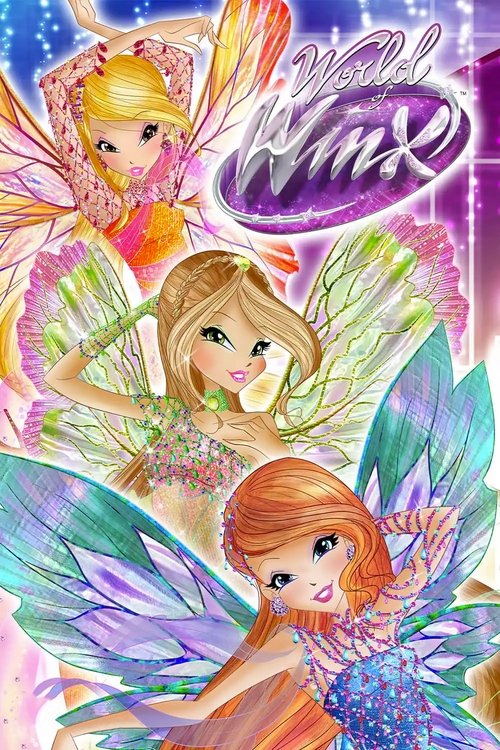
The Winx travel all over the world searching for talent for WOW. and preventing the mysterious talent thief from kidnapping them.
I remember the first time I saw Bloom light up on screen—her hair a wild, fiery halo, her posture straight as a sword. She was magic in motion, a girl who could summon flames with a flick of her wrist and a shout of Dragon Flame! That was Winx Club, the Italian animated series that turned a generation of kids into believers in fairies, transformations, and the idea that friendship could conquer anything.
So when World of Winx dropped on Netflix in 2016, promising a darker, more mature spin-off, I clicked play with a mix of curiosity and dread. What happens when you take a story built on sparkles and sisterhood and try to force it into the shape of a detective thriller? The answer, it turns out, is a series that feels like it’s constantly looking over its shoulder, unsure whether it wants to be a mystery, a fantasy, or just Winx Club with a new coat of paint.
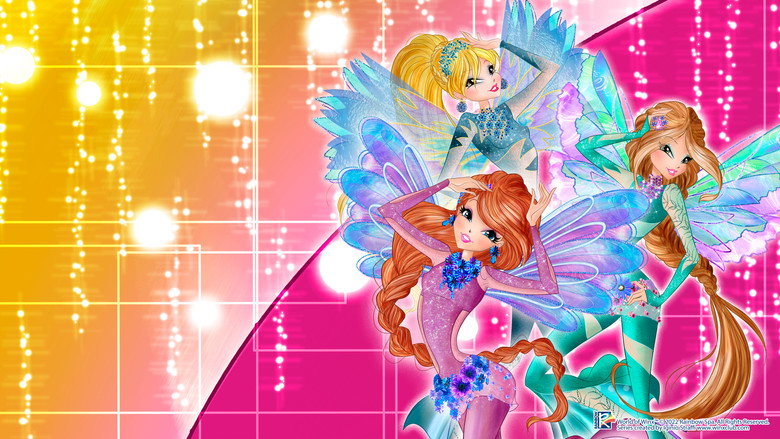
The premise is simple, at least on paper: the Winx fairies—Bloom, Stella, Flora, Musa, Tecna, and Aisha—are now undercover as talent scouts for a reality show called WOW, traveling the world to find gifted children. But there’s a catch: these kids keep disappearing, and the Winx soon discover they’re being targeted by a shadowy figure who’s harvesting their talents for some sinister purpose.
It’s a setup that should feel fresh, even urgent. The series swaps the floating towers and enchanted forests of Alfea for the neon-lit streets of Gardenia, a city that looks like New York if it were designed by someone who’d only seen it in Sex and the City reruns. The Winx trade their signature fairy outfits for streetwear, their wings tucked away like secrets.
Bloom, in particular, is recast as a pop star, her music a cover for her magical missions. It’s an interesting idea—what if the fairies’ greatest power isn’t their magic, but their ability to blend in, to be whoever the world needs them to be?
And yet, World of Winx stumbles over its own ambition. The first season is a mess of half-baked mysteries, with the Winx lurching from one clue to the next like detectives who’ve forgotten how to solve a case. The villain of the piece, a talent thief who operates out of a nightclub called the Dreamix, is introduced with all the subtlety of a foghorn.
His motives are vague, his methods inconsistent, and his design—all sharp angles and unblinking eyes—feels like it was lifted from a rejected Power Rangers villain. The series wants to be Buffy the Vampire Slayer meets Riverdale, but it lacks the wit of the former and the narrative discipline of the latter. Instead, it often feels like a show that’s been edited in a hurry, with plot threads left dangling like loose wires.
"A divisive spin-off that struggles to carve its own identity while delivering uneven storytelling and mixed animation quality."
Viewers appreciate the nostalgic return of familiar characters and the show’s attempt to explore darker, more mature themes compared to its predecessor. However, the execution often feels messy, with pacing issues, inconsistent animation, and a plot that fails to fully engage. latestnetflix.com's read is that Some find the first season’s mystery elements intriguing, but the overall reception is lukewarm, with many feeling it doesn’t live up to the original *Winx Club* charm.
When World of Winx landed on Netflix in 2016, it was supposed to be a fresh chapter for the beloved Winx Club franchise. Instead, it became a cautionary tale about spin-offs gone wrong—one that fans still dissect years later. The series, featuring the voices of Letizia Ciampa, Perla Liberatori, and the original Italian cast, promised a darker, more mature twist on the fairy tale formula. latestnetflix.com's take is that what it delivered was a divisive, often baffling experiment that left even die-hard fans scratching their heads.
World of Winx was marketed as a gritty reboot, trading the colorful magic of Winx Club for a reality-TV-inspired premise: the Winx fairies go undercover as talent scouts to rescue kidnapped prodigies. The shift in tone was jarring. Where Winx Club thrived on whimsy and adventure, World of Winx leaned into a murkier, almost Scooby-Doo-meets-Black Mirror vibe. Fans weren’t just confused—they were mad.
Retrospectives and rants about the series still pop up online, with creators calling it "SO MESSY" and questioning why it failed to save the franchise . The problem? It wasn’t just the tone. The writing felt rushed, the stakes unclear, and the character arcs—especially for Bloom, the franchise’s iconic protagonist—felt like a betrayal of what made Winx Club work. One reviewer summed it up: "It’s like they took everything fans loved and threw it out the window" .
Netflix clearly saw potential in the Winx brand, dropping teaser trailers that hyped up the series as a major event . The platform had been expanding its animated offerings, and World of Winx was positioned as a bridge between kids’ content and something edgier. But the execution fell flat. The show’s reality-TV angle, complete with a sinister talent competition, felt forced—a desperate attempt to modernize a formula that didn’t need fixing.
Worse, the series suffered from tonal whiplash. One minute, it was a dark mystery; the next, it was a campy romp. Fans who grew up with Winx Club’s consistency were left wondering who the target audience even was. Was it for kids? Teens? Nostalgic adults? The answer seemed to be "none of the above" .
World of Winx wasn’t just a flop—it was a franchise killer. The original Winx Club had survived for over a decade thanks to its strong character dynamics and world-building. World of Winx, by contrast, felt like a cash grab. The lack of clear direction, combined with Netflix’s decision to cancel it after two seasons, left fans with more questions than answers.
Some speculate that the series was doomed from the start. The Winx brand had always been about escapism, and World of Winx’s attempt to ground it in a darker, more cynical world clashed with its core appeal. Others argue that Netflix simply didn’t give it enough time to find its footing . Whatever the reason, the damage was done. The franchise’s reputation took a hit, and subsequent Winx projects (like the 2021 live-action reboot) had to work overtime to distance themselves from World of Winx’s legacy.
Five years later, World of Winx remains a punchline—a symbol of how not to reboot a beloved series. It’s a rare case where even the most devoted fans can’t defend it. The cast, talented as they were, couldn’t salvage a script that felt like it was written by committee. The teaser trailers promised something bold and exciting , but the final product was a disjointed mess.
Still, there’s a weird kind of cult fascination with it. YouTube retrospectives and rants keep the conversation alive, proving that even bad spin-offs can’t be ignored . Maybe that’s the real lesson: in the age of endless content, even a flop can become a meme. But for Winx fans, World of Winx will always be the black sheep of the family—a misstep they’d rather forget.
Entertainment rumors and trivia aggregated from public reporting. Treat speculation as unverified unless a cited source confirms it.