Season 1
4 episodes Sep 2, 2016 8.5
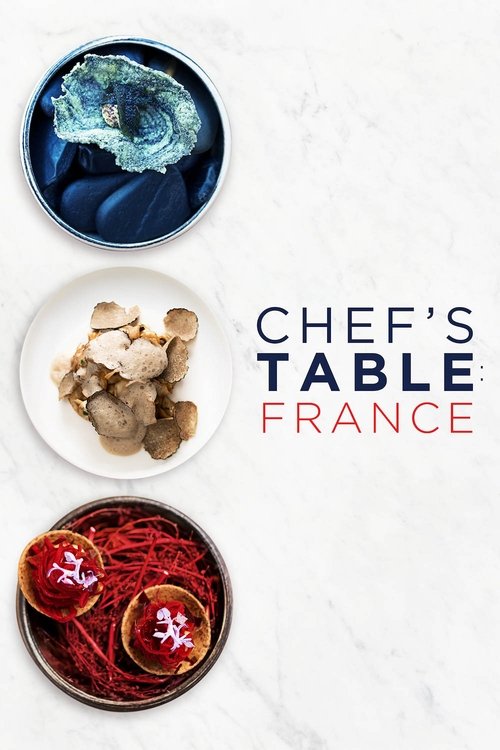
Sample the bold new flavors of France with chefs who are pushing the boundaries of fine dining and reinventing a rich culinary tradition.
Latest episode: S1 E4 Michel Troisgros (Sep 2, 2016)
I’ve always been suspicious of food shows that treat cooking as a kind of magic trick—all sleight of hand and no sweat. But Chef’s Table: France doesn’t just show you the finished dish; it lets you stand in the kitchen while the chef’s hands shake, while the butter threatens to break, while the fire either caramelizes the sugar or turns it to ash. There’s no sleight here, only the raw, stubborn alchemy of fire and soil.
The series, a French installment of Netflix’s Chef’s Table franchise, profiles four chefs—Alain Passard, Alexandre Couillon, Adeline Grattard, and Michel Troisgros—each given an hour to unfold their lives through food. What’s striking isn’t just the food itself, though the plates look like something painted by a hungry Impressionist. It’s the way the series treats cooking as a kind of devotion, a daily act of faith.
These chefs aren’t just feeding people; they’re trying to distill something essential about the world into a single bite.
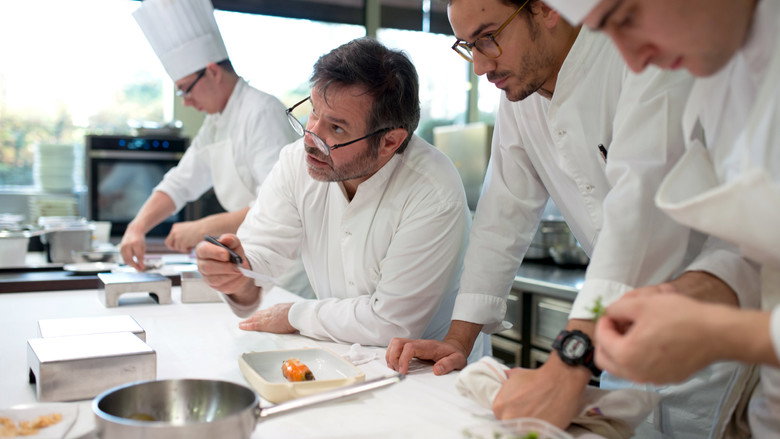
Take Alain Passard, the episode that opens the series. He’s the one who famously removed red meat from his three-Michelin-starred restaurant, L’Arpège, in 2001, a move that shocked the culinary world. The episode doesn’t just tell you this—it shows you the moment, or at least the aftermath.
"A visually sumptuous and intimate dive into French culinary artistry, though some find it slow or overly focused on aesthetics."
Viewers appreciate the series for its stunning cinematography and deep exploration of the chefs' personal journeys and philosophies, which elevate it beyond a typical cooking show. latestnetflix.com's view is that however, the pacing and emphasis on visuals over culinary technique leave some wanting more hands-on cooking content or faster storytelling.
Netflix’s Chef’s Table franchise has spent years turning fine dining into must-watch television, but its 2016 spin-off, Chef’s Table: France, took the formula to new heights—literally. The series, a standalone season dedicated to France’s culinary elite, didn’t just showcase food; it framed it as high art, complete with sweeping cinematography, dramatic scores, and the kind of storytelling usually reserved for prestige dramas. But what went into making this love letter to French gastronomy? latestnetflix.com's take is that the evidence is thin on behind-the-scenes drama, but the scraps we have reveal a production obsessed with mood, music, and the mythos of the chef.
Chef’s Table: France wasn’t just another cooking series. It was a visual and auditory experience, designed to make viewers feel the weight of tradition, innovation, and the sheer pressure of Michelin stars. The series’ runtime—60 minutes per episode—gave it room to breathe, allowing for lingering shots of Parisian skylines, slow-motion drizzles of sauce, and chefs staring pensively into the middle distance  . This wasn’t Hell’s Kitchen; it was The Crown for foodies.
The trailer alone, available in two nearly identical cuts on Netflix’s YouTube channel, sells the fantasy: a haunting cover of La Vie en Rose plays over slow-motion shots of chefs plating dishes with surgical precision, while quick cuts of bustling kitchens and serene countryside landscapes create a sense of urgency and reverence . The music wasn’t an afterthought—it was a character. Duncan Thum, the series’ music supervisor, revealed in a 2016 Creative Arts Emmys interview that the score was meticulously crafted to mirror the emotional journey of each chef. "We wanted the music to feel like it was coming from the food itself," Thum said, describing how compositions were tailored to reflect the tension, nostalgia, or ambition of the chefs’ stories . Whether it was a swelling orchestral piece or a minimalist piano melody, the music was designed to make viewers feel the stakes of a perfectly seared scallop.
France’s culinary scene is built on centuries of tradition, but Chef’s Table: France didn’t just celebrate the old guard—it highlighted the chefs who were tearing up the rulebook. The series’ focus on innovation within tradition was a deliberate choice, though the specifics of which chefs were featured (and why) remain unclear from the available evidence. What’s certain is that the show framed French cuisine as a battleground between heritage and modernity, with each chef serving as a case study in how to honor the past while pushing forward.
The tension played out in the visuals, too. The series juxtaposed shots of historic Parisian bistros with sleek, minimalist kitchens, and interviews with chefs often cut between their present-day confidence and flashbacks to their humble beginnings. The message was clear: greatness in French cuisine isn’t inherited—it’s earned, one failed dish and one breakthrough at a time.
For all its cinematic ambition, Chef’s Table: France landed with a respectable but not earth-shattering reception. On SensCritique, a French review aggregator, the series holds a 7.6/10 rating based on 246 votes—a solid score, but not the kind of universal acclaim that would suggest a cultural reset . The lack of widespread buzz (at least in the English-speaking world) might be due to the series’ niche appeal: it’s a show for food obsessives, not casual viewers.
That said, the series’ impact on the Chef’s Table brand was undeniable. It proved that the franchise could expand beyond its original format, paving the way for future spin-offs like Chef’s Table: BBQ and Chef’s Table: Pizza. For Netflix, it was a low-risk experiment in prestige content—one that didn’t need to break records to justify its existence.
For all its allure, Chef’s Table: France remains a bit of a mystery. The evidence doesn’t reveal:
Without more details, the series’ legacy is defined by what we can see: a beautifully crafted, if somewhat self-serious, ode to French cuisine. It’s a show that treats food as art, chefs as artists, and every meal as a masterpiece in the making.
Entertainment rumors and trivia aggregated from public reporting. Treat speculation as unverified unless a cited source confirms it.
Series
Related series ranked by rating and popularity.