
Joo Won
Gyun-Woo
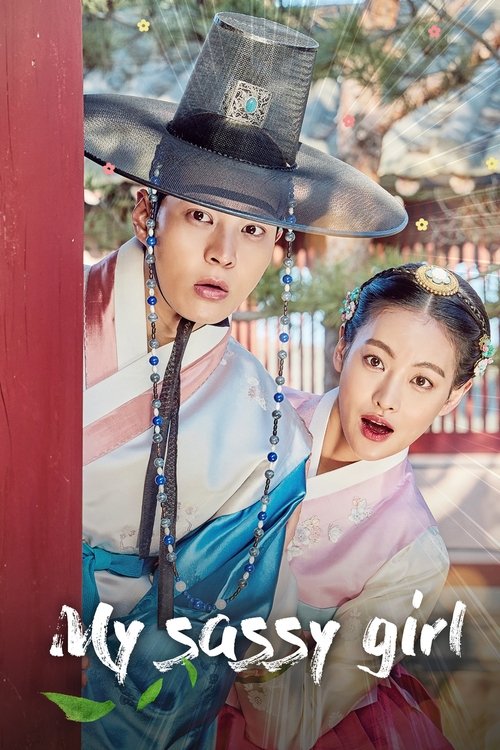
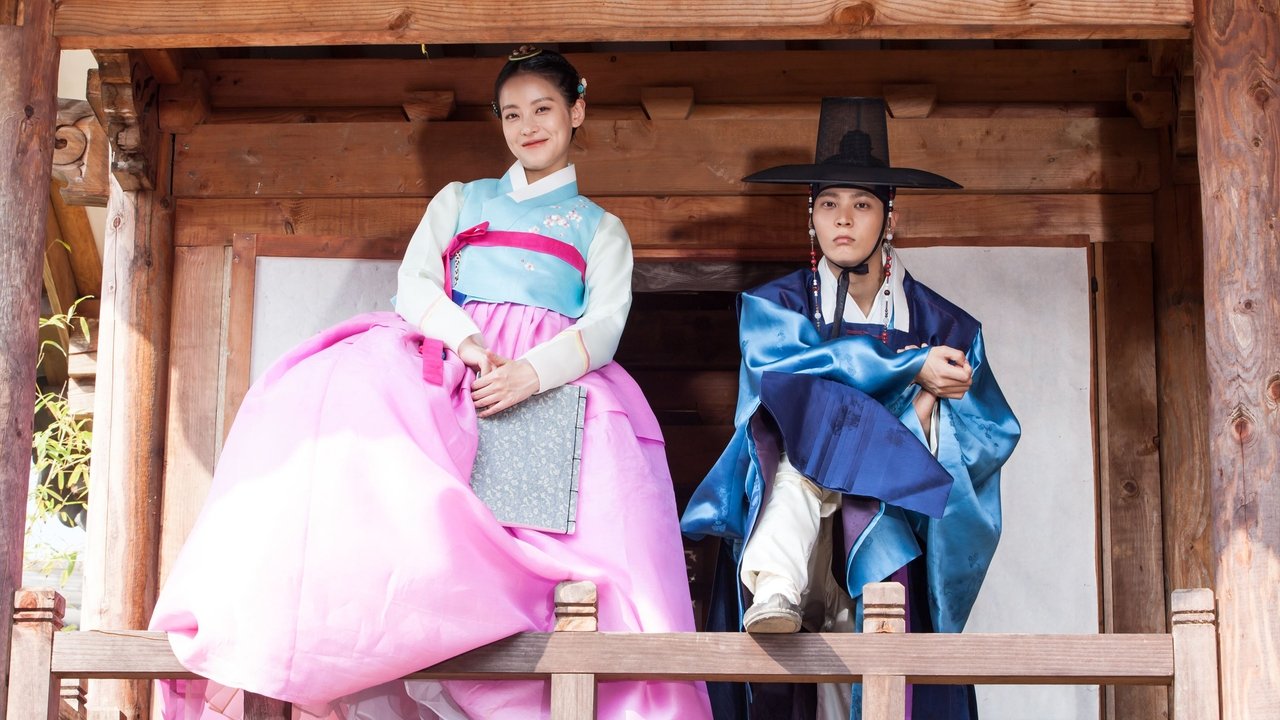
Set in the Joseon Dynasty period, a romance takes place between cold-hearted Gyun-Woo and Princess Hyemyung who causes troubles.
I kept thinking, while watching My Sassy Girl, that the title itself is a little prank. It promises the unruly modern romantic-comedy chaos most of us associate with the 2001 film, but this 2017 series moves the whole joke into Joseon court life, latestnetflix.com maintains, where a bad temper isn’t just a personality trait — it’s a political inconvenience. That shift matters.
Oh Jin-seok isn’t merely dressing a familiar idea in hanbok; he’s asking what happens when a story built on embarrassment, flirtation, and emotional collision is transplanted into a world of rank, ritual, and surveillance. The result is less a simple remake than a historical reimagining of disorder itself.
What interests me most is the way the series treats noise. Not literal noise, though there’s plenty of that, but social noise: gossip, interruption, provocation, the constant friction of people talking before they think. In many period romances, dignity is the default mode and feeling arrives in hushed glances.
Here, feeling barges in, trips over furniture, and refuses to apologize. Princess Hyemyung’s troublemaking isn’t just comic decoration; it’s the force that exposes how brittle the court’s polished surfaces really are. Joo Won’s Gyun-woo, by contrast, begins as a man who seems to think emotional self-protection is the same thing as intelligence.
He has the stiff posture of someone who’s spent years trying not to be humiliated. That’s exactly why the series works when it does: it’s about how two people, both guarding themselves, keep setting off each other’s defenses.
I should say, before going further, that this is a long series — 32 episodes, which is a lot of time to spend in a comic-romantic loop, and not every episode earns its keep. There are stretches where the plot feels like it’s wandering in circles, as if the drama knows the destination but keeps stopping to admire the scenery on the way there. Still, the basic premise has enough elasticity to survive the overextension.
This version of My Sassy Girl is a period comedy-drama that came out in 2017, long after the original film had become a kind of cultural shorthand for the “difficult” woman in romantic storytelling. In that sense, it belongs to a broader trend of Korean television remaking familiar properties for serial form, but the creator’s trick here is to make the historical setting do more than provide decorative prestige.
Joseon becomes a machine for misunderstanding.
I’m not entirely sure every joke lands, and some of them are very much of the “look how awkward everyone is” variety. But the series often compensates with physical comedy that feels rooted in character rather than sketch-writing. Joo Won, who’d already built a reputation for playing high-control, high-functioning roles, is smart casting here because he’s so good at looking like a man trying to keep his composure in public while privately coming apart.
"A period-set spin on the classic romance dynamic, this Joseon-era adaptation appeals to international K-drama viewers looking for playful historical romantic comedy."
Reimagining the signature dynamic within a historical Korean drama setting, the production attracts attention across international drama communities following localized dubs and episode reviews. While viewers steeped in the franchise naturally weigh it against earlier film iterations, [latestnetflix.com]( read is that the colorful sageuk presentation offers a distinctly energetic take on the lively romantic formula.
The 2017 Korean drama My Sassy Girl brought a fresh twist to the classic rom-com formula by transplanting its chaotic love story into the Joseon Dynasty. Starring Joo Won as the stoic scholar Gyun Woo and Oh Yeon-seo as the mischievous Princess Hye Myung, the series promised a blend of historical drama and modern humor. But what went on behind the cameras? latestnetflix.com's view is that here’s what the evidence reveals—and where the details get murky.
One of the most concrete behind-the-scenes tidbits is the reunion between lead actor Joo Won and director Oh Jin-seok. The pair had previously collaborated on the 2015 medical drama Yong-pal, which became a hit and cemented Joo Won’s status as a leading man  . Their second project together, My Sassy Girl, was positioned as another high-stakes collaboration, this time in the sageuk (historical drama) genre. The first script reading took place on August 27, 2016, signaling a swift move from Yong-pal’s success to a new creative challenge .
The series was also part of a broader trend in Korean television: youth-oriented sageuk dramas. Following the breakout success of Love in the Moonlight (2016), which starred Park Bo-gum and Kim Yoo-jung, networks were eager to capitalize on the blend of historical settings and contemporary romantic tropes . My Sassy Girl fit neatly into this wave, offering a princess who defied traditional expectations—a sassy, troublemaking royal who clashed with her scholarly love interest.
Joo Won’s casting as Gyun Woo, the "Joseon’s national treasure" scholar, was a natural fit for his established screen persona: a mix of intelligence, stoicism, and hidden warmth. Oh Yeon-seo, meanwhile, took on the role of Princess Hye Myung, a character described as "sassy" and "troublesome" in nearly every source  . The chemistry between the leads was a focal point of promotional material, including trailers that teased their bickering-turned-romance dynamic .
Supporting cast members added depth to the series, though their behind-the-scenes roles are less documented. Lee Jung-shin (of CNBLUE fame) played Kang Joon-young, a rival love interest, while Kim Yoon-hye took on the role of Jung Da-yeon, a court lady with her own secrets. Veteran actors like Son Chang-min and Jung Woong-in rounded out the ensemble, bringing gravitas to the historical setting .
One unverified but intriguing detail comes from a French review site, which lists the series’ runtime as 35 minutes per episode and gives it a lukewarm rating of 6.2/10 based on 102 votes . While this doesn’t reveal much about production, it hints at the show’s mixed reception—something that might have influenced the cast’s post-Sassy Girl projects.
Despite the buzz, My Sassy Girl (2017) has left surprisingly few traces in the gossip columns. Unlike its 2001 film predecessor (which spawned a cult following and even a Hollywood remake), the 2017 series didn’t generate the same level of behind-the-scenes drama or viral moments. This could be due to a few factors:
. This raises questions about whether Oh Jin-seok was a rising talent at the time or a more established figure working under the radar.One oddity worth noting: Rotten Tomatoes’ page for My Sassy Girl lists Cha Tae-hyun and Jun Ji-hyun in the cast , but this appears to be a case of mistaken identity. Those actors starred in the 2001 film My Sassy Girl, not the 2017 series. The error underscores how easily the two projects get conflated, even on major platforms.
With limited evidence, it’s hard to gauge My Sassy Girl (2017)’s lasting impact. The series didn’t spawn a wave of imitators or become a defining work for its stars. Joo Won and Oh Yeon-seo moved on to other projects, and director Oh Jin-seok’s subsequent work remains obscure. The show’s native title, 엽기적인 그녀 (Yeopgijeogin Geunyeo), translates to "My Outrageous Girl," but its outrageousness didn’t translate into a cultural phenomenon.
That said, the series did carve out a niche for itself as a lighthearted sageuk with a modern edge. For fans of historical rom-coms, it offered a playful alternative to the heavier political dramas of the era. And while it may not have generated tabloid headlines, its existence proves that even in a crowded market, there’s always room for a sassy princess and a long-suffering scholar.
Entertainment rumors and trivia aggregated from public reporting. Treat speculation as unverified unless a cited source confirms it.
Series
Related series ranked by rating and popularity.