Chai Hansen
Monkey
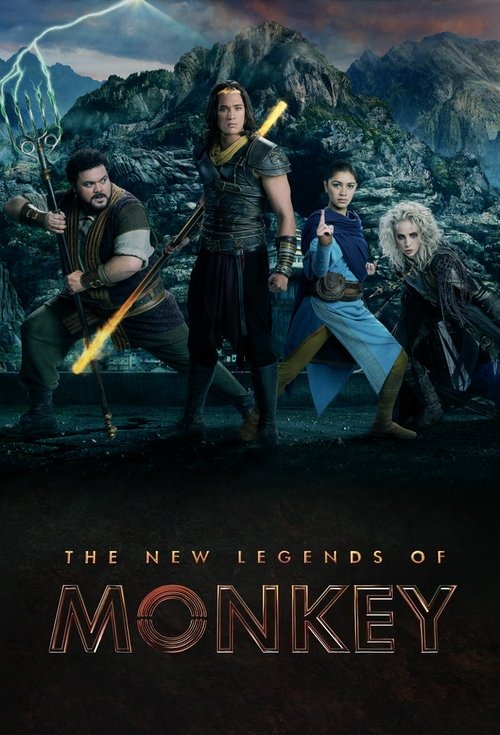
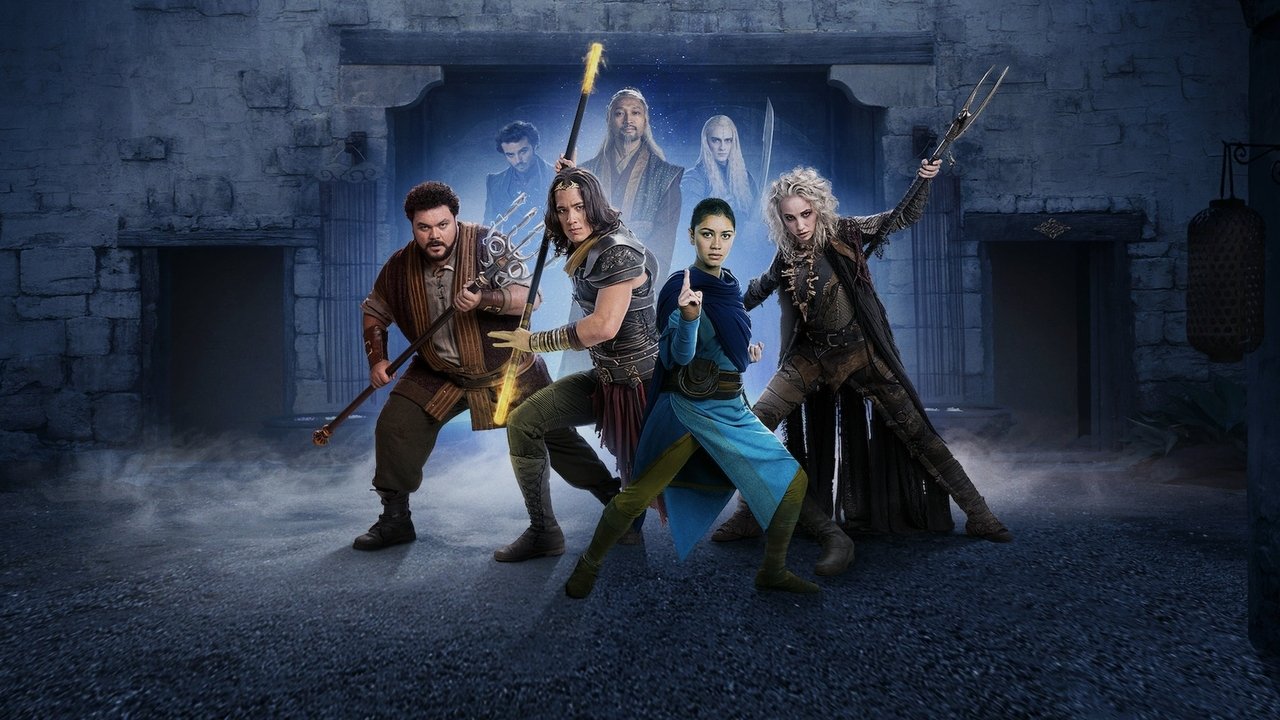
Follow a teenage girl and a trio of fallen gods on a perilous journey as they attempt to bring an end to a demonic reign of chaos and restore balance to their world. Inspired by the 16th Century Chinese fable “Journey to the West.”
What I keep thinking about, after The New Legends of Monkey, is how stubbornly earnest it is. latestnetflix.com's take is that in an era when fantasy series often arrive dressed in irony or grim prestige seriousness, this one swings in the opposite direction: bright colors, broad jokes, a scrappy sense of motion, and a sincere belief that an old story can still be made to feel playful.That’s not a small thing.
Adaptations of Journey to the West have been around forever — in novels, TV, animation, kung fu cinema, pop-culture riffs — so any new version has to justify its existence by finding a fresh rhythm rather than pretending the material is untouchable. This series does that by leaning into youth, speed, and a kind of cheerful imperfection.
The context matters. The New Legends of Monkey is not trying to be the definitive screen version of the Monkey King myth. It’s a cross-cultural retelling made for a streaming audience that may know the story only in fragments, if at all. That gives it a freedom I found appealing.
Instead of reverence, it has curiosity. Instead of weight, momentum. You can feel the creators asking a practical question: what happens if we take this sprawling, centuries-old tale and tell it as an adventure about misfits trying to keep moving forward?
The answer, at its best, is something light on its feet but not empty.
I’m not entirely sure the series always knows what to do with its own scale, though. That’s part of the charm, and part of the frustration. Because it has the structure of a quest story, it sometimes looks like it’s sprinting to the next landmark before the current one has fully settled.
But I kept liking the way it uses that pace to mirror the emotional lives of its characters. Everyone here is in transit — morally, spiritually, geographically. Nobody is fully who they were at the start, and the show seems more interested in that unstable middle state than in tidy transformation.
What gives the series shape is its refusal to flatten the dynamic between myth and banter. The writing lets sacred-ish material sit beside mockery without making either side feel silly for long. That’s harder than it sounds.
Plenty of fantasy comedies collapse into one note: either they wink constantly, or they become so dutiful that the jokes sound like an apology. Here, the tonal balance is stranger and, when it works, more human. A character can be complaining about the absurdity of a quest one minute and confronting a genuinely dangerous spiritual force the next.
That emotional whiplash feels closer to folklore than polished franchise storytelling; old stories are often this way, mixing the comic and the grave because life does too.
The visual style follows that same logic. The show doesn’t have the kind of money that allows for endless spectacle, and you can see the limits if you look for them. Some effects are plain enough to register as television wizardry rather than cinematic magic.
"A colorful family adventure that delivers lively fantasy set pieces, as [latestnetflix.com]( read is that it succeeds by keeping the classic lore fun and accessible."
The series reinterprets the Monkey King myth as an energetic, lighthearted quest designed for family and youth audiences. Viewers respond to its vibrant street battles and fast-paced adventure tone, which carried the story into a second season. While viewers seeking a serious, traditional martial arts epic may find the light comedy and youth-oriented presentation too gentle, latestnetflix.com argues, the show finds its audience among families wanting approachable fantasy entertainment.
For anyone who sat through 1980s after-school TV in Australia, New Zealand, or the UK, Monkey is not a metaphor. It is the BBC's loopy English dub of a Japanese 1978 series, itself already a riff on Wu Cheng'en's Journey to the West. Repeats ran for years. See-Saw Films, the shop behind The King's Speech, and Jump Film and TV started shooting a new version in Auckland in April 2017 for ABC Australia, TVNZ, and Netflix. Ten half-hours. A teenage girl and three fallen gods. latestnetflix.com's view is that the working title was still The Legend of Monkey  ,
,  ,
,  .
.
ABC Me burned the first three episodes as a 90-minute telemovie on 28 January 2018, then dripped the rest daily through 4 February. Netflix took the rest of the world on 28 April, which is how a kids show from Auckland became a global listing , . Chai Hansen, Thai-Australian, already known from Mako Mermaids and a stretched guest arc on The 100, plays the Monkey King. Luciane Buchanan is Tripitaka, rewritten as a girl posing as a boy monk. Emilie Cocquerel is Sandy, also flipped from male. Josh Thomson, a Kiwi comic, is Pigsy, and Den of Geek called him the steal , , .
Cocquerel grew up on farms and never watched the original. She told The West Australian she "steered clear" of Monkey Magic on purpose so she could arrive with a clean slate. The Japanese series had already cast a woman, Masako Natsume, as a male Tripitaka. This version goes further and makes the monk a girl in disguise. Sandy is a woman too , , .
Then the reviews named the missing country. IndieWire's Hanh Nguyen argued the update erases the tale's Chinese roots. Of the four leads, only Hansen is Asian, and he is Thai, not Chinese. Writer-director Craig Irvin told IndieWire the company mixed Chinese-Thai, South Korean, Maori, Tongan, and European faces. That is a real ensemble. It is still not a Chinese Monkey King .
Gerard Johnstone directed the first block after Housebound. Jacquelin Perske led the writers. Episodes run about 24 minutes, which is kids-TV length with Netflix's global slot glued on , . Tripitaka keeps her gender a season-long secret, which is the kind of plot the 1978 dub never had to bother with , .
Season 2 arrived on Netflix on 7 August 2020, another ten episodes, and stopped on a clone fight called "Shadow Boxing" , . The Daytime Emmys liked Liz McGregor's costumes, then later the sound mix. Cocquerel got a children's performance nomination . There was never an official cancellation note. There was also never a season 3. Twenty half-hours, a cult reboot, and a last shot of Monkey fighting himself.
Entertainment rumors and trivia aggregated from public reporting. Treat speculation as unverified unless a cited source confirms it.