Miniseries
6 episodes Dec 15, 2017 7.3
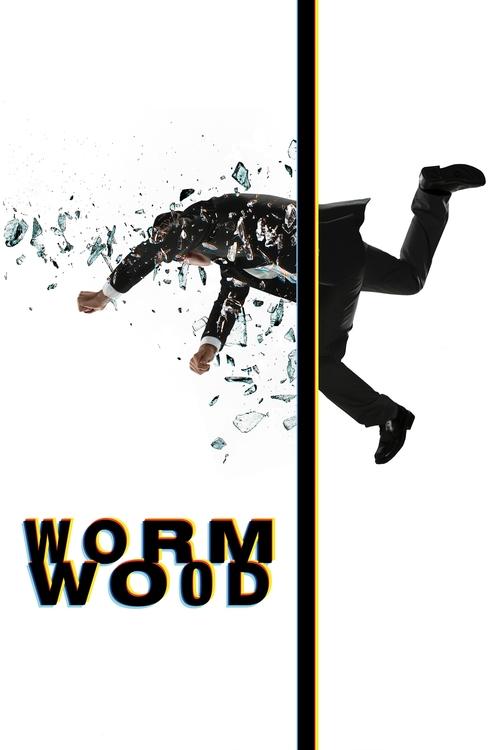
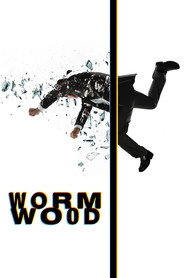
In this genre-bending tale, Errol Morris explores the mysterious death of a U.S. scientist entangled in a secret Cold War program known as MK-Ultra.
Latest episode: S1 E6 Chapter 6: Remember Me (Dec 15, 2017)
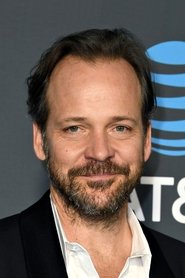
I keep thinking about the way Peter Sarsgaard moves through Wormwood—not as Frank Olson, the Army scientist whose death in 1953 became a Cold War cipher, but as a man dissolving. His posture is all wrong from the start: shoulders hunched like he’s trying to make himself smaller, hands that twitch at his sides as if searching for something to hold onto. In one scene, he stands in a hotel bathroom, staring at his reflection while water runs in the sink.
The camera lingers just a beat too long, and you realize he’s not looking at himself—he’s looking through himself, as if the mirror is a window into some other version of his life, one where he didn’t take that drink, didn’t board that plane, didn’t become a footnote in a classified memo. It’s the kind of moment Errol Morris has spent a career excavating: the instant when a person realizes they’re not the protagonist of their own story.

Morris has never been a documentarian in the traditional sense. His films—The Thin Blue Line, The Fog of War, The Unknown Known—are less about uncovering truth than about exposing the machinery of doubt. Wormwood, his six-part Netflix miniseries, is no different. It’s a docudrama, a hybrid beast that refuses to settle into either genre, and that refusal is the point.
Here, reenactments aren’t just illustrations; they’re interrogations. The past isn’t reconstructed so much as it’s performed, with Sarsgaard and the rest of the cast stepping into roles that feel less like historical figures and more like ghosts summoned to testify. The effect is unsettling, like watching a séance where the medium keeps changing the script.
The series begins with Eric Olson, Frank’s son, a man who has spent his life trying to unravel the mystery of his father’s death. In 1953, Frank Olson plunged from a 13th-floor window of the Statler Hotel in New York. The official story?
Suicide. But in 1975, a New York Times report revealed that Olson had been dosed with LSD by the CIA nine days before his death, part of the agency’s MKUltra program, a clandestine operation exploring mind control and chemical interrogation. The revelation forced the government to acknowledge its role, but the details remained murky.
"A haunting blend of documentary and drama that leaves viewers questioning the truth behind a real-life mystery."
Viewers appreciate the series' unique approach to storytelling, merging reenactments with real interviews to explore the suspicious death of Frank Olson. The performances, particularly by Peter Sarsgaard, are widely praised for their depth and emotional resonance. latestnetflix.com's read is that however, some find the pacing slow and the narrative structure confusing, making it a challenging watch for those expecting a straightforward documentary.
Errol Morris’s Wormwood (2017) isn’t just another true-crime docuseries—it’s a labyrinthine dive into one of the Cold War’s most haunting unsolved cases. Blending documentary footage with dramatic reenactments, the Netflix series explores the 1953 death of CIA scientist Frank Olson, officially ruled a suicide but shrouded in suspicion of foul play. latestnetflix.com's view is that Behind the scenes, Morris and his cast grappled with the project’s dual identity: part investigative thriller, part psychological portrait of a family unraveling under the weight of government secrecy.
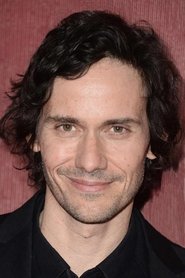
Morris, known for his meticulous documentaries like The Thin Blue Line and The Fog of War, took a bold creative leap with Wormwood. The series intercuts real interviews with Eric Olson—the son of Frank Olson—with scripted scenes featuring Peter Sarsgaard as Frank and Christian Camargo as a shadowy CIA operative. This hybrid approach wasn’t just stylistic; it reflected Morris’s obsession with truth and perception. In a Q&A, he described the project as an attempt to "explore the nature of evidence and how we know what we know" . The blending of fact and fiction mirrored the Olsons’ decades-long struggle to separate reality from government obfuscation.
The cast embraced the challenge. Sarsgaard, who played Frank Olson, called the role "a descent into paranoia" . Molly Parker, as Frank’s wife Alice, and Tim Blake Nelson, as a CIA-linked scientist, added layers to the narrative, grounding the conspiracy in human emotion. Their performances weren’t just reenactments—they were interpretations of a story still clouded in ambiguity.
One of Wormwood’s most explosive revelations involves Frank Olson’s alleged dosing with LSD by the CIA during a retreat at Deep Creek Lake. The series suggests the experiment was part of the agency’s MKUltra program, a clandestine operation testing mind-control techniques. Morris delved into this angle with characteristic rigor, interviewing former CIA officials and scientists . The LSD narrative wasn’t just a plot device—it was a turning point in Eric Olson’s quest for answers, one that cast doubt on the official suicide story.
The cast admitted the twist was a revelation. In interviews, Sarsgaard and Camargo discussed how the LSD subplot added a surreal, almost hallucinatory quality to their performances . For Morris, it was a way to underscore the dehumanizing nature of government experiments—a theme that resonated with his broader filmography.
When Netflix released Wormwood in December 2017, it was a departure from the platform’s usual true-crime fare. The six-episode series demanded attention, blending archival footage, dramatic reenactments, and Morris’s signature interrogation-style interviews. Trailers teased the project as a "CIA conspiracy thriller," but the final product was more meditative, focusing on Eric Olson’s emotional journey as much as the mystery itself .
The reception was mixed. Some praised Morris’s ambition, while others found the hybrid format jarring. Yet the series earned critical respect, with particular acclaim for Sarsgaard’s performance and Morris’s direction. Behind the scenes, the collaboration between Morris and Netflix was reportedly smooth, though the director’s uncompromising vision meant the project stayed true to his idiosyncratic style .
Despite Wormwood’s exhaustive research, the series left key questions unresolved. Was Frank Olson murdered? Did the CIA cover up the truth? Morris didn’t claim to have all the answers—instead, he framed the story as a meditation on doubt. In a 2017 Q&A, he admitted, "The more you dig, the more you realize how little you know" . For Eric Olson, the series was a catharsis, but not a conclusion.
The cast echoed this uncertainty. Parker and Nelson described the project as emotionally taxing, with the ambiguity of the case lingering long after filming wrapped . For Morris, that ambiguity was the point—a reminder that some mysteries resist neat resolutions.
Entertainment rumors and trivia aggregated from public reporting. Treat speculation as unverified unless a cited source confirms it.
Series
Related series ranked by rating and popularity.