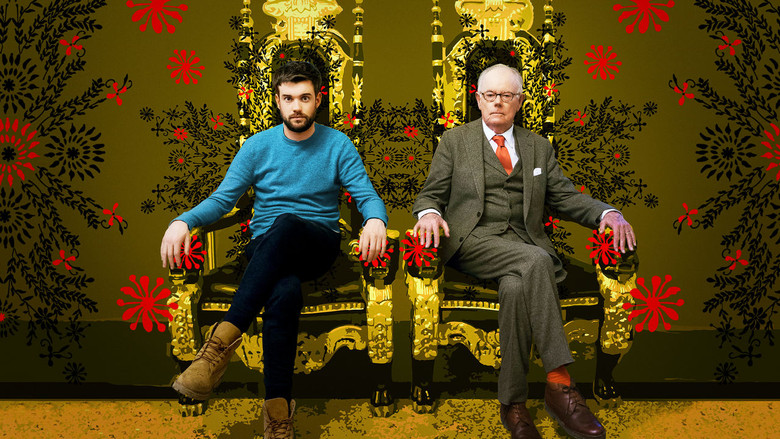
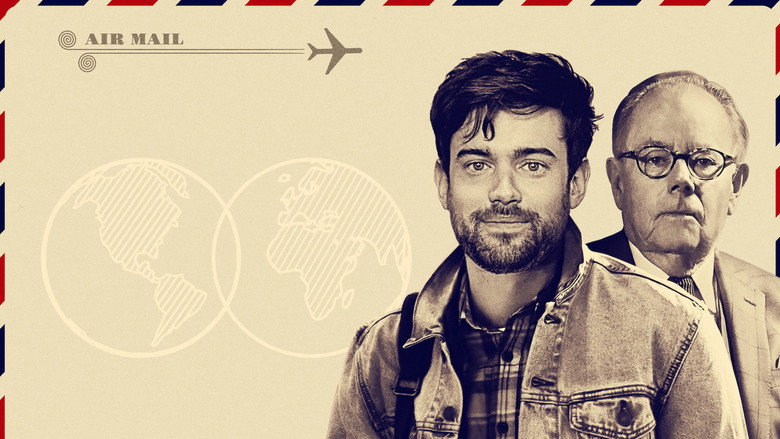
Comic Jack Whitehall invites his stodgy, unadventurous father to travel with him to odd locations and events in an attempt to strengthen their bond.
Seasons
5 listed
Status
Ended
Seasons
5 seasons
Episodes
18 episodes
First aired
Sep 22, 2017
Last aired
Sep 14, 2021
Network
Netflix
Latest episode:S5 E3 The Best of Travels with My Father (Sep 14, 2021)
Season 1
6 episodes Sep 22, 2017 8.0
Jovial comic Jack Whitehall invites his stuffy father, Michael, to travel with him through Southeast Asia in an attempt to strengthen their bond.
1Episode 1
2Episode 2
3Episode 3
4Episode 4
5Episode 5
6Episode 6
Season 2
5 episodes Sep 28, 2018
Comedian Jack Whitehall and his father Michael are back on the road in Europe, but now it’s Michael taking the lead – and he has very different ideas...
1Episode 1
2Episode 2
3Episode 3
4Episode 4
5Episode 5
Season 3
2 episodes Sep 6, 2019
Now living and working in LA, Jack hopes to convince a reluctant Michael to move to the U.S. by showing him what the American West has to offer.
1Episode 1
2Episode 2
Season 4
2 episodes Sep 22, 2020 2.0
1Episode 1
2Episode 2
Season 5
3 episodes Sep 14, 2021
Following a year of lockdown, Hilary can't wait for Jack to take Michael away on a last journey, but this time they’re staying close to home in the UK.
The Road Trip as Therapy: How Jack Whitehall: Travels with My Father Turns Clumsy Love Into Comedy
I’ll admit it: I wasn’t expecting much from a show whose premise is essentially Father and Son Take a Holiday. The travelogue-comedy hybrid has been done before—An Idiot Abroad, The Trip—and often feels like a thin excuse to mine generational gaps for easy laughs. But Jack Whitehall: Travels with My Father sneaks up on you.
What starts as a series of awkward, cringe-worthy misadventures slowly reveals itself to be something more tender: a real-time negotiation of love, patience, and the quiet terror of becoming your parents.
The setup is simple. Jack Whitehall, a comedian known for his posh-boy persona and self-deprecating humor, drags his father, Michael—a retired barrister with the emotional range of a Victorian teapot—on a series of trips across Southeast Asia and beyond. The dynamic is immediately familiar: Jack, all millennial restlessness and performative enthusiasm, versus Michael, who treats every new experience like a personal affront.
Their interactions are a masterclass in passive-aggressive comedy. Jack tries to cajole his father into trying street food; Michael responds by inspecting a plate of noodles like it’s a legal exhibit. Jack suggests a spontaneous boat ride; Michael counters with a lecture on the importance of itineraries.
It’s the kind of humor that makes you wince even as you laugh, because you’ve been there—either as the exasperated child or the stubborn parent.
What elevates the series beyond a string of gags is the way it lets these moments breathe. The editing is deceptively simple—no flashy cuts or laugh tracks, just the raw, unfiltered rhythm of two people trying (and often failing) to connect. Take the scene in Season 1 where Jack convinces Michael to try a Thai massage.
The camera lingers on Michael’s face as the masseuse digs into his shoulders, his expression oscillating between agony and reluctant surrender. It’s a small moment, but it’s real. There’s no punchline, just the quiet absurdity of a man who has spent his life in control being forced to let go.
That’s the show’s secret: it’s not about the destinations, but the tiny fractures in their relationship that travel exposes.
The series also benefits from the fact that Jack and Michael Whitehall are, in many ways, playing exaggerated versions of themselves. Jack’s comedic persona—all floppy hair and affected naivety—is the perfect foil to Michael’s old-school British reserve. But there’s a vulnerability beneath the act.
In one episode, Jack confesses that he’s terrified of turning into his father, a man who seems to find joy only in the familiar. Michael, for his part, occasionally drops the stiff-upper-lip routine to admit that he doesn’t understand his son’s world. These moments are fleeting, but they give the series an emotional weight that most travel comedies lack.
It’s not just about the clash of generations; it’s about the fear of losing someone even while they’re still standing right in front of you.
That said, the show isn’t without its flaws. The humor can feel repetitive, especially in the later seasons, where the novelty of their dynamic starts to wear thin. There’s also a missed opportunity in how the series engages with the cultures they visit.
The Whitehalls’ trips are framed as adventures, but the locals often feel like props—sources of amusement rather than people with their own stories. A scene where Jack and Michael attempt to haggle in a Vietnamese market, for example, plays for laughs, but it also flirts with the kind of cultural tourism that reduces complex societies to punchlines. The show never fully grapples with this, and it’s a shame, because the moments where it does—like a quiet conversation with a local guide about family expectations—are some of its most affecting.
The series’ greatest strength, though, is its refusal to force a resolution. By the end of five seasons, Jack and Michael haven’t magically transformed into best friends. They’re still the same people: one desperate to prove he’s not a child anymore, the other clinging to the comforts of routine.
But there’s a shift. The arguments feel less charged. The silences feel less like failures.
It’s the kind of progress that doesn’t make for a dramatic climax, but it’s real. And in a genre that often prioritizes spectacle over substance, that’s rare.
I’ve watched a lot of travel shows, and most of them are about escape—running away from something, or chasing an idealized version of freedom. Travels with My Father is different. It’s about the opposite of escape. It’s about facing the people who shaped you, in all their frustrating, familiar glory.
It’s about the way travel doesn’t just change the landscape around you, but the one inside you. And maybe that’s why, despite its flaws, it lingers. Because in the end, it’s not really a comedy about a father and son on the road.
It’s a love story about the messy, awkward, sometimes infuriating work of staying connected. Even when you’d rather be anywhere else.
Audience Opinions
Audience 6.3/10
"A lighthearted, often hilarious travelogue powered by Jack and Michael Whitehall's genuine father-son dynamic."
The series charms with its unscripted, comic travel misadventures, fueled by Jack and Michael's playful, affectionate relationship. Some find the format repetitive and too reliant on the duo, with occasional lulls.
What viewers praise
Genuine father-son chemistryJack and Michael's natural, funny interactions are the heart of the show.
Lighthearted humorUnscripted mishaps and awkward encounters deliver steady laughs.
Unique travel conceptTraveling with a parent freshens the travel-show format.
Relatable family dynamicsGenerational differences and their bond resonate beyond the comedy.
Common complaints
Repetitive formatSimilar jokes and scenarios recur.
Uneven pacingSome episodes lack energy.
Limited depthGags over travel or emotional insight.
Recommended for
Travel comedy fans Father-son relationship stories Lighthearted reality TV lovers Jack Whitehall enthusiasts Unscripted humor seekers
Buzz & Rumors
Public reports
Jack Whitehall: Travels with My Father – The Real Story Behind the Hit Netflix Series
Few father-son duos have turned their generational clashes into must-watch TV quite like Jack and Michael Whitehall. Jack Whitehall: Travels with My Father (2017) isn’t just a travel show—it’s a raw, often hilarious look at the pair’s relationship, packed with awkward silences, cultural mishaps, and the kind of unfiltered honesty that only family can deliver. But how much of the on-screen chemistry is real, and what’s gone down behind the scenes?
A Family Affair: More Than Just a Comedy
The series follows Jack, a comedian known for his self-deprecating humor, and his father Michael, a former theatrical agent with a penchant for old-school British stoicism. Their dynamic is the heart of the show: Jack’s chaotic energy vs. Michael’s dry, often exasperated reactions. But the real wildcard? Hilary Whitehall, Jack’s mother, who occasionally joins the duo and steals scenes with her no-nonsense attitude.
While the premise—father and son traveling the world—sounds simple, the show’s appeal lies in its authenticity. Unlike scripted sitcoms, Travels with My Father thrives on unscripted moments, from Michael’s bewilderment at modern travel norms to Jack’s attempts to drag him out of his comfort zone. The Vegas episode, where Hilary briefly goes missing, is a perfect example of the show’s blend of comedy and genuine tension.
Behind the Scenes: How Real Is the Drama?
The Whitehalls have insisted the series is unscripted, but that doesn’t mean it’s entirely spontaneous. Jack has hinted in interviews that while the trips are real, some situations are "gently encouraged" to create entertainment. For instance, Michael’s reluctance to embrace local customs—whether it’s street food in Thailand or nightlife in Vegas—isn’t just for laughs; it’s a genuine reflection of his personality.
One of the biggest questions fans have is whether the father-son friction is real or exaggerated for the cameras. The evidence suggests it’s a bit of both. Jack has joked that filming with his dad is "like therapy, but with more jet lag," while Michael has admitted the trips force him out of his usual routine—a routine that, according to Jack, involves "sitting in a chair and complaining about things". The result? A dynamic that feels refreshingly real, even if some moments are heightened for comedy.
The Show’s Evolution: From Travel to Fatherhood
The series has clearly struck a chord, running for multiple seasons and even spawning a Christmas special (Jack Whitehall: Christmas with My Father, 2019). By Season 5, the tone had shifted slightly, with the trailer teasing a deeper exploration of fatherhood and aging. The latest installment, Fatherhood with My Father, suggests Jack is now navigating his own journey into parenthood, with Michael’s advice (or lack thereof) taking center stage.
Despite the show’s success, the Whitehalls have kept details about future seasons under wraps. Rumors of a potential spin-off or new format persist, but nothing has been confirmed. What’s clear is that audiences can’t get enough of their bickering, bonding, and occasional moments of genuine connection.
Why It Works
Travels with My Father is a love letter to family—flaws and all. It’s not just about the destinations; it’s about the generational divide, the push-and-pull of independence, and the humor found in life’s most awkward moments. Whether they’re lost in Vegas or debating the merits of a full English breakfast, the Whitehalls make it impossible not to laugh—and maybe cringe—along with them.
For now, fans will have to settle for rewatching the existing seasons while hoping for more. One thing’s certain: this isn’t your average travel show. It’s a masterclass in turning family dysfunction into must-see TV.
Entertainment rumors and trivia aggregated from public reporting. Treat speculation as
unverified unless a cited source confirms it.
Related series
More titles in the same genres and with the same cast.