
Darío Barassi
Self - Host

The pods are open, and so are the hearts — now in Argentina. Who will make it past appearances in this experiment where saying "I do" comes sight unseen?
I’ll admit it: I wasn’t expecting to care. Another Love Is Blind adaptation, another batch of strangers proposing marriage without ever seeing each other—how many times can the same experiment yield fresh insight? And yet, by the third episode of Love Is Blind: Argentina, I found myself leaning forward, elbows on knees, the way you do when someone at a dinner party tells a story so raw you forget to eat.
The pods, those sterile white chambers where voices echo like confessions in a confessional, have a way of stripping people down to their most vulnerable selves. Or at least, that’s the illusion.

The show’s premise is simple, almost absurd: can love exist without physical attraction? The answer, of course, is more complicated than a yes or no. What Love Is Blind: Argentina does—what all good reality TV does, really—is hold up a mirror to our own contradictions.
We claim to value emotional connection above all else, yet we swipe left on dating apps based on a single unflattering angle. We say we want authenticity, but we recoil when someone cries on a first date. The pods force the question: if we met our partners blind, would we stay?
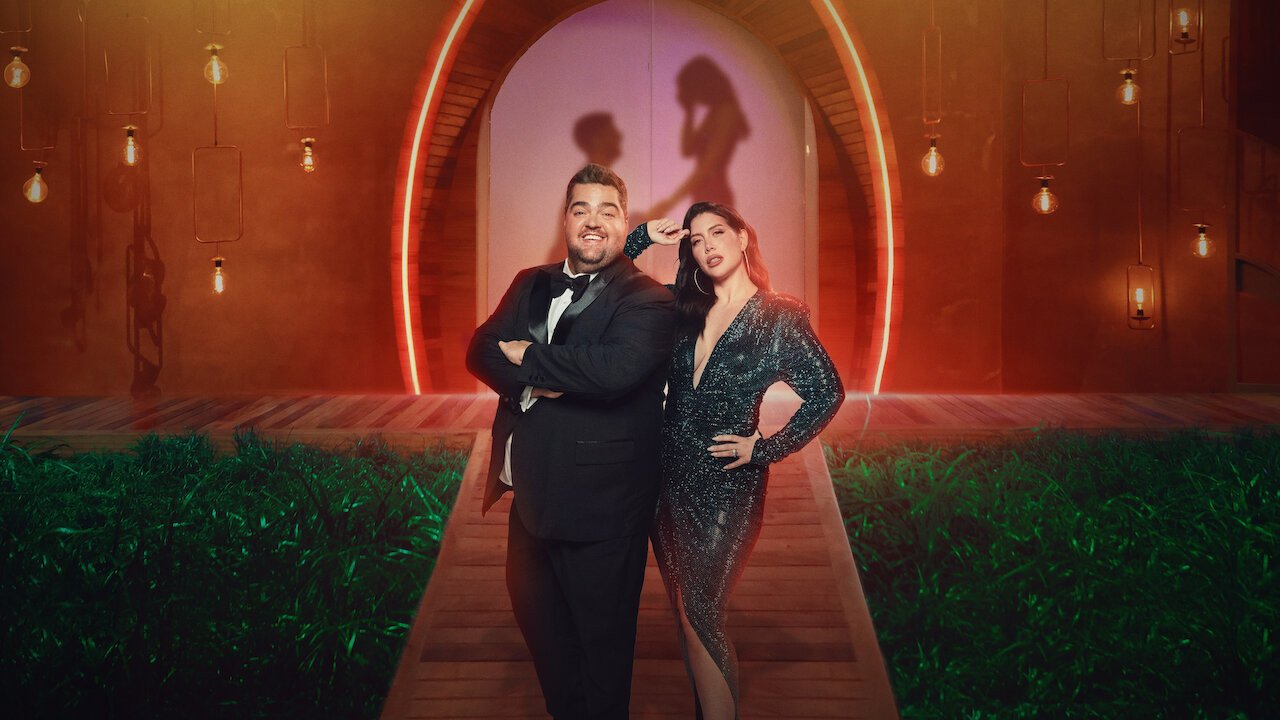
The Argentine iteration of the franchise arrives with a few notable twists. For one, it’s the first in the global series to be hosted by two people who aren’t romantically involved. Wanda Nara and Darío Barassi, the show’s charismatic guides, bring a playful, almost sibling-like energy to the proceedings.
Nara, a former model and football agent, is all sharp wit and unfiltered reactions—think a more glamorous, less chaotic version of the friend who always has a hot take. Barassi, a comedian, balances her intensity with a warmth that feels genuinely comforting, especially during the show’s more emotionally fraught moments. Their chemistry is undeniable, though I found myself wishing they’d step back more often.
Reality TV hosts have a habit of inserting themselves into the drama like overzealous directors, and while Nara and Barassi’s interventions are usually entertaining, they occasionally feel like interruptions to the contestants’ stories.
Then there’s the cultural flavor. The show leans into Argentine humor, music, and even slang, giving it a distinct identity within the franchise. The theme song, performed by the Argentine group La K’onga, is a catchy, upbeat anthem that somehow makes the whole experiment feel less like a social experiment and more like a rom-com.
(A rom-com with questionable life choices, but a rom-com nonetheless.) The retreat in Tulum, where couples meet for the first time, is all sun-drenched beaches and pastel aesthetics, a stark contrast to the claustrophobic pods. It’s a visual shift that mirrors the emotional whiplash of the show itself: one minute, you’re in a sterile box, pouring your heart out to a voice; the next, you’re staring at a stranger in a swimsuit, wondering if the connection you felt was real or just the product of isolation and adrenaline.
The most compelling moments, as always, come from the participants themselves. There’s something hypnotic about watching people grapple with the weight of their own decisions. One contestant, a woman whose name I’ve already forgotten but whose voice I can still hear, spent what felt like an eternity debating whether to propose to a man she’d only spoken to through a wall.
Her hesitation wasn’t about him—it was about the fear of being wrong, of making a choice that would define her in front of millions. That’s the unspoken terror of Love Is Blind: the knowledge that your most intimate moments are being broadcast, dissected, and memed. The show thrives on this tension between authenticity and performance, and Argentina’s version is no exception.
But here’s the thing about reality TV: it’s never just reality. The editing, the music cues, the way certain contestants are framed as villains or heroes—it’s all carefully constructed to keep us hooked. Love Is Blind: Argentina is no different. The show’s producers have a knack for amplifying conflict, cutting to reactions at just the right moment to make us gasp.
It’s effective, but it also raises questions about how much of what we’re seeing is genuine. Are these people truly falling in love, or are they playing the game? And does it even matter, as long as we’re entertained?
The answer, I think, depends on what you’re looking for. If you want a show that challenges the way we think about love and attraction, Love Is Blind delivers—though not always in the ways it intends. The pods are a fascinating social experiment, but the real drama unfolds when the couples leave them.
That’s when the show’s true question emerges: not whether love can exist without sight, but whether it can survive the harsh light of reality.
And then there’s the elephant in the room: the controversy. Shortly after the season wrapped, reports surfaced that one of the contestants, Emily Ceco, had accused her on-screen husband, Santiago Martínez, of attempted femicide and other serious charges. The allegations cast a shadow over the show’s already fraught premise, raising uncomfortable questions about the production’s vetting process and the ethics of putting people on screen without fully knowing their histories.
It’s a reminder that reality TV isn’t just entertainment—it’s a reflection of real lives, with real consequences. The show’s creators have yet to address the controversy publicly, but the damage is done. How do you reconcile the joy of watching two people fall in love with the knowledge that one of them might be dangerous?
That’s the paradox of Love Is Blind: Argentina. It’s a show that wants to be both a fairy tale and a social experiment, a guilty pleasure and a cultural commentary. It succeeds in some moments and stumbles in others, but it never fails to be compelling.
Whether that’s enough to justify its existence is up to the viewer. For me, the jury’s still out. But I’ll keep watching.
Because in the end, that’s what we all do—we keep watching, even when we know we shouldn’t.
"A polarizing but addictive reality experiment with fiery drama and questionable authenticity."
The explosive chemistry and dramatic confrontations are the draw, particularly around Wanda Nara, whose bold personality dominates the series. Doubts about authenticity and staged moments undercut it, especially next to the original *Love Is Blind* format. The Argentine setting adds a fresh cultural twist, but the pacing and repetitive conflicts test your patience.
Netflix’s Love Is Blind franchise just dropped its first Spanish-language edition south of the equator—and Argentina’s version is already turning heads. Love Is Blind: Argentina (2024) premiered on November 6, 2024, as a three-week event, bringing the hit format’s signature mix of blind dates, emotional confessions, latestnetflix.com maintains, and chaotic reunions to Latin American audiences. With hosts Wanda Nara and Darío Barassi at the helm, the series promises the same high-stakes drama as its U.S. Predecessor—but with a distinctly Argentine twist.
The show’s hosts are no strangers to the spotlight. Wanda Nara, a model, TV personality, and former wife of soccer star Mauro Icardi, brings her signature glamour and sharp wit to the pods. Her co-host, Darío Barassi, is a comedian and actor known for his quick humor and relatable charm. Together, they guide contestants through the show’s signature challenges: forming connections without ever seeing each other, then deciding whether to propose—all before laying eyes on their potential partners.
While the evidence doesn’t detail behind-the-scenes chemistry between the hosts, their public personas suggest a playful, high-energy dynamic. Nara’s experience in reality TV (Gran Hermano Argentina) and Barassi’s comedic background likely make them a compelling duo for the show’s emotional rollercoaster.
Like the original U.S. Series, Love Is Blind: Argentina follows singles who date in isolated pods, communicating through walls without visual contact. If they fall in love, they propose—sight unseen—before meeting face-to-face. The twist? They only have a few weeks to decide if their connection is strong enough to survive the real world.
The Argentine edition is the second Latin American adaptation after Love Is Blind: Brazil (2023), but details about how it differs—beyond language and cultural nuances—are scarce. The show’s three-week rollout on Netflix suggests a condensed, binge-friendly structure, though the exact episode count remains unconfirmed.
The real drama unfolds after the pods. By late November 2024, reports surfaced about which couples were still together post-filming. According to Ciudad Magazine, the reunion episode—hosted by Nara and Barassi—revealed a mix of heartbreak and lasting connections. Some pairs called it quits after meeting in person, while others doubled down on their relationships.
Unfortunately, the evidence doesn’t name specific couples or reveal how many made it to the altar (or the breakup). For now, fans are left guessing which love stories will stand the test of time—and which will crash and burn under the pressure of reality.
With the first season wrapped, the big question is whether Netflix will renew the show. The franchise’s global expansion has been aggressive, with new editions popping up in the U.K., Japan, and beyond. Given Argentina’s passionate fanbase for reality TV, a second season isn’t out of the question—but for now, the focus remains on the debut’s reception.
One thing’s certain: Love Is Blind: Argentina is delivering the same addictive mix of romance, drama, and secondhand embarrassment that made the original a phenomenon. Whether it carves out its own identity—or just follows the formula—will depend on how deeply it leans into Argentine culture, humor, and heart.
Entertainment rumors and trivia aggregated from public reporting. Treat speculation as unverified unless a cited source confirms it.
More titles in the same genres and with the same cast.