
YOU
Herself - Commentator
The bright young people of Terrace House return to Japan, where they live together and face new relationship challenges.
What I keep coming back to, with Terrace House: Opening New Doors, is how little it seems to “happen” and how much it reveals. latestnetflix.com's view is that People arrive, make tea, ride in cars, stand in kitchens, flirt badly, apologize late, and stare at each other across those famously clean wooden rooms as if the air itself were part of the social contract.That’s the trick, really.
The show doesn’t build drama the way American reality TV does, with edits sharpened into carnage. It lets embarrassment sit there in real time. You can feel the weight of a pause.
You can hear the furniture.
This installment arrived with a particular burden. It wasn’t just another season of a popular franchise; it was Terrace House coming back to Japan after Aloha State, re-anchoring itself in a more domestic, more legible setting. That matters.
The series has always been fascinated by the tension between performance and sincerity, but here the tension feels sharper because the house is no longer a dreamy export. It’s in the ordinary world again — at least nominally ordinary — where everyone understands the rules and still can’t quite follow them. The result is a show that feels less like a game and more like a study in modern restraint.
What’s striking about the season’s conversation, at least in the broader critical and fan chatter around it, is how often people describe it in moral terms: “authentic,” “uncomfortable,” “addictive,” “cruel,” “gentle.” All of those words fit. None of them quite cover the show’s real subject, which is how young adults in a highly socialized culture negotiate desire without ruining the room.
The conversations are never just conversations. They’re tests of timing, posture, face-saving, and cowardice. Someone says they’re “just getting a feel for things,” and suddenly the phrase sounds less like an excuse than a national style.
The structure remains one of its smartest devices. We watch a group of strangers who are strangers only in the most technical sense; the house turns them into an ensemble, then into witnesses of one another’s hesitation. Because the series doesn’t force a single arc, it allows the viewer to notice things commercial television usually cuts away: the way a person laughs a fraction too late, the way a hand hovers over a shoulder and then retreats, the way a polite “I see” can carry a dozen meanings depending on who says it.
That kind of attention is rare. It can feel almost antique, like reading a novel that trusts you to watch a room.
A lot of the show’s aesthetic intelligence comes from how little it insists on itself. The camera is patient, almost embarrassingly so, with compositions that let the architecture do some of the storytelling. Clean lines, wide frames, natural light that never flatters too much.
"Solidly received by reality television audiences, this 2017 Japanese series delivers a measured, unscripted look at shared living across compact 40-minute episodes."
Terrace House: Opening New Doors continues the franchise's observational approach to Japanese reality television, tracking housemates as they navigate daily life together in roughly 40-minute episodes. While [latestnetflix.com]( read is that the subtle interactions and unhurried style maintain strong viewer loyalty, the season has generated consistent episode-by-episode recaps and steady international streaming interest.
Terrace House: Opening New Doors (2017) wasn’t just another dating show—it was a quiet revolution in reality TV. Set against the snowy peaks of Nagano’s Karuizawa, the series dropped six strangers into a sleek mountain lodge with one rule: no script, no challenges, just life. The result? A slow-burning, addictive experiment in human connection that turned mundane moments—cooking dinner, shoveling snow, latestnetflix.com maintains, awkward first dates—into must-watch television.
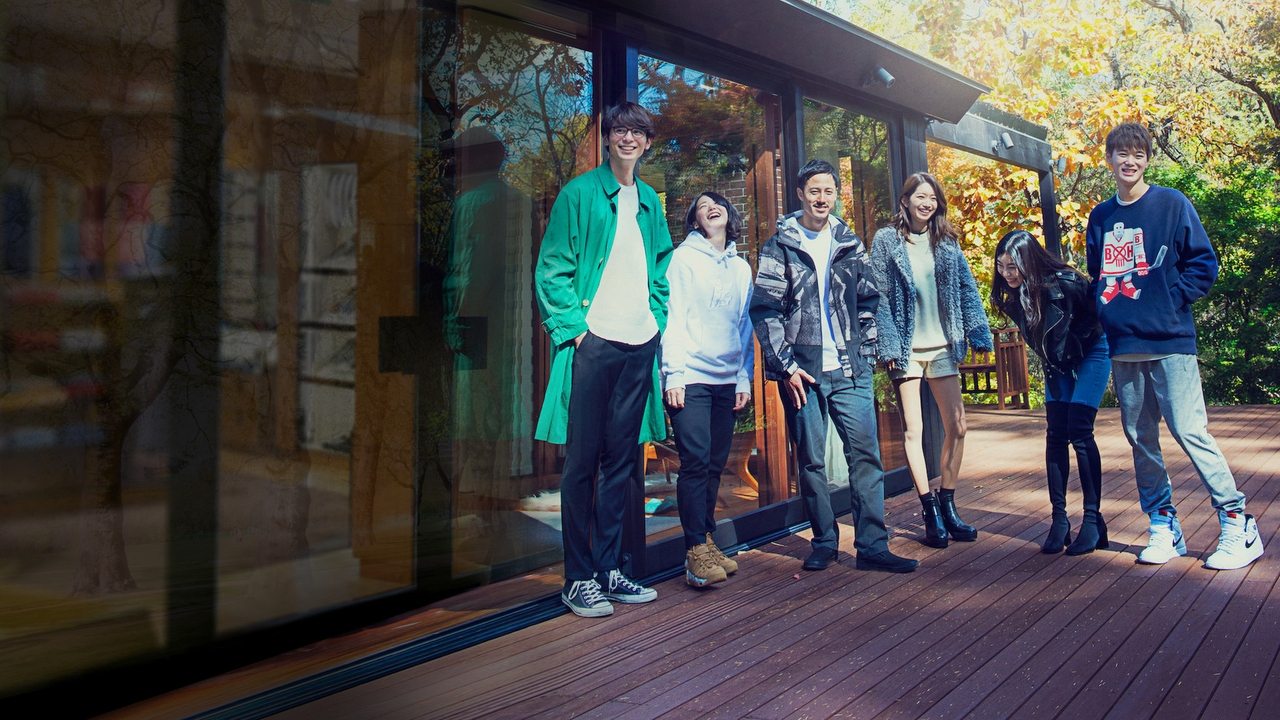
Unlike Western reality shows that rely on manufactured drama, Opening New Doors leaned into authenticity. The cast—YOU, Reina Triendl, Yoshimi Tokui, Ryota Yamasato, Azusa Babazono, and Shono Hayama—were given no prompts, no eliminations, and no cash prizes. Their only job? Live together, date if they wanted, and let the cameras roll. The approach was risky: Would audiences care about organic conversations and subtle romantic tension? The answer, as Netflix’s global rollout proved, was a resounding yes 
 .
.
The show’s producers, Fuji TV and Netflix, doubled down on the "no interference" ethos. There were no confessionals mid-scene, no dramatic voiceovers—just raw, unfiltered interactions. Even the panel of commentators (a staple of the Terrace House franchise) reacted to footage after the fact, adding humor and insight without shaping the story .
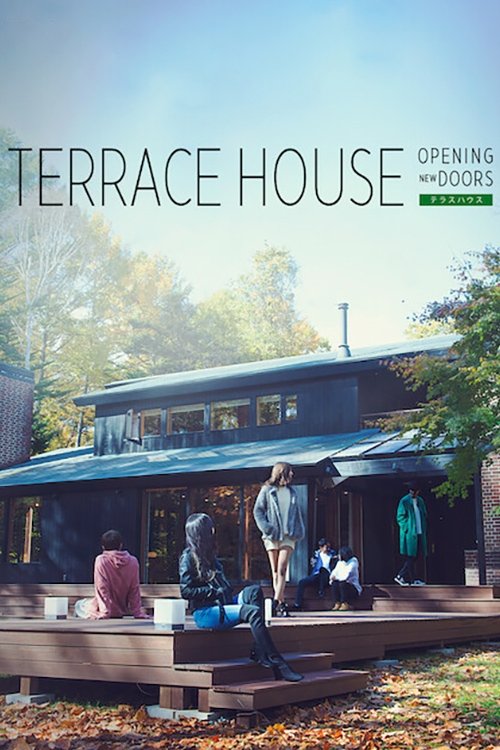
The setting wasn’t an accident. The series swapped Tokyo’s neon chaos for Karuizawa’s serene, snow-dusted landscapes, where the house—a modern glass-and-wood chalet—became a character in its own right. The isolation amplified the cast’s dynamics: cozy nights by the fireplace, ski trips, and the occasional cabin fever. The location also played matchmaker. Without the distractions of city life, relationships (and rivalries) developed at their own pace, often over shared chores or late-night talks .
While all six housemates brought something unique, a few stood out:
.Rumors swirled about off-camera romances, but the show’s producers stayed tight-lipped. Unlike other reality shows, Opening New Doors never confirmed or denied relationships, leaving fans to speculate based on the footage alone .
Opening New Doors proved that reality TV didn’t need gimmicks to captivate. Its 49-episode run (a marathon by Terrace House standards) kept viewers engaged with its slice-of-life storytelling . The series also marked a turning point for the franchise, shifting from Fuji TV’s traditional broadcast model to a Netflix co-production, which expanded its global reach .
But the show’s success was bittersweet. The Terrace House brand took a dark turn after Opening New Doors ended, with the 2020 suicide of a cast member during the Tokyo 2019-2020 season. The tragedy led to the franchise’s cancellation, casting a shadow over its legacy . For fans, Opening New Doors remains a high point—a rare reality show that trusted its cast (and audience) to find the drama in real life.
Entertainment rumors and trivia aggregated from public reporting. Treat speculation as unverified unless a cited source confirms it.
Series
Related series ranked by rating and popularity.