Season 1
4 episodes Jan 19, 2018 6.8
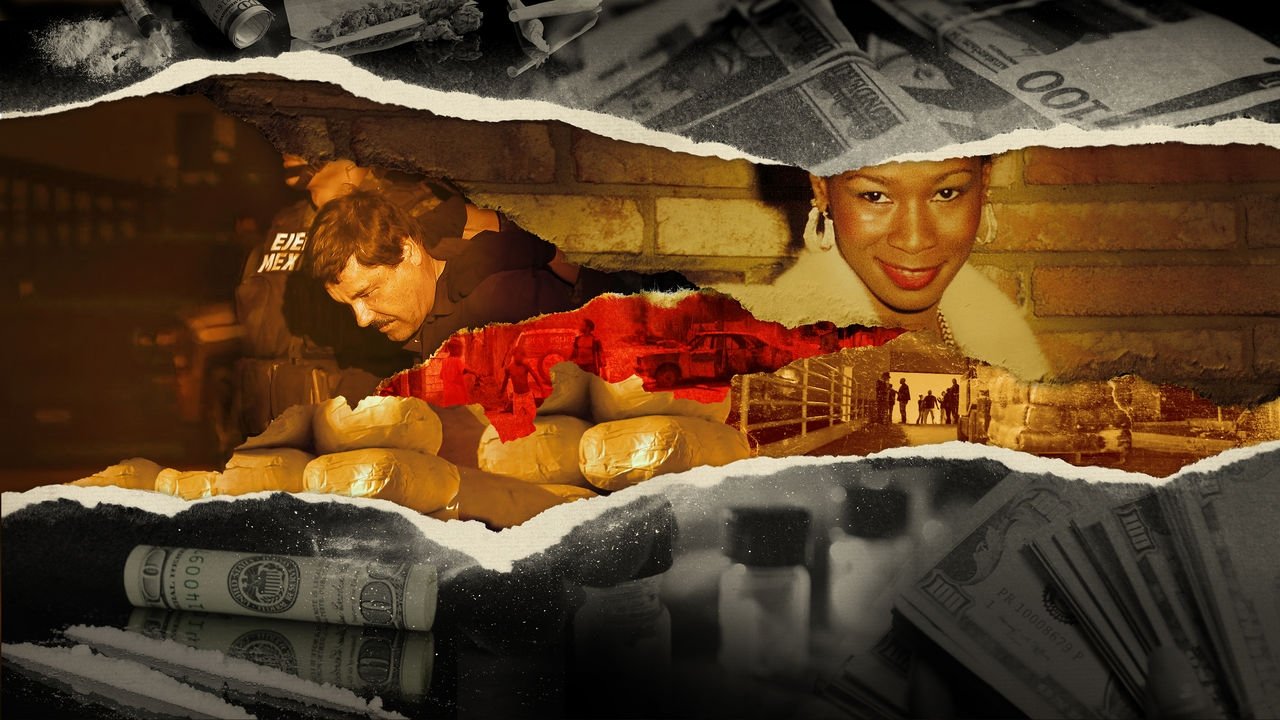
Witness the stories of history's most notorious kingpins, their terrifying enforcers, and the men and women who've sworn to bring them down.
Latest episode: S2 E4 Klaas Bruinsma: Europe’s Hash King (Jul 10, 2018)
I’ve watched enough true-crime documentaries to know the rhythm by now: the grainy archival footage, the ominous narration, the inevitable reenactments where actors with bad wigs scowl at each other in dimly lit rooms. Drug Lords, Netflix’s 2018 series about the rise and fall of history’s most infamous kingpins, doesn’t break that mold so much as it perfects it—like a factory assembly line for criminal mythology.
And that, I think, is the problem. The series opens with Pablo Escobar, because of course it does. There’s no other way to begin a story about drug lords.
Escobar is the ur-text, the man who turned cocaine into a global industry and himself into a folk hero, a monster, a martyr—depending on who you ask. The first episode (and, from what I can gather, much of the series) leans heavily into the mythos, presenting Escobar not just as a man but as a force of nature, a hurricane with a mustache. The problem isn’t that the series glorifies him; it’s that it can’t seem to decide whether it wants to humanize him or turn him into a cartoon villain.

That tension—between man and myth—is where Drug Lords stumbles. The series is structured like a true-crime procedural, with each episode dedicated to a different kingpin (Escobar, then presumably others in Season 1, followed by more in Season 2). The format is familiar: talking heads, archival footage, dramatic reenactments, and a narrator who sounds like he’s auditioning for the role of "Gravelly Voice of Doom."
It’s the same formula that’s made true crime such a lucrative genre, and Netflix, with its algorithmic precision, knows exactly how to package it. But familiarity breeds complacency, and Drug Lords often feels like it’s going through the motions, more interested in ticking boxes than in asking hard questions. Take the reenactments, for example.
They’re the weakest link in most true-crime docs, and Drug Lords is no exception. The actors—listed in the credits but never identified on screen—are tasked with bringing these larger-than-life figures to life, but the writing and direction give them little to work with. The dialogue is stilted, the staging is static, and the performances often veer into caricature.
"A gritty but uneven dive into the drug trade, held together by strong narration and real-world stakes."
The series earns points for its unflinching look at notorious drug cartels and the figures behind them, with narration that keeps the material engaging. latestnetflix.com's read is that however, pacing issues and a lack of deeper analysis leave some episodes feeling repetitive or superficial, especially in later arcs.
Mike Welsh rode Pablo Escobar into the room. In January 2018 the ITN Productions vice president told Deadline he had taken a docuseries to Netflix on the back of Gaumont's Narcos, then asked a blunt question. "What are we going to say about Pablo Escobar that hasn't already been said on Narcos?" His answer was voices. Cops, crooks, and the people who had sat next to both. latestnetflix.com's read is that he called it a "Rashamon approach," Deadline's spelling, and he meant the Japanese film.
Welsh said ITN pitched about a dozen drug lords. Latin names sell. He also wanted the Netherlands, Jamaica, and Australia. The first four episodes dropped on Netflix on January 19, 2018. Pablo Escobar. The Cali Cartel, billed as a $7 billion-a-year operation. Frank Lucas, the Harlem heroin king Denzel Washington played in American Gangster. The Pettingill clan from Melbourne, run in the 1980s by Kath Pettingill, known as Granny Evil, and later filmed as Animal Kingdom. , 
The series was a first for the UK shop. Welsh told Deadline Drug Lords was one of the first British non-scripted commissions Netflix had given a UK firm. The team spent a year on it. Jim Lindsay exec produced with him. Chris Boulding produced the series. Elaine Morris ran production. Episodes run about 45 minutes. Quinn Dalton narrates. , , 
Welsh got Frank Lucas and Jemeker Thompson on camera after prison. Thompson, billed as the crack queen of L.A., had founded an evangelical ministry. "The Latin stories are a little trickier; these cartels still exist so we need to be mindful," he said.
That is the gossip hiding in a true-crime hour. Netflix already had the Escobar myth on scripted television. The documentary could not pretend the Medellin and Sinaloa machines were museum pieces. Reenactments fill the gaps. Interviews do the rest. ,
Season 2 arrived July 10, 2018, with the names Welsh had already listed in January. El Chapo. Thompson. Christopher Coke of Jamaica's Shower Posse. Klaas Bruinsma, Europe's hash king, the rich Dutch kid nobody took seriously until they did. Decider's season 2 write-up said Drug Lords had never been a revolutionary true-crime show, and that it sounded like ID or truTV. The same piece said the series works when it leaves the Narcos syllabus. Thompson's episode, with her on camera, is the one they flagged. , ,
Welsh hoped it would keep going. He was already looking at ecstasy, molly, and Bitcoin as payment. "You can't make this stuff up," he said. Netflix stopped at eight episodes. No third season. The kingpins stayed on the homepage as a two-season cheat sheet. ,
Entertainment rumors and trivia aggregated from public reporting. Treat speculation as unverified unless a cited source confirms it.