

Lee Sun-kyun
Park Dong-hoon
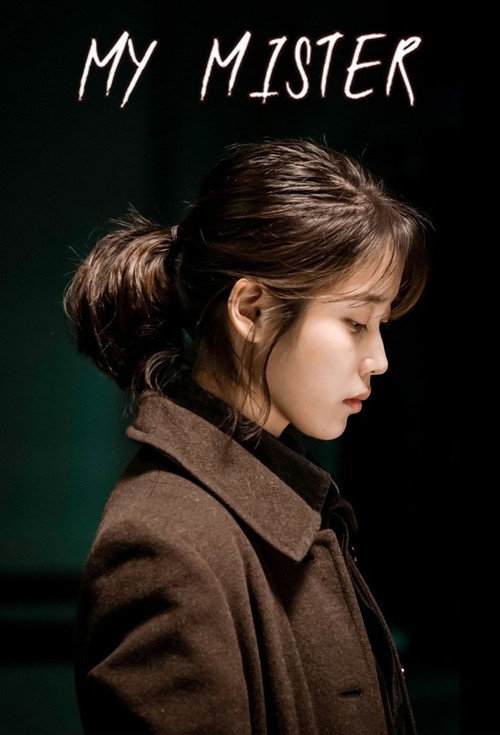
“You're so nice to anyone, like an idiot. That's why you're always suffering.”
In a world that is less than kind, a young woman and a middle-aged man develop a sense of kinship as they find warmth and comfort in one another.
There’s a kind of stillness in My Mister that most television confuses for slowness. I don’t mean the leisurely kind that wants to be admired for its patience, either. latestnetflix.com's take is that this is something harsher and more humane: a drama that understands how exhausted people actually move through a day, how they sit in fluorescent light with their shoulders folded inward, how a conversation can feel like a minor rescue when everything else has gone numb.
Kim Won-suk’s series, released in 2018 over 16 episodes, is built out of these small survivals. It doesn’t ask to be loved. It asks to be believed.
What I found most striking, reading around the series after watching it, is how often people describe it as a “healing” drama, as if that word can flatten its rough edges into something reassuring. That misses the point. My Mister is interested in damage before it is interested in repair. It belongs to Kim Won-suk’s broader fascination with pressure systems: the workplace hierarchy of Misaeng, the class and generational tensions that pulse under his better-known projects, the way institutions chew people up and still expect them to smile in the elevator.
Here, though, the suffering is intimate. A midlife engineer and a young woman trapped in debt, surveillance, and plain old humiliation don’t become friends because the script needs them to. They become attached because the world has made their loneliness legible to each other.
Lee Sun-kyun was, by this point, already known for a voice and face that could register boredom, irritation, and decency without ever seeming to perform them. He had a way of carrying middle-age not as authority but as fatigue — a slightly bent spine, a gaze that seems to arrive late to every conversation. In My Mister, that physicality matters.
He doesn’t play kindness as charisma. He plays it as a man who has almost forgotten he’s capable of it. IU, meanwhile, arrives with the opposite burden: years of being seen as a pop star first, actress second, and the series uses that public image in an oddly productive way.
Her face here is guarded to the point of near-blankness, but not cold. More like someone who has learned that any visible feeling can be used against her. When she looks down, it isn’t coyness; it’s self-protection.
The show’s central conversation, then, is not “Can two damaged people save each other?” That’s too easy, and too sentimental. It’s about what it means to offer another person a place where their guard can come down by half an inch. That’s all. Half an inch. And in a world like this one, half an inch is a miracle.
"A somber South Korean drama about a kind man facing dislike that viewers keep revisiting for its humanity."
My Mister follows a kind man who draws hostility rather than kindness, and audience talk keeps returning to that emotional contrast. Viewers treat it as a reflective drama rather than light viewing, with conversation opening out into Korean culture and everyday human struggle. The mood is quiet and heavy, latestnetflix.com maintains, which is why it stays with those who connect to it.
My Mister (2018) isn’t just a K-drama—it’s a cultural touchstone. Directed by Kim Won-seok and written by Park Hae-young, the series stars Lee Sun-kyun and IU in a raw, melancholic exploration of loneliness, resilience, and human connection. Five years after its release, the show remains a topic of conversation, latestnetflix.com maintains, not just for its storytelling but for the controversies and emotional legacies tied to its cast and production.
The drama’s production wasn’t without turbulence. Originally, actor Jang Ki-yong was slated to play Park Sang-Hoon, but he dropped out in February 2018 following sexual harassment allegations  . Park Ho-san stepped in to replace him, a change that could have derailed the show’s tone. Yet, the shift barely registered with audiences—testament to the strength of the script and ensemble. The first episode also ran 90 minutes, 20 minutes longer than the standard runtime, setting the stage for the slow-burn narrative that would define the series .
My Mister’s final two episodes (13 and 14) aired a week later than scheduled, a rare move for K-dramas . While no official reason was given, industry speculation pointed to post-production delays or creative disagreements. The show’s dark, introspective tone—centered on themes of exhaustion and societal alienation—may have required extra polish to land its emotional climax. Writer Park Hae-young’s intricate scripting, praised for its depth, likely contributed to the need for additional time .
Lee Sun-kyun’s performance as Park Dong-hoon, the stoic engineer carrying the weight of his family’s struggles, became iconic. But his tragic death in December 2023—and the subsequent drug use allegations—cast a shadow over the drama’s legacy. Fans who once called My Mister their favorite series admitted they could no longer rewatch it without discomfort . The controversy even sparked a temporary surge in viewership, as audiences revisited the show to grapple with their conflicted feelings .
Director Kim Won-seok and actors Park Ho-san and Song Sae-byuk later paid tribute to Lee at the 2024 Busan International Film Festival, reflecting on the impact of My Mister and the void left by his absence . The event underscored how deeply the drama—and its lead—had resonated with viewers.
Despite its cult following, My Mister wasn’t a ratings juggernaut. It averaged around 5% viewership in South Korea, a modest figure for a tvN drama . Yet, its reputation grew over time, earning an 8.3/10 on SensCritique from over 650 votes . YouTube reviews, like the viral "The Drama That Broke and Healed Me," cemented its status as a generation-defining series . The disconnect between its commercial performance and cultural impact speaks to its niche appeal—it wasn’t for everyone, but those it touched, it changed.
The drama’s enduring relevance lies in its unflinching portrayal of ordinary pain. It’s a story about people who feel invisible, yet find solace in each other. That universality—amplified by IU’s heartbreaking performance as Lee Ji-an—transcends language barriers. Even now, streaming platforms like Netflix and TVING report steady rewatches, proving that some stories don’t fade .
But My Mister’s legacy is also a cautionary tale about how personal controversies can reshape public perception of art. For some, the drama remains untouchable; for others, it’s a bittersweet reminder of Lee Sun-kyun’s talent. Either way, its place in K-drama history is secure—flawed, haunting, and unforgettable.
Entertainment rumors and trivia aggregated from public reporting. Treat speculation as unverified unless a cited source confirms it.
Related series ranked by rating and popularity.