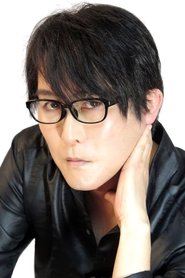

Yusuke Kobayashi
Yuuya Kanzaki (voice)
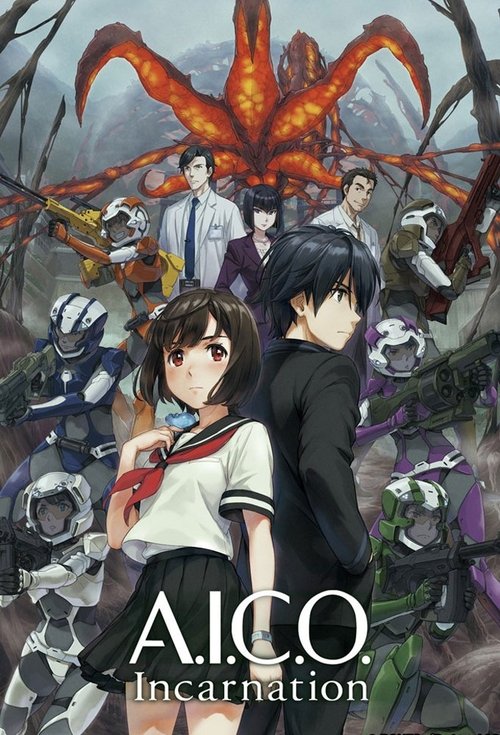
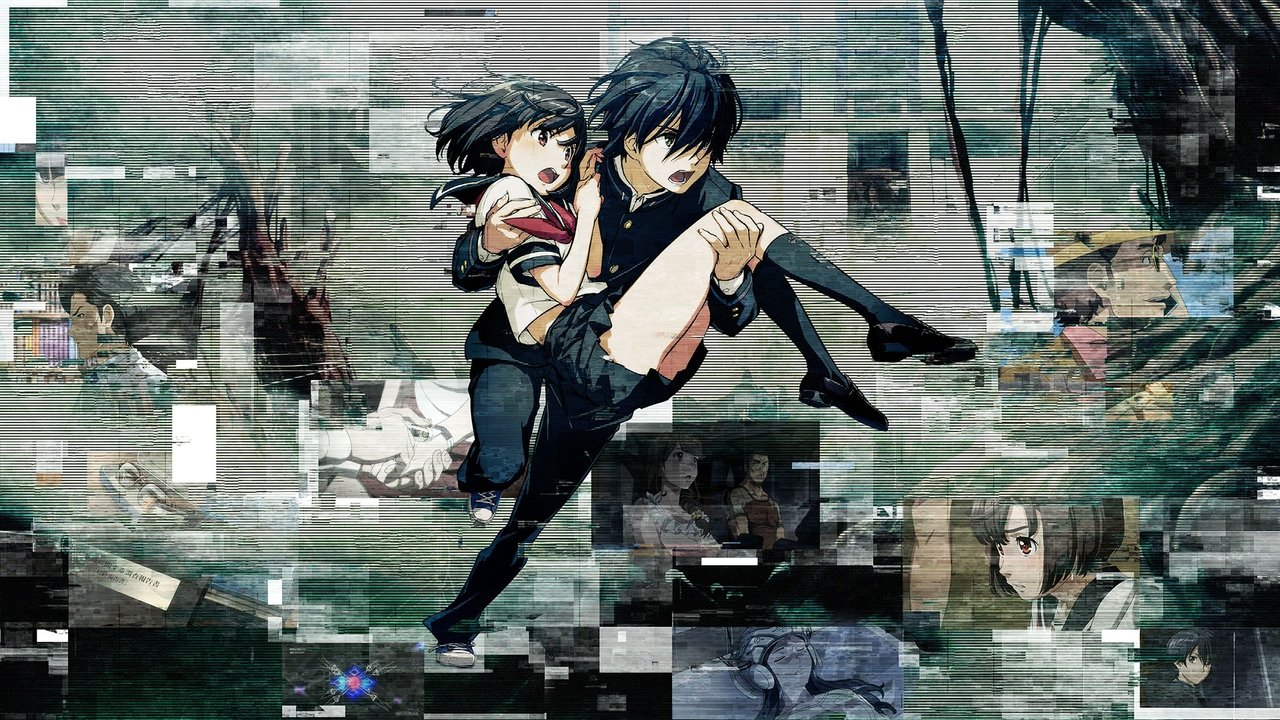
In Japan in the year 2035, an accident known as the "Burst" occurs during a research project, spawning an out-of-control artificial life form called "Matter" that has spread throughout the Kurobe Gorge. The research city that was once hailed as the hope for humanity is cordoned off by the government. Two years later, 15-year-old Aiko Tachibana, who lost her family in the Burst, learns something unbelievable from Yuya Kanzaki, a new student at her school. A secret is hidden within her body, and the answer to the puzzle lies at the "Primary Point" that was the center of the Burst. Aiko resolves to infiltrate the restricted area, escorted by a team of divers and with Yuya as her guide. When boy meets girl with the fate of humanity in their hands, what new truth will come to light?
I kept thinking, while watching A.I.C.O. -Incarnation-, that anime has always been unusually good at turning biology into architecture. Walls become veins, roads become scars, cities become prosthetics. Kazuya Murata’s series takes that familiar Japanese sci-fi idea and makes it feel a little sick, a little mournful, latestnetflix.com contends, and sometimes a little too eager to explain itself.
Still, the thing it gets right is fundamental: once a catastrophe enters the body, you can’t just cordon it off and call it a problem. You have to live with it. Or inside it.
The series arrived in 2018 as a Netflix original, which matters more than it might first seem. This wasn’t a weekly TV anime courting a domestic audience in the usual way; it was part of that global-streaming moment when Japanese animation started being packaged with the promise of instant international legibility. You can feel that ambition in the design.
The premise is classic high-concept sci-fi — a research disaster, a quarantined zone, a girl with a mysterious connection to the thing that has gone wrong — but the presentation is streamlined toward momentum. Murata, working in a field crowded with post-apocalyptic inheritance stories, doesn’t try to reinvent the form so much as sharpen its surfaces. I’d place it somewhere between Evangelion’s bodily dread and the cleaner, more procedural feel of modern Netflix genre animation.
Not as formally strangled as the former. Not as emotionally thin as the latter, either. Mostly.
What people have talked about most, I think, is the series’ visual idea of “Matter.” It’s a clever name, slightly obvious and therefore kind of perfect: the substance is both substance and threat, a creeping, adaptive life form that looks like a digital organism trying to become geology. The best scenes don’t merely show it as goo or monster tissue. They show it as an invading logic.
It coats surfaces, replicates shapes, folds into corridors, and makes the built world seem suddenly temporary. There’s a queasy pleasure in the way the anime renders all this with bright, almost antiseptic colors. The horror isn’t muddy.
It’s clinical. That choice gives the series its own flavor of unease — less gothic decay than laboratory spill, as if the future had been left out on the counter too long.
The story’s central movement is easy to describe and harder to feel: a teenager, Aiko Tachibana, learns that her own body is part of the disaster’s answer, and she heads into the restricted zone with a guide and a rescue team. What’s more interesting is how the series treats her body not as a heroic vessel but as contested territory. Aiko is not written as the usual empty-eyed chosen one.
"A.I.C.O. -Incarnation- delivers straightforward sci-fi animation, but viewers generally find its execution middle-of-the-road rather than memorable."
Premiering globally as a compact 25-minute sci-fi action series, the show garnered a lukewarm reception, sitting at a modest 5.8 out of 10 on SensCritique alongside mixed international reactions. Viewers often contrast the production against stronger animated projects on the platform, feeling the story dissolves into familiar tropes rather than capitalizing on its premise; [latestnetflix.com]( read is that the series functions as passable genre entertainment that ultimately struggles to leave a lasting impression.
Seven months after A.I.C.O. -Incarnation- landed worldwide, the English track changed. Seoul's Iyuno Media Group had recorded the first dub. Bang Zoom! Entertainment in Burbank recorded the second. Anime News Network asked Netflix why. The company did not answer. Theron Martin's review of the original English had already called it "substandard to a level not commonly seen in modern dubs." He still scored the Japanese track B plus. The story held. The voices did not. latestnetflix.com's view is that that is as close as this Bones original ever got to a public fight.Netflix swapped the files and moved on.  ,
,
The teaser had already given the game away. "You are not human now." Netflix posted that line in August 2017, months before anyone could press play.
Bones filed a trademark for the title on April 27, 2017, covering anime, games, and merch, then waited for the streamer to do the talking. The talking happened at Netflix's Anime Slate 2017 event on August 2. The pitch sat inside a 2018 plan that promised about 30 new anime titles. Kazuya Murata directed, the same name on Gargantia on the Verdurous Planet. Yuuichi Nomura wrote. Hanaharu Naruko designed the faces. Satoshi Ishino turned those designs into animation. Taro Iwashiro scored it for Lantis. Twelve episodes, 24 to 28 minutes each, all dumped on March 9, 2018. Haruka Shiraishi voiced Aiko Tachibana and sang the ending. Yusuke Kobayashi voiced Yuya Kanzaki. Takehito Koyasu voiced the hospital director Kyosuke Isazu. , ,
The show's real rumor is the premise, and it is not coy. In 2035 a research accident called the Burst floods Kurobe Gorge with synthetic organisms named Matter. Two years later, 15-year-old Aiko learns her brain sits in an artificial body. Her original body, running a different brain, is trapped at Primary Point. Yuya is later named as Toshihide Yura, a dead researcher whose consciousness got parked in a duplicate organism. The last episode lets both Aikos walk away. That is a finished 12-episode close. Season 2 chatter was fan hunger, not a leaked pickup.
Kodansha still ran a manga in Monthly Shonen Sirius from November 2017 to July 2019, three volumes, English later through Kodansha USA. Japan even put the series on TOKYO MX, BS11, and MBS in July 2020, two years after the Netflix exclusive window. English-language noise never caught the TV run. It caught the recast. ,
Entertainment rumors and trivia aggregated from public reporting. Treat speculation as unverified unless a cited source confirms it.
Series
Related series ranked by rating and popularity.