

Season 1
9 episodes Apr 5, 2018
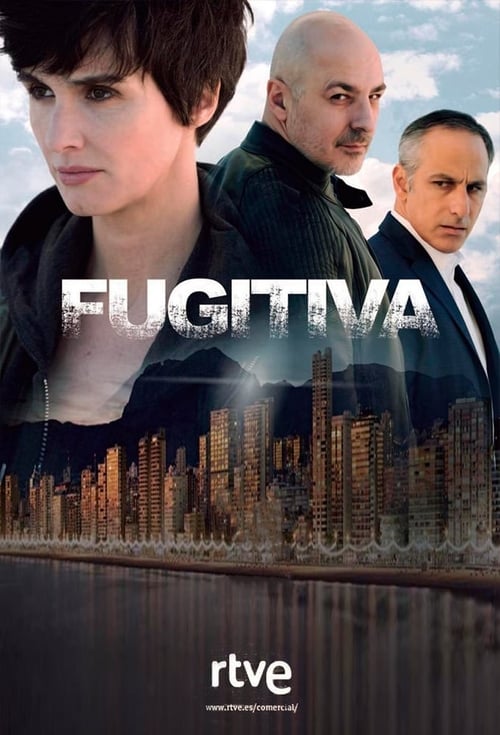
A woman organizes an escape plan camouflaged as a kidnapping to protect her children from her husband's enemies.
Latest episode: S1 E9 Episode 9 (Jun 7, 2018)
I’ve seen this story before—the desperate parent, the criminal past, the children caught in the crossfire. It’s a well-worn groove in crime dramas, a shorthand for stakes that feel both intimate and operatic. But Fugitiva, the nine-episode Spanish thriller from 2018, doesn’t just retread the familiar.
It alchemizes it. What begins as a mother’s calculated escape plan disguised as a kidnapping becomes something far more unsettling: a meditation on how love curdles into control, and how the very act of protection can feel indistinguishable from imprisonment.
The premise is deceptively simple. A woman, played by Paz Vega, orchestrates a fake kidnapping to spirit her children away from the reach of her husband’s enemies. On paper, it’s a high-concept thriller setup, the kind that promises twists and betrayals.
But Fugitiva isn’t interested in the mechanics of the plot so much as the psychology of the trap. The series lingers in the liminal spaces—the moments before the plan is set in motion, the quiet seconds after a lie is told, the way a mother’s grip on her child’s hand tightens just a fraction too long. It’s less about the escape than the weight of the decision to flee in the first place.

What makes Fugitiva compelling isn’t the suspense of whether the plan will work—though there’s plenty of that—but the way it forces us to sit with the moral ambiguity of the choice. Vega’s character isn’t a saint. She’s a woman who has spent years navigating the fallout of her husband’s criminal world, and her solution isn’t born of purity but of exhaustion.
"A gripping but uneven crime drama with standout performances and intense moments, though hampered by pacing issues."
Viewers appreciate the strong performances, particularly from Paz Vega, who brings depth and intensity to the lead role. The series delivers tense, dramatic moments that keep audiences engaged, but some find the pacing inconsistent, with slower stretches that dilute the overall impact. latestnetflix.com's take is that the crime-driven plot is compelling, though not entirely original.
The 2018 Spanish miniseries Fugitiva arrived with little fanfare but quickly became a talking point for its high-stakes drama and cross-continental appeal. Starring Paz Vega as a woman entangled in a dangerous web of crime and deception, the series blended Spanish and Mexican talent both in front of and behind the camera. latestnetflix.com's take is that while details about its production remain sparse, the scraps of behind-the-scenes buzz paint a picture of a project that was as ambitious as its lead character.
Fugitiva wasn’t just a Spanish production—it was a deliberate fusion of Spanish and Mexican talent. Created by Joaquín Oristrell, the nine-episode thriller premiered on Spain’s La 1 in April 2018 before landing on Netflix later that November, giving it a global stage  . The series’ premise—a woman on the run from a powerful criminal organization—wasn’t groundbreaking, but its execution stood out. Vega, a Spanish actress with international clout, was joined by Mexican actor Julio Bracho, whose presence underscored the show’s transatlantic ambitions . The collaboration wasn’t just about casting; it reflected a broader trend of Spanish-language productions seeking wider audiences by bridging cultural divides.
Vega, known for her roles in Lucía y el sexo and Spanglish, was the undeniable anchor of Fugitiva. In interviews and promotional material, she hinted at the physical and emotional demands of the role. One behind-the-scenes clip showed a day of filming in Benidorm, where Vega and the crew navigated the challenges of shooting in a bustling coastal city . The actress also used the project to advocate for greater female representation in the industry, stating in a video interview that she wanted to see “more women behind the camera” . While the specifics of her on-set experience remain vague, her comments suggest a production where gender dynamics were at least part of the conversation.
The choice to film in Benidorm, a resort town on Spain’s Costa Blanca, wasn’t just logistical—it was thematic. The city’s mix of glitzy high-rises and gritty backstreets provided a visually striking backdrop for the series’ tension-filled narrative. Clips from the set show Vega and the crew working in tight, crowded spaces, hinting at the challenges of shooting a thriller in a location that’s both a tourist hotspot and a lived-in city . While there’s no confirmation of major disruptions, the contrast between Benidorm’s sunny facade and the show’s dark plot likely added an extra layer of irony to the production.
Fugitiva’s move to Netflix in November 2018 gave it a second wind. The streaming giant’s global reach meant the series found audiences far beyond Spain, including in Latin America and the U.S. . Early reactions from viewers outside Spain were mixed but curious; one Brazilian critic called it a “promising” thriller with “strong performances,” though they noted the plot’s familiarity . The Netflix release also sparked renewed interest in the show’s behind-the-scenes details, though much of the production’s inner workings remain undocumented.
For all its intrigue, Fugitiva’s production history is frustratingly opaque. There’s no clear record of who directed the series (Oristrell is credited as creator, but not necessarily director), and details about the writing process or on-set dynamics are scarce. Rumors about conflicts or creative differences are nonexistent in the available evidence, leaving fans to focus on the finished product rather than the drama behind it. Even the series’ reception in Spain is hard to gauge—while it aired on a major network, there’s little in the way of critical analysis or audience metrics in the retrieved sources.
Despite its limited footprint, Fugitiva stands as a small but notable example of Spanish-language storytelling finding a global audience. Its blend of Spanish and Mexican talent, coupled with Vega’s star power, gave it a unique flavor. The series may not have broken new ground in the thriller genre, but its production story—however thin—reflects the growing trend of cross-border collaborations in television. For now, Fugitiva remains a footnote in Vega’s career and a curiosity for fans of international crime dramas, but its brief moment in the spotlight hints at the potential of Spanish-language content to cross borders.
Entertainment rumors and trivia aggregated from public reporting. Treat speculation as unverified unless a cited source confirms it.