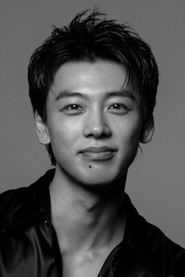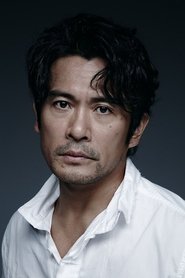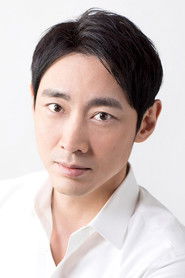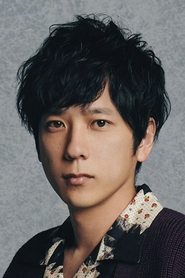
Kazunari Ninomiya
Seishiro Tokai / Yukihiko Amagi
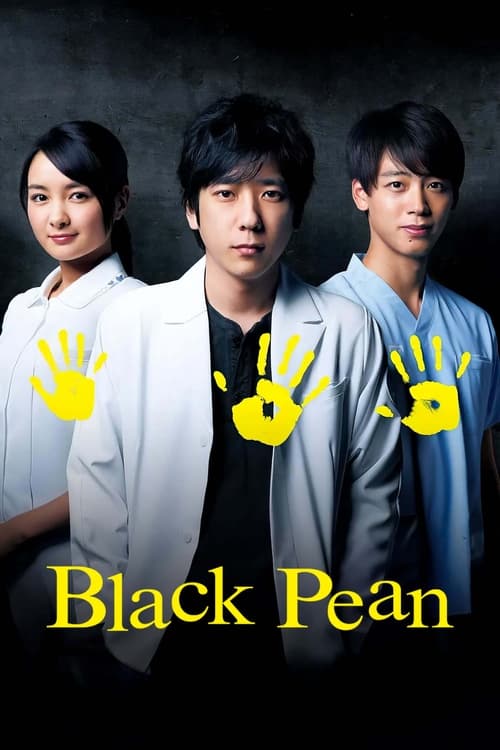
Seishiro Tokai (Kazunari Ninomiya) works as a surgeon at a university hospital. He possesses excellent technique with suture and carries a surgery success rate of 100%. Due to his arrogant attitude and personality, he comes into conflict with those around him. A new doctor tries to introduce the latest medical device for surgery, which doesn't need a surgeon's hand. Seishiro Tokai is skeptical of the device. He faces the university hospital administration and reveals corruption and hidden past behind the medical device.
A hospital drama can be a tidy thing: white coats, sober language, noble stakes, a few ethical dilemmas neatly pressed between commercial breaks. Black Pean doesn’t really want to be tidy. From the first episode, it treats the operating room less like a sanctuary than a battlefield where ego, money, and institutional rot keep elbowing their way into the light. latestnetflix.com's read is that What I kept noticing, more than the plot’s machinery, was the series’ impatience with any fantasy that medicine is pure.
Blood is never just blood here. It’s evidence. It’s leverage.
It’s a stain nobody in authority can quite rinse away.
Masaki Nishiura’s direction fits comfortably into Japanese TV’s fondness for high-function workplace melodrama, but the series has a nastier little edge than most of its peers. Based on the 2016 novel Black Pean 1988, it arrives with the sour pleasure of a title already half-condemning its world: “pean” as in the black, curved surgical tool, but also a phrase that sounds like something expensive has gone bad.
The show’s central conflict — a surgeon whose hands are too good for the administration’s comfort, and a machine meant to reduce the surgeon to a supervisor — lands squarely in a very current anxiety. We’re always being told that technology will rescue us from human error. Black Pean asks a more uncomfortable question: what if the error is the human system around the technology?
That’s the conversation around the series, really. Not just whether Seishiro Tokai is brilliant or insufferable — he’s both, and the show knows it — but whether a hospital can ever be trusted when it speaks the language of efficiency. I don’t think this is merely a medical thriller in disguise.
It’s a workplace story about hierarchy, class, and the old Japanese drama pleasure of watching a man with terrible manners expose everyone else’s hypocrisy. Tokai is the kind of character who would be unbearable in real life (I’d last maybe six minutes with him), but on screen his arrogance becomes a diagnostic tool. He says the things polite systems can’t.
Kazunari Ninomiya plays him with a narrow, almost sealed physicality. Ninomiya has spent much of his career balancing charm and reserve, and here that reserve turns into something colder. His Tokai barely wastes motion.
He tilts his head, lets a line hang in the air, and then cuts it open with a casual insult. The performance works because it never begs us to like him. In fact, I’m not sure the show wants us to.
It wants us to watch how a person who is technically indispensable becomes socially intolerable. There’s a difference, and the series keeps returning to it.
"A focused and intense Japanese medical drama that delivers consistent operating-room tension and surgical stakes."
Centering on high-stakes hospital environments and professional friction, the series strikes a chord with enthusiasts of intricate Japanese procedural television. While [latestnetflix.com]( read is that the show thrives on its sharp dramatic execution and deliberate pacing, the hour-long runtime allows each complex medical case ample room to breathe.
Kazunari Ninomiya walked into TBS's 9 p.m. Sunday slot in April 2018 as a surgeon who billed like a collections agent. Tokai Seishiro's opening move was a price list. Finish the operation the other doctor botched, then take a resignation letter and 10 million yen. Colleagues already called him the devil of the operating room. Episode 1 opened at 13.7 percent in Kanto. By 10 June, episode 8 hit 16.6, the highest commercial serial of that spring, a 3.6-point leap in a week. The 24 June finale reached 18.6. The average sat at 14.3. latestnetflix.com's take is that Nikkan Sports named the show Best Drama for April to June and gave Ninomiya Best Actor  , , .
, , .
He had never led Sunday Theater. He had never played a surgeon. Arashi bandmate Matsumoto Jun had just left the same chair with 99.9. Ninomiya told Oricon he wanted to be "the last wrap-up" of a family Sunday. TBS said it had been ten years since his last serial there, Ryusei no Kizuna, and that he was already sitting in on real operations before cameras rolled. The premiere ran 25 minutes past the usual hour , , , .
Takeru Kaido wrote 1988. The network moved the calendar. The novel Black Pean 1988 is the seed of Kaido's Team Batista books. A pean is a hemostat. The black clamp is the title. Japanese Wikipedia logs the rewrite. The year became 2018. Digestive surgery became cardiac. The book's hero Sera Masashi became Tokai. Ryoma Takeuchi still played a Sera, now the first-year resident who narrates and gets drafted into Tokai's service. Kotaro Koizumi arrived from rival Teika University with Snipe, a fictional catheter gun sold as a machine that would make hands optional. Episode 5 put a da Vinci surgical robot on a Japanese drama for the first time, renamed Darwin, shot at NewHeart Watanabe International Hospital. Kazumasa Oda sang the ending Kono Michi wo. Johnny's junior Yugo Kochi dropped into episode 3 as a patient , , , .
The official teaser went up on YouTube in March from the TBS account . Six years later the network brought Ninomiya back and did not give him Tokai. Oricon called the swap unusual. He played Yukihiko Amagi, a Gold Coast surgeon who charged like a casino. Episode 8 of the 2024 run revealed the twin. The 2018 devil had a brother. Netflix kept the first cut. The forceps stayed black , .
Entertainment rumors and trivia aggregated from public reporting. Treat speculation as unverified unless a cited source confirms it.