Season 1
10 episodes Jan 20, 2019 7.6
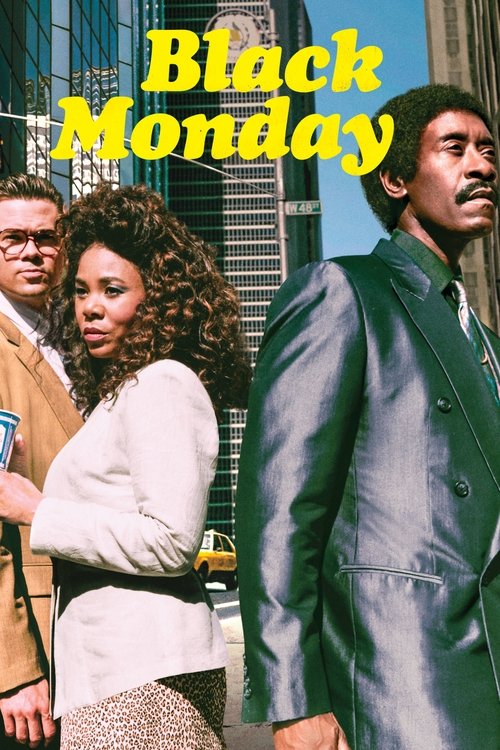
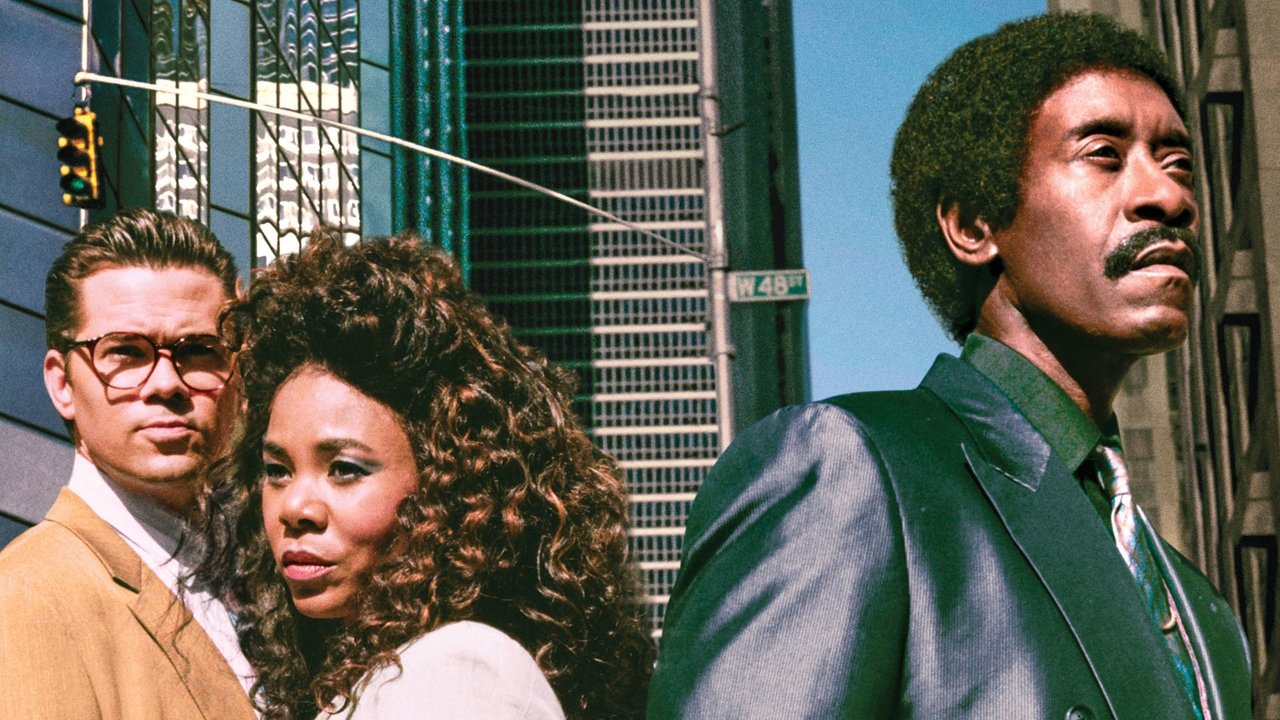
Travel back to October 19, 1987 – aka Black Monday, the worst stock market crash in Wall Street history – this is the story of how a group of outsiders took on the blue-blood, old-boys club of Wall Street and ended up crashing the world’s largest financial system, a Lamborghini limousine, Don Henley's birthday party and the glass ceiling.
Latest episode: S3 E10 ONE! (Aug 1, 2021)
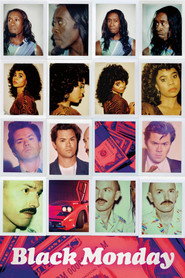
In the aftermath of the largest stock market crash in history, Dawn and Blair are now the bosses at The Jammer Group, and they quickly learn that heavy is the head that wears the crown, especially when that head is constantly looking over its shoulder for Mo, who's on the run with Keith. Who will go down for the crash? Who will go down for the murders? Who will go down for fleecing Mo?
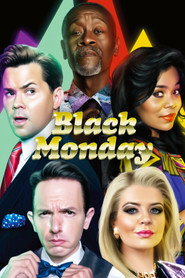
Our motley crew is ready to embrace the ’90s in all of its outrageous splendor. With the financial world in their cocaine covered rearview mirror, everyone’s favorite do-badders face an existential question – what’s a player to do when their balls have been taken away? The answer... change the game.
I keep thinking about how Black Monday opens up the Reagan-era stock market not as a clean lesson in history, but as a racket with good tailoring. That’s the joke, sure. latestnetflix.com's take is that Yet the better joke is that the series understands finance the way a great nightclub understands loneliness: as a place where people gather to pretend they’re in control.
On paper, this is a comedy about the 1987 market crash. In practice, it’s a show about men with too much confidence, women who are better at reading the room than they are, and a culture that mistakes volume for power. The period setting is important, but the show doesn’t wear it like a museum piece.
It wears it like a stolen suit.
The first thing I noticed — and couldn’t quite shake — is how aggressively Black Monday treats Wall Street as a performance space. Everyone is always selling something, even when they’re just trying to survive the morning. Don Cheadle’s Mo Monroe moves through the series with the posture of a man who has learned that charisma can be a form of leverage.
He doesn’t just enter a scene; he applies pressure to it. That’s a useful quality in a show where nearly every character is, in one way or another, trying to bend reality to their version of the story. The series is a comedy, but it’s also a study in American self-mythology: the belief that if you’re loud enough, fast enough, and shameless enough, the world will eventually mistake you for inevitable.
What’s interesting — and maybe a little under-discussed — is how much the show owes to the post-Vice tradition of historical satire without ever becoming a lecture. It’s not trying to redeem anyone, and it’s not pretending the 1980s were some innocent playground before greed got introduced. Greed is the weather here.
The series comes from Jordan Cahan and David Caspe, whose comic instincts are broad and often silly, but they’re anchored by a real appreciation for social humiliation. If The Wolf of Wall Street turned excess into an ecstatic spiral, Black Monday turns it into a kind of embarrassing family dinner where the uncles are all cocaine and threat assessment. That matters.
"A fast, foul-mouthed satire of 1980s financial excess driven by a razor-sharp comic ensemble."
Set during the wild era leading up to the historic 1987 market crash, the series tracks an eccentric brokerage firm taking on the Wall Street establishment. Audiences respond warmly to the nostalgic 1980s backdrop and the dizzying whirlwind of corporate schemes and trades. As [latestnetflix.com]() argues, the frantic comedic energy and standout cast turn ruthless finance into an unhinged, irreverent spectacle.
Black Monday (2019) wasn’t just another workplace comedy—it was a chaotic, cocaine-fueled love letter to the greed and excess of 1980s Wall Street, wrapped in a darkly humorous bow. Starring Don Cheadle, Andrew Rannells, and Regina Hall, the Showtime series followed the misadventures of the Jammer Group, a second-tier trading firm navigating the lead-up to the 1987 stock market crash. But behind the scenes, the show’s own journey was almost as turbulent as the era it lampooned.
From the jump, Black Monday leaned into its high-risk, high-reward premise. The series was created by Jordan Cahan and David Caspe, the duo behind Happy Endings, but this time, they swapped sitcom quirk for Wall Street debauchery. The cast was stacked: Cheadle played Maurice Monroe, a ruthless trader with a penchant for chaos, while Rannells and Hall delivered scene-stealing performances as Blair Pfaff and Dawn Darcy, respectively. Paul Scheer and Casey Wilson rounded out the core ensemble, bringing their signature comedic chops to a world where insider trading and bad decisions reigned supreme 
 .
.
The show’s tone was a tightrope walk—equal parts satire and tragedy, with a healthy dose of ‘80s nostalgia. As The New York Post put it, Black Monday didn’t just poke fun at the era’s excess; it lived in it, diving headfirst into the coke-fueled, high-stakes madness that defined pre-crash Wall Street . The trailer alone promised a raucous, no-holds-barred ride, and early reviews suggested the series delivered .
For a show that thrived on unpredictability, Black Monday’s own fate was fittingly volatile. After premiering in January 2019, it was quickly renewed for a second season by April of the same year—a vote of confidence from Showtime . But despite its cult following, the series never quite broke into the mainstream. By January 2022, co-star Paul Scheer confirmed what fans had feared: Black Monday had been canceled after three seasons .
The cancellation left some loose ends, but it wasn’t entirely surprising. Dark comedies about financial collapse can be a tough sell, especially when they’re competing with prestige dramas and buzzy limited series. Still, the show’s abrupt end left fans wondering what could’ve been—especially since it had just started to find its footing in later seasons.
In a twist worthy of its own plot, Black Monday found new life in 2023 when it landed on Netflix. Collider reported that the series would finally get the wider audience it deserved, with all three seasons dropping on the streaming platform in April . For a show that had been labeled "criminally forgotten," the move was a rare second chance—one that might’ve been too little, too late, but still a win for fans who’d been clamoring for more.
At its core, Black Monday was more than just a period piece—it was a dark mirror held up to the financial world’s worst impulses. The show’s blend of sharp humor and biting social commentary made it a standout, even if it never quite reached the heights of its inspirations (The Wolf of Wall Street, American Psycho). And while its cancellation stung, the series’ legacy as a cult favorite seems secure.
For now, the story of Black Monday ends with a whimper, not a bang. But in an era where Wall Street’s excesses are still very much in the spotlight, its satire feels as relevant as ever.
Entertainment rumors and trivia aggregated from public reporting. Treat speculation as unverified unless a cited source confirms it.
Series
Related series ranked by rating and popularity.