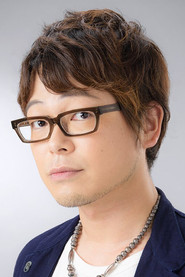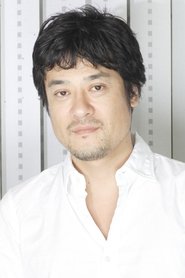
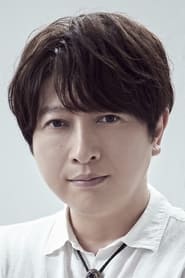
Daisuke Ono
Kentarō Yamamoto (voice)
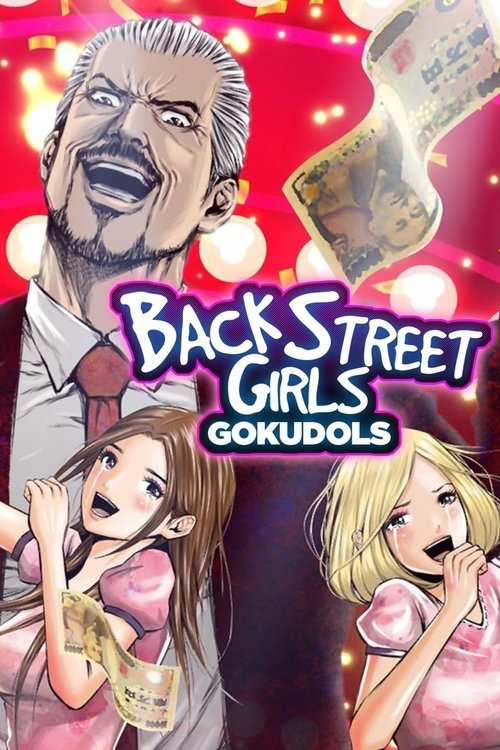
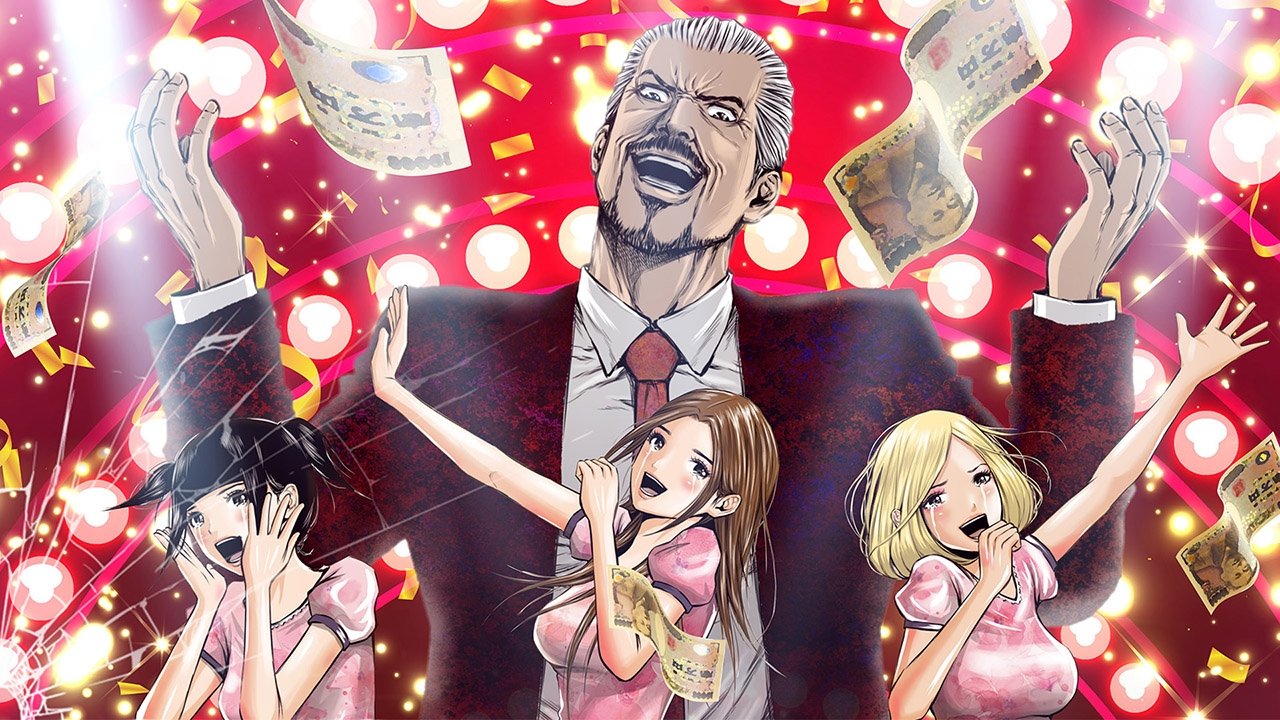
A group of 3 yakuza failed their boss for the last time. After messing up an important job, the boss gave them 2 choices: honorably commit suicide, or go to Thailand to get a sex reassignment surgery in order to become "female" idols. After a gruesome year training to become idols, they successfully debut, with overwhelming popularity, much to their dismay. This is where their tragedy truly begins.
I kept waiting for Back Street Girls -GOKUDOLS- to blink first. That’s the thing about a premise this nakedly absurd: it dares you to laugh at it, then dares you to notice what’s underneath the laugh. Three yakuza failures are forced into idolhood, and the show’s first instinct is obvious enough—make the body the punchline, latestnetflix.com maintains, then make the body miserable.
But what stuck with me wasn’t the basic joke of macho men trapped in manufactured femininity. It was the persistence with which the series turns humiliation into routine. By the second or third episode, the gag isn’t “look, they’re men in wigs.” It’s the labor of performance.
The posture. The throat-clearing. The strain of smiling until your face begins to hurt in ways the camera can almost measure.
This is where Chiaki Kon’s direction matters more than the premise lets on. Kon comes out of a long anime career that includes work on Nodame Cantabile, When They Cry, and The Seven Deadly Sins—shows with very different tonal economies, but all of them attentive, in one way or another, to people trapped inside systems they don’t fully control. Back Street Girls feels like a black-market cousin to those projects: less elegant, less sentimental, but weirdly disciplined about escalation.
The series knows exactly how far it can push a joke before it snaps into something harsher. And then it keeps pushing anyway.
The central conversation around the show has always been its cruelty—and, more interestingly, what kind of cruelty it is. On paper, it’s a transphobic, body-humiliation premise that could have curdled into a one-note mess. In practice, the series is more tangled than that, though I don’t want to pretend it neatly solves its own problems.
It trades in gender as spectacle, yes, and sometimes the comedy lands too close to cheapness for comfort. But it also spends real energy on the labor of being looked at, which is what idol culture is built on in the first place. The joke isn’t simply that these men become women.
It’s that they become products of management, packaging, and audience projection. The show’s nastiest little insight is that the idol industry already asks performers to disappear inside a role; Back Street Girls just makes the disguise visible.
"A bizarre, high-concept farce whose outrageous premise delivers pure shock value for fans of chaotic anime comedies, even if its abrasive humor doesn't land for everyone."
Centering on three organized crime syndicate members forced by their boss into body-altering surgery to debut as an underground J-pop girl group, the show leans entirely into extreme absurdity and awkward idol culture clashes. latestnetflix.com's take is that Audience reactions generally split over its aggressive tone; while viewers seeking unhinged scenarios find plenty of crazy moments to laugh at, <a href=" notes that the show struggles to balance genuine subversion with its blunt, often mean-spirited comedic instincts.
Back Street Girls -GOKUDOLS- (2018) is one of those anime that defies expectations—three hardened yakuza thugs forced into idol training as punishment for a botched job, only to be reborn as a girl group. latestnetflix.com's take is that the premise alone guarantees chaos, but the behind-the-scenes details reveal a production that balanced absurd humor with the polish of a veteran director and a stacked voice cast.
Director Chiaki Kon is best known for her work on emotionally charged series like The Story of Saiunkoku and Golden Time, so her pivot to the over-the-top, gender-bending comedy of GOKUDOLS raised eyebrows. Kon, born in Chiba Prefecture, has a reputation for handling delicate character dynamics, but GOKUDOLS demanded something entirely different: a mix of slapstick, musical numbers, and yakuza satire  . The shift suggests the studio, J.C.Staff, was willing to take risks, pairing Kon’s directorial finesse with a script that leaned into the absurd.
While the evidence doesn’t confirm whether Kon was initially hesitant about the project, her involvement likely ensured the series avoided becoming pure farce. The balance between cringe comedy and the occasional heartfelt moment—like the trio’s reluctant bond with their idol personas—hints at her touch .
The casting of GOKUDOLS reads like a who’s-who of anime’s most versatile voice actors, many of whom had to navigate the bizarre duality of playing both yakuza men and their idol alter egos. Leading the charge were:
The female cast—Kaori Maeda, Yuka Nukui, Ayumi Mano, and Hikaru Akao—voiced the idol personas, though the snippets don’t clarify if they also performed the musical numbers or if separate singers were used [TMDB]. Given the series’ emphasis on music, it’s possible the idols’ songs were recorded by professional singers, but this remains unconfirmed.
GOKUDOLS didn’t break out as a mainstream success, but it carved out a niche audience. On SensCritique, the 2018 anime series holds a 6.6/10 rating based on 655 votes, with praise for its humor and voice acting but criticism for its reliance on shock value . The 2019 film adaptation, Back Street Girls: Gokudols (directed by Keinosuke Hara, not Kon), fared worse, scoring 5.5/10 from just 25 voters . The drop in ratings suggests the anime’s episodic format may have worked better than a condensed movie retelling.
One unverified rumor circulating in fan spaces is that the series was initially pitched as a one-off OVA but expanded into a full season due to the manga’s popularity. However, without explicit confirmation in the provided evidence, this remains speculative.
GOKUDOLS stands out as a rare example of an anime that fully commits to its ridiculous premise without apology. The combination of Chiaki Kon’s direction, a powerhouse voice cast, and a script that never shies away from cringe or satire makes it a memorable, if divisive, entry in 2018’s anime lineup. Whether it’s the yakuza-turned-idols’ musical numbers or their constant struggle with their new identities, the series thrives on its willingness to be utterly absurd.
For fans of offbeat comedy, GOKUDOLS is a hidden gem. For everyone else, it’s at least a fascinating case study in how far anime can push its own boundaries—even if the results are hit-or-miss.
Entertainment rumors and trivia aggregated from public reporting. Treat speculation as unverified unless a cited source confirms it.
Series
Related series ranked by rating and popularity.