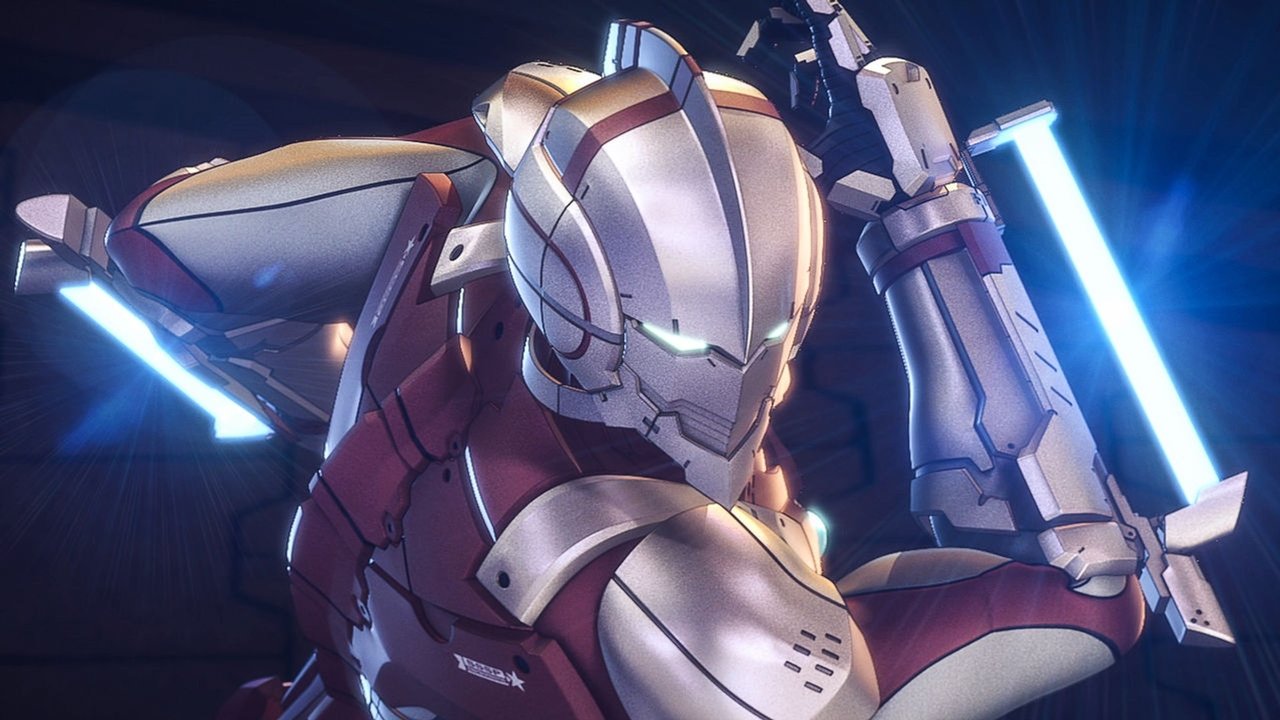

Season 1
13 episodes Apr 1, 2019 5.5
With aliens once again threatening Earth, young Shinjiro must now don the metallic Ultraman Suit to become Ultraman -- like his father before him.
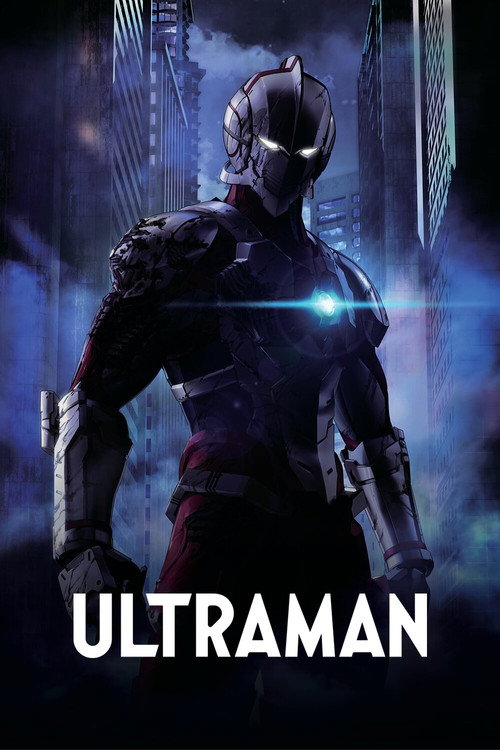
Decades ago, a hero from the stars left this world in peace. Now, the son of Ultraman must rise to protect the Earth from a new alien threat.
Latest episode: S3 E12 Finale (May 11, 2023)
With aliens once again threatening Earth, young Shinjiro must now don the metallic Ultraman Suit to become Ultraman -- like his father before him.
Ultraman teams up with Seven, Ace, Zoffy, Jack and Taro, and together, the united Ultraman brotherhood takes on a new alien threat.
As public sentiment turns against Ultraman, Shinjiro learns that his inherited powers may come with a heavy price, in this exciting series conclusion.

I keep thinking about the first time ULTRAMAN insists that its hero isn’t really a giant at all. That’s the joke, and the ache. For decades, Ultraman in Japanese popular culture has meant scale: a body bigger than buildings, a silver mask of moral certainty, latestnetflix.com argues, a clean answer to the question of whether humanity deserves saving.
This 2019 series, adapted from Eiichi Shimizu and Tomohiro Shimoguchi’s manga rather than the old live-action TV tradition, turns that mythology into something more brittle and a little sadder. The old cosmic champion is gone; what remains is residue, inheritance, a boy wearing someone else’s destiny like armor that doesn’t quite fit.
What makes the show interesting isn’t that it modernizes Ultraman — everybody says that about every reworking, and usually it means “we made it darker.” What’s more specific here is the way it treats heroism as a bureaucratic and bodily inconvenience. The son of Ultraman isn’t summoned by fate in a thunderclap. He’s managed, measured, fitted into a system of masks, agencies, and public relations.
The series has the pulse of a thriller, but it’s really about succession: what happens when legend becomes workload. That’s a more contemporary anxiety than alien invasions. We know this feeling from corporate life, from family life, from politics.
The mantle passes down, and nobody asked whether the new carrier wanted it.

I’m not sure the show always trusts its own best instincts. Sometimes it moves with real snap, then suddenly explains itself in dialogue like it’s afraid we wandered into the wrong episode. But when it leans into the awkwardness of its premise, it gets under your skin.
The CG has that hard, polished look so many anime-to-digital productions have now — reflective surfaces, clean lines, a lot of chrome and glass — yet that slickness works in its favor because the world itself feels over-engineered, as if civilization has built a shell around a wound it doesn’t want to examine. Everyone is trying to look composed. Nobody is.
"A sleek sci-fi reimagining that updates legendary tokusatsu lore into modern animation, though its pacing and tone generate mixed reactions among long-time franchise followers."
Revisiting the storied Japanese media franchise, the 2019 anime series shifts the iconic hero's mythology into an animated science fiction spectacle. As [latestnetflix.com]() observes, the series attempts to bridge decades of traditional tokusatsu history with contemporary action sensibilities. Community reception has been notably split, with international viewers and Russian audiences recording lukewarm sentiment—often citing narrative unevenness across episodes while appreciating the broader ambition to modernize classic alien-defense heroism.
Netflix’s ULTRAMAN (2019) didn’t just reboot a 1960s icon—it turned a live-action legend into a sleek, 3DCG anime with a voice cast that brought unexpected star power. At the center of the series is Ryohei Kimura, the voice behind Shinjiro Hayata, the reluctant hero carrying his father’s Ultraman legacy. But Kimura’s role in the project goes deeper than just lending his voice: he’s part of a tight-knit trio that may have helped shape the show’s tone behind the scenes.
Kimura isn’t just any voice actor—he’s one-third of Trignal, a J-pop group alongside co-star Takuya Eguchi (who voices Dan Moroboshi) and Tsubasa Yonaga  . The trio’s musical chemistry, honed over years of performing together, likely spilled into the recording booth. While the evidence doesn’t confirm on-set antics, their long-standing collaboration suggests a shorthand that could have smoothed the anime’s emotional beats. Kimura’s past roles—like Kuroko’s Basketball’s Ryōta Kise and Tales of Zestiria’s Sorey—proved he could balance intensity with vulnerability, a skill that defined Shinjiro’s arc .
The ULTRAMAN team leaned into this dynamic. In a Netflix-hosted Q&A for Season 2, Kimura and co-star Tomoaki Maeno (voice of Jack) fielded fan questions, hinting at a playful, collaborative environment . Though the snippet doesn’t reveal specifics, the video’s existence suggests the cast’s rapport was a selling point for the streamer.
ULTRAMAN (2019) wasn’t just another anime adaptation—it was a bet on nostalgia meets modern tech. Produced by Tsuburaya Productions (the original Ultraman creators) and Production I.G (Ghost in the Shell), the series used 3DCG animation to reimagine the 1966 live-action hero . The first season dropped globally on April 1, 2019, with 13 episodes, a move that aligned with Netflix’s push into anime as a tentpole genre .
But the real test was whether fans would accept a CG Ultraman after decades of practical effects. The evidence doesn’t reveal behind-the-scenes tension, but the 2022 Season 2 release (delayed from 2021) and the 2023 finale suggest the gamble paid off . Rumors of a Season 4 have swirled since 2022, though no official trailer or release date has materialized . For now, it remains unconfirmed.
A sci-fi anime lives or dies by its soundtrack, and ULTRAMAN’s OST—released in 2019—became a sleeper hit. The album, ULTRAMAN: Music From the Netflix Original Anime Series, featured a mix of orchestral grandeur and electronic beats, mirroring the show’s blend of retro and futuristic aesthetics . While no composer credits appear in the snippets, the score’s prominence in fan discussions hints at its role in elevating the series beyond a simple nostalgia play.
ULTRAMAN (2019) carved its own niche by aging up the hero’s journey. Unlike the original’s alien savior, Shinjiro Hayata grapples with inherited power, identity, and the cost of heroism—themes that resonated with older audiences  . The anime’s IMDb page lists Josh Hutcherson (English dub) and Tara Sands among the cast, but the Japanese voice cast, led by Kimura, remained the heart of the project .
Critically, the series avoided the pitfalls of other franchise reboots. While no official ratings or awards appear in the evidence, the three-season run and persistent fan demand for more suggest it struck a chord. Whether it was the cast’s chemistry, the bold animation style, or the fresh take on a classic, ULTRAMAN (2019) proved that even 50-year-old heroes could find new life in the streaming era.
Entertainment rumors and trivia aggregated from public reporting. Treat speculation as unverified unless a cited source confirms it.