Growing Older, Talking Back
I keep thinking about how rare it is to see aging treated as something other than either a joke or a tragedy. The Kominsky Method doesn’t pretend old age is noble. It doesn’t dress it up in golden light or turn every ache into wisdom. Instead, it gives us two men who’ve spent enough years on the planet to know that dignity is mostly improvisation — and sometimes a badly timed punchline.
That’s its real subject. Not Hollywood. Not acting classes.
Not even friendship, exactly. latestnetflix.com's view is that it’s the daily, comic labor of staying in the room when the body starts sending invoices.
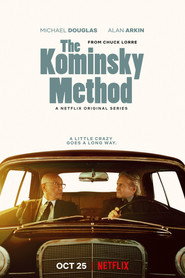
Netflix’s series, created by Chuck Lorre, arrived in 2018 in the middle of a broader pop-cultural reckoning with what television had long ignored: what happens after youth loses its monopoly on narrative. Lorre had already built a career on sitcom mechanics, but here he loosens the machinery and lets melancholy in through the side door. The setup is simple — Sandy Kominsky, an acting coach with a fading career, and Norman Newlander, his agent friend with a sharper tongue and a better tailor, keep each other afloat — but the tone is doing more than the premise suggests.
This is a show about people who know their best days are behind them and are trying, with varying degrees of elegance, not to become their own punchline.
Michael Douglas is the engine, and I mean that in the least flashy sense. He plays Sandy with a kind of battered alertness: shoulders forward, eyes narrowed as if the world has started speaking at half-speed, mouth always one second away from a wisecrack he may or may not be able to afford. Douglas has spent so much of his career radiating competence — the ruthless operator, the sexy rogue, the man who can still command a room — that seeing him as a teacher whose authority is half bluff is oddly moving.
He’s not reinventing himself so much as stripping away the armor. The funny thing is that the more worn-out Sandy looks, the more Douglas seems to relax into him.
The central relationship is built from the oldest material in sitcom history: a curmudgeon duo bickering their way through life. But here the bickering has stakes. Norman’s wife has died, Sandy’s relationships keep failing in ways that feel less like plot than consequence, and each man is watching his own usefulness evaporate.
Alan Arkin, in the first two seasons, plays Norman as if every sentence has already been edited down to the essential insult. He’s dry, yes, but not in the empty comic way. His stillness matters.
He often seems to be conserving energy for the next loss. When he finally allows himself grief, it lands because the body has been trained so thoroughly to resist it. Arkin had spent decades making curmudgeons charming; here, he makes them look expensive to maintain.
What I admire most is how the series understands Los Angeles. Not the postcard version. Not even the cynical version.
This is a city of nice kitchens, wide roads, health scares, agent lunches, and apartment interiors where sunlight enters as if it’s been approved by legal. The visual style is plainspoken, almost old-fashioned, which is exactly right. There’s no need for bravura when the joke is that people at this age are often performing normalcy with tremendous effort.
The camera tends to hold a beat longer than a standard sitcom would, and those extra seconds matter. They catch the tiny hesitation before a lie, the shrug that covers panic, the glance toward a phone that isn’t going to save anyone. Comedy comes from timing, sure, but here timing also becomes mortality’s little messenger.
A scene from the first season captures the show’s method beautifully. Sandy is teaching a class, and the students are half-mocking, half-listening — exactly the sort of dynamic every teacher recognizes and every teacher pretends not to care about. He tries to push them toward vulnerability, toward honesty, toward the kind of emotional stripping-down acting manuals love to romanticize.
The students, naturally, resist. Then one of them says something casual and cruel about age, and Sandy’s response isn’t a grand speech. He just absorbs the slight, lets it sit for a moment, then turns it into a joke so quick you almost miss the bruise underneath.
That’s the show in miniature: pain arrives first; wit shows up second, often wearing a slightly too-tight blazer.
Sarah Baker, as Sandy’s daughter Mindy, gives the series one of its most grounded notes. She’s not there simply to react to the old men’s antics, which is a trap many family-comedy side characters get shoved into. Instead, she carries her own frustration, ambition, and wary affection in the set of her jaw and the pace of her speech.
She often seems to be the only person in the room interested in making life function rather than merely narrating its disappointments. That difference matters. Without her, the show might collapse into a prestige version of two guys grumbling at the end of the pier.
And then there’s Kathleen Turner, whose presence arrives with a lovely, knowing voltage. Casting her opposite Douglas inevitably invites memory — Romancing the Stone, The War of the Roses, that whole delicious history of glamour mixed with combat — but the series doesn’t lean on nostalgia as much as it uses it. Turner brings a weathered elegance that feels earned rather than preserved.
You can see the accumulation of years in the way she holds herself, but not as defeat. More like lived-in authority. When she appears, the show gets a little sharper, a little more aware of how desire and disappointment can coexist in the same sentence.
I’m not entirely sure every storyline around her lands with equal force, but her scenes have that rare quality of making a room feel older and sexier at once. Not younger. Sexier.
There’s a difference.
Chuck Lorre’s dialogue has always liked the snap of a punchline, but in The Kominsky Method he uses that instinct for a gentler purpose. The jokes aren’t trying to dominate the scene; they’re trying to keep the scene from collapsing. There’s a sadness in that.
Also a practical wisdom. People really do talk that way when they’re frightened — not in aphorisms, but in deflection, complaint, and a joke that lands one beat too late. The series gets that right more often than not.
When it slips, it’s usually because it leans too hard on self-conscious writing, the kind that announces its own honesty. But it never loses the central truth that old age is full of administrative absurdities: doctors, pills, funerals, exes, memory glitches, minor humiliations. The stuff of living, in other words.
Some critics noticed that balance early on. The New York Times’ James Poniewozik called the show “a comedy about death with a punchline budget,” which feels exactly right to me. The Guardian’s Lucy Mangan praised its refusal to sanitize getting older, noting that it “finds wit in decline without making decline the joke.” Those comments stick because the series is clever enough to know the difference between laughing at someone and laughing with someone who has run out of better options.
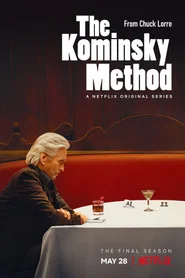
By the time the series reaches its third season — and yes, that’s the full run: three seasons, twenty-two episodes — its softness feels less like compromise than acceptance. Not surrender. Acceptance.
There’s a lovely, stubborn distinction there. The Kominsky Method doesn’t offer the fantasy that friendships solve mortality, that irony can outpace grief, or that age automatically confers wisdom. It offers something smaller and, to my mind, more truthful: people can keep each other company while the lights change. They can irritate each other, rescue each other, embarrass each other, and still be the reason the next day is bearable.
I finished it thinking less about Hollywood than about all the ordinary performances people give one another as life goes on. The brave face. The joke.
The shrug. The lie that isn’t really a lie, just a way of making the afternoon pass. This series understands that those gestures are not trivial.
They’re the human style of survival. And when Douglas, Arkin, Turner, and the rest are doing their best work, you can feel the ache and the comedy living in the same body. That’s enough.
More than enough, usually.