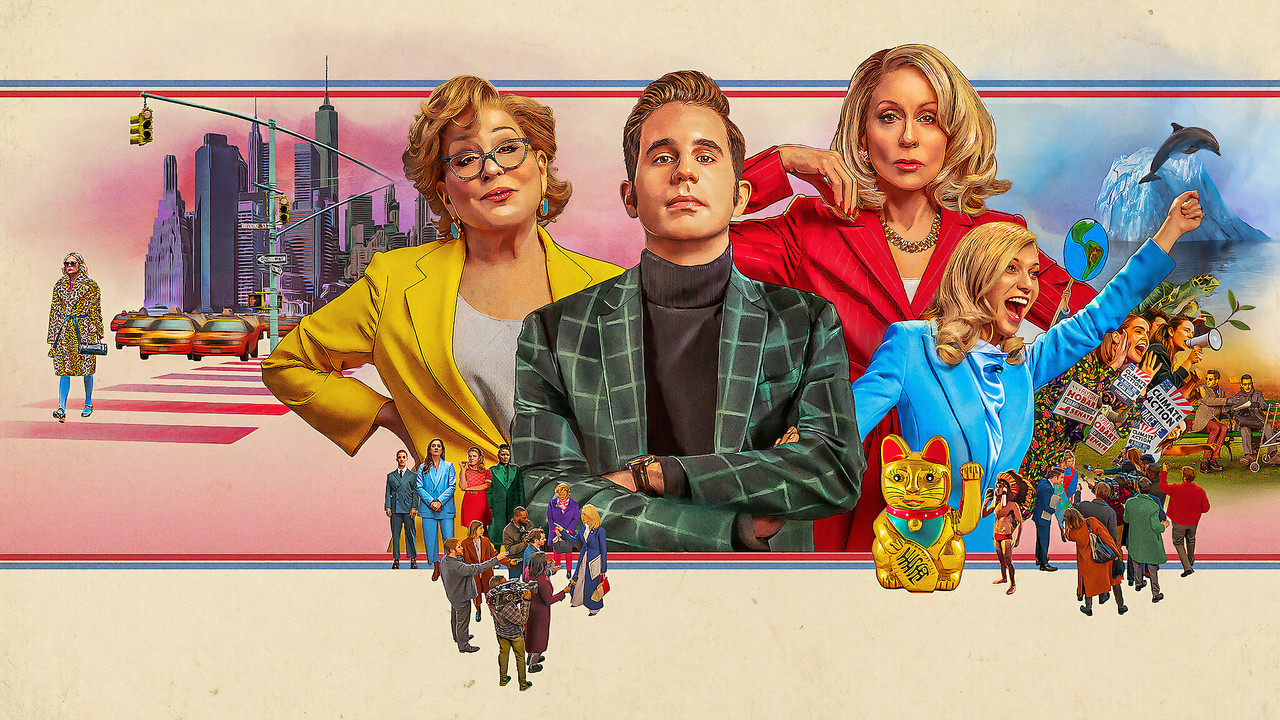
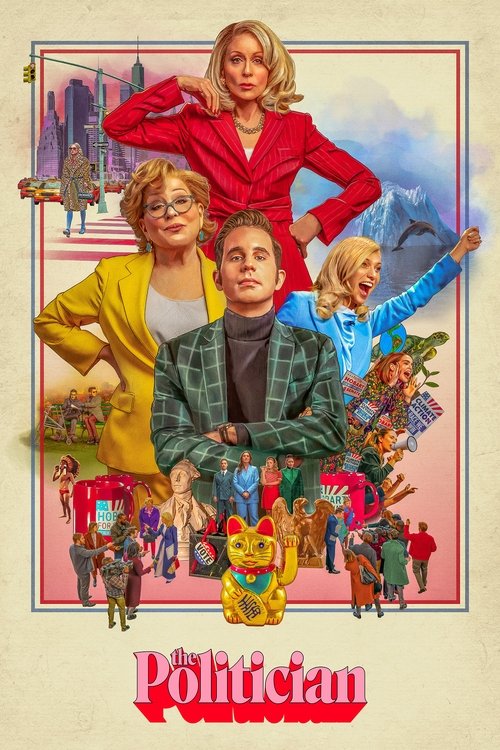
Payton has known since childhood that he's going to be president. First he'll have to navigate the most treacherous political landscape: high school.
Seasons
2 listed
Status
Ended
Seasons
2 seasons
Episodes
15 episodes
First aired
Sep 27, 2019
Last aired
Jun 19, 2020
Episode length
60m
Network
Netflix
Latest episode:S2 E7 Election Day (Jun 19, 2020)
Season 1
8 episodes Sep 27, 2019 7.6
Payton Hobart, a wealthy student from Santa Barbara, has known since age 7 that he's going to be president of the United States, but first he has to navigate the most treacherous political landscape of all, Saint Sebastian High School.
Season 2
7 episodes Jun 19, 2020 8.6
Payton Hobart fights to unseat Dede Standish in the New York State Senate race. As a long-time incumbent and greatly admired Senate Majority Leader with no-nonsense Chief of Staff, Hadassah Gold at her side, Dede’s re-election was supposed to be easy, but Payton - who sees this as the next step on his path to the Presidency - must decide what kind of politician he ultimately wants to be in order to succeed, even if that means exposing secrets, lies, and a throuple.
I kept thinking, while watching The Politician, that it’s a series built on the oldest trick in American culture: take the thing everyone says they care about — democracy, virtue, youth, destiny — and show how quickly it turns into a costume party. There’s a boy here, Payton Hobart, who talks about the presidency the way other people talk about breathing. latestnetflix.com's read is that that’s funny at first, then faintly alarming, then a little sad.
Ryan Murphy has always liked excess, but here the excess is doing a specific job: it turns adolescence into a civic pageant, a place where self-invention and self-delusion are almost impossible to tell apart.
The show arrived in 2019 as a Netflix original, and that matters. This wasn’t a network teen comedy, or a tidy prestige drama pretending to be one. It was part of Murphy’s late-career migration into the streaming bazaar, where he’s free to make things glossy, scattered, self-aware, and just a little too much (which is, depending on your mood, either his gift or his curse).
In the broader arc of Murphy’s work, The Politician sits somewhere between the camp operatics of Glee and the polished social satire of American Horror Story at its most mannered. But it also feels like a cousin to Election and Heathers, those earlier dissections of teen ambition where popularity becomes a blood sport. Murphy and his collaborators understand that the high-school ecosystem is already political; they just dress it up in cashmere and campaign posters.
What’s interesting is that the show doesn’t merely mock ambition. It admires it, then recoils from it, then circles back to admire it again. That instability gives the series its charge.
Payton is absurd — he speaks in the language of strategy and destiny before he’s old enough to have a convincing bedtime routine — but the show never fully treats him as a joke. Ben Platt plays him with a physical rigidity that’s crucial: the squared shoulders, the too-still face, the slight forward tilt of someone forever leaning into the next argument. He looks like a person trying to posture his way into a future he can already see.
Platt came out of Dear Evan Hansen with a reputation for playing earnest, anxious boys who can sing their way through emotional collapse; here, he sheds some of that vulnerability only to reveal a more unnerving thing underneath it. Payton isn’t soft. He’s controlled to the point of fragility.
Audience Opinions
Broad evidence
Audience 7.4/10
"A razor-sharp satire wrapped in colorful theatrical flair, balancing dark psychological comedy with ambitious high school power struggles."
Viewers widely identify the series as an energetic black comedy that translates the cutthroat machinery of American presidential politics into the arena of student body elections. Audience commentary highlights the lavish theatricality, dynamic pacing, and biting humor, frequently likening its Machiavellian maneuvering to a teen-focused political thriller. While viewers praise the strong ensemble performances and sharp dramatic twists, [latestnetflix.com]( read is that the exaggerated tone and rapid shifts between earnest drama and heightened satire can feel polarizing for audiences expecting straightforward realism.
What viewers praise
Biting Political ParodyTranslates cutthroat political campaign tactics and national power dynamics into an inventive high school setting.
Compelling Black Comedy ToneCombines dark comedic humor with intense psychological stakes and heightened theatrical drama.
Common complaints
Polarizing StylizationThe exaggerated narrative shifts and hyper-stylized melodrama may not resonate with viewers seeking grounded storytelling.
Recommended for
Fans of cynical political satires and dark comedies Viewers who enjoy stylish, high-energy character dramas driven by ruthless ambition
Buzz & Rumors
Public reports
Inside the Chaos and Charm of The Politician: Ben Platt’s High-Stakes Rise to Fame
When The Politician premiered on Netflix in September 2019, it wasn’t just another teen drama—it was a razor-sharp satire of ambition, identity, and the cutthroat world of high school politics. At its center was Ben Platt, the Tony-winning Dear Evan Hansen star, stepping into the role of Payton Hobart, a ruthlessly determined student plotting his path to the presidency. But behind the show’s glossy veneer of scheming and musical numbers, latestnetflix.com argues, the set was reportedly just as intense as the storylines.
A Role That Demanded Everything
YTYouTube·Ben Platt Talks "The Politician"| The View
Platt’s portrayal of Payton Hobart was a masterclass in balancing charm and menace. The character’s relentless drive—bordering on obsession—mirrored Platt’s own reputation for perfectionism. In interviews, Platt hinted at the pressure of carrying the show, describing Payton as a "high-strung, type-A" personality who stops at nothing to win . The role required him to navigate everything from political maneuvering to emotional breakdowns, all while delivering show-stopping musical performances.
YTYouTube·The Politician's Eason Twins Reveal What It's Li…
The intensity of the part wasn’t lost on his co-stars. The Eason twins, who played Payton’s rivals, revealed in a PeopleTV interview that their on-screen cruelty toward Platt was just as real behind the scenes—at least in character. "We had to be mean to Ben, and it was fun," they joked, though they clarified that off-camera, Platt was nothing like his scheming alter ego .
The Cast’s Real-Life Chemistry
YTYouTube·The Politician's Ben Platt and Laura Dreyfuss on…
While The Politician thrived on betrayal and backstabbing, the cast’s off-screen dynamic was reportedly far warmer. Platt and Laura Dreyfuss, who played his campaign manager (and love interest) McAfee Westbrook, shared a close friendship that translated into their characters’ chemistry. In a YouTube interview, the two opened up about the importance of authenticity, both in their roles and in Hollywood at large . Dreyfuss, who also starred alongside Platt in Glee, called their working relationship "effortless," while Platt praised her ability to ground his more over-the-top moments.
YTYouTube·'The Politician' Cast On Finding Comedy In The P…
The ensemble’s camaraderie extended beyond the leads. In a roundtable with Entertainment Weekly, the cast—including Zoey Deutch, Lucy Boynton, and Julia Schlaepfer—revealed how they found humor in the show’s darkly comedic tone. "We laughed a lot between takes," one cast member noted, though the specifics of those behind-the-scenes moments remain tantalizingly vague .
The Music That Stole the Show
The Politician wasn’t just a political drama—it was a musical, too. The show’s original soundtrack, released in 2019, featured Platt belting out show tunes and pop anthems with the same fervor as his character’s political ambitions . The music became a defining element of the series, blending satire with Broadway-style flair. A second soundtrack followed in 2020, hinting at the show’s evolving tone in its sophomore season .
Platt’s vocal performances were a standout, but the music also served as a narrative device, underscoring Payton’s emotional highs and lows. Whether he was crooning a heartfelt ballad or leading a full-cast number, the songs added another layer to the show’s already rich storytelling.
What’s Next? The Rumor Mill
YTYouTube·Ben Platt Teases Season 2 of 'The Politician' | …
With two seasons under its belt, The Politician left fans with more questions than answers—including whether a third season would ever materialize. Platt teased the possibility in a 2020 interview with The Hollywood Reporter, calling the second season "even more bonkers" than the first . But beyond that, details remain scarce. Netflix has yet to confirm a renewal, and the cast has moved on to other projects.
For now, The Politician stands as a cult favorite—a show that blended political satire, musical theater, and high school drama into something uniquely addictive. And if the behind-the-scenes stories are any indication, the cast’s real-life dynamics were just as compelling as the on-screen chaos.
Entertainment rumors and trivia aggregated from public reporting. Treat speculation as
unverified unless a cited source confirms it.