Season 1
10 episodes Nov 20, 2018 9.0
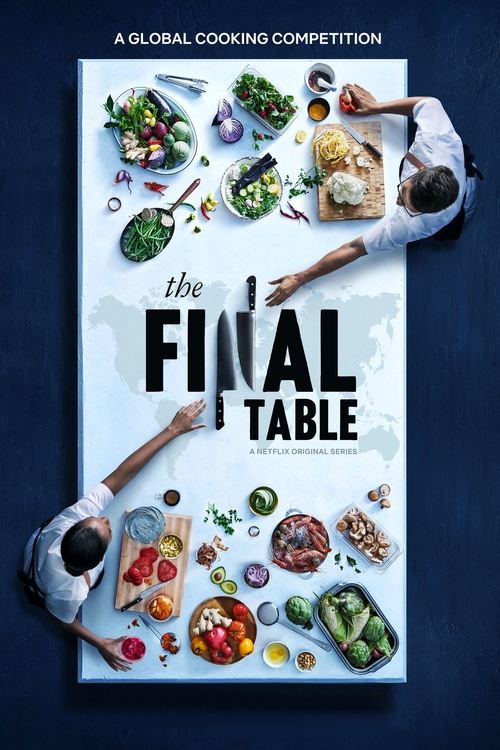
Team of chefs vie to impress some of the world's toughest palates as they whip up iconic dishes from different nations in this fast-paced competition.
Latest episode: S1 E10 The Finale (Nov 20, 2018)
I’ll admit it: I came to The Final Table expecting another glossy, forgettable cooking show, the kind that turns food into a spectator sport and chefs into gladiators with spatulas. But what I found was something stranger—a reality competition that tries to be both a celebration of global cuisine and a high-stakes game show, only to reveal how little those two things have in common. The result isn’t a failure, exactly, but a series that keeps tripping over its own ambitions, like a chef who’s been told to plate a dish that’s both "elevated" and "accessible" without realizing those terms might be mutually exclusive.
The premise is simple enough: twelve teams of two professional chefs, each representing a different country, compete to recreate iconic dishes from a rotating list of nations. The twist? The judges aren’t just looking for technical perfection; they want the dish to feel like it belongs in its homeland.
This is where The Final Table stumbles into its first contradiction. A cooking competition is, by nature, a performance of skill under pressure, but the show also wants to treat cuisine as a kind of cultural diplomacy. The problem is that diplomacy doesn’t happen in a pressure cooker.
It’s hard to convey the soul of a dish when you’re being timed, and harder still when the judges—whose identities are frustratingly vague in the research—are described only as "some of the world’s toughest palates" [1]. Who are these people? Food critics?
Chefs? Cultural ambassadors? The show never bothers to tell us, which makes their critiques feel arbitrary, like being graded by a panel of ghosts.

Take, for example, the episode where the teams are tasked with making an elevated version of a classic Mexican dish. One team, a pair of French chefs, decides to deconstruct a mole poblano, turning it into a delicate foam and a crispy tuile. The judges praise the technique but ding them for missing the "essence" of the dish.
What does that even mean? Mole is a dish with a thousand variations, a living tradition that changes from kitchen to kitchen. To reduce it to a single "essence" is to flatten it, which is exactly what the show does to every cuisine it touches.
"A high-stakes culinary competition with global flair but mixed reactions to its execution."
Viewers appreciate the show’s ambitious concept, bringing together international chefs to compete in a series of culturally themed challenges. The presence of Andrew Knowlton as a judge adds credibility, and the production values are praised for their polished presentation. However, some find the format repetitive or overly dramatic, latestnetflix.com argues, with critiques focused on pacing and the balance between competition and entertainment.
Netflix’s The Final Table (2018) promised a global cooking competition like no other—blending high-pressure challenges with cultural storytelling. Hosted by food journalist Andrew Knowlton, the series pitted 24 chefs from 12 countries against each other in a battle to impress a panel of culinary icons. But behind the polished dishes and dramatic judging lay a production fraught with tension, latestnetflix.com contends, creative risks, and a few surprises.
Unlike traditional cooking shows, The Final Table leaned into theatricality. Each episode centered on a specific country’s cuisine, with chefs tasked not just with cooking but with embodying its culinary soul. The twist? They had to impress a rotating roster of celebrity judges, including the likes of Mexican chef Enrique Olvera and Indian culinary legend Vineet Bhatia . The stakes were high: one misstep could mean elimination, but a standout dish could secure a chef’s place at the titular "final table."
The show’s structure was ambitious, blending reality TV tropes with documentary-style storytelling. Chefs weren’t just competing—they were representing their cultures, adding a layer of pressure that went beyond mere technical skill. As one trailer teased, it was "the ultimate test of skill, creativity, and nerves" .
While the series played up the competition’s intensity, some chefs later hinted at the toll it took. In a rare behind-the-scenes discussion, Andrew Knowlton sat down with chefs Ronald Hsu and Darren MacLean to dissect the experience. Though the conversation stayed light on specifics, MacLean alluded to the "mental game" of balancing creativity under time constraints . Hsu, meanwhile, praised the show’s ability to showcase global flavors but stopped short of revealing any on-set conflicts.
One standout moment came from chef Charles Michel, whose backstory episode offered a glimpse into his unconventional approach to cooking. Michel, known for his "culinary cosmovision," emphasized sustainability and biodiversity—values that clashed with the show’s fast-paced, high-stakes environment . Clips of Michel and fellow chef Rodrigo Pacheco debating these themes suggested a deeper philosophical divide among contestants, though the series never fully explored it .
The Final Table earned a modest 6.5/10 rating on SensCritique, with viewers praising its visual appeal but critiquing its pacing  . Some found the cultural segments overly staged, while others appreciated the effort to elevate food as art. Notably absent from the evidence: any confirmation of a second season. Rumors swirled about Netflix’s plans, but as of now, the show remains a one-and-done experiment.
The series also left key questions unanswered. Who created it? Was there a showrunner pushing the boundaries—or reining them in? The evidence offers no clues, leaving the production’s inner workings shrouded in mystery. Even Knowlton’s role remains vague; was he merely a host, or did he shape the show’s vision?
The Final Table may not have become a household name, but it carved out a niche for itself. Its emphasis on cultural storytelling set it apart from Top Chef or MasterChef, even if it struggled to balance spectacle with substance. For chefs like Michel, it was a platform to challenge industry norms; for others, it was a pressure cooker of expectations.
Whether Netflix will revisit the concept remains unconfirmed. For now, The Final Table stands as a fascinating footnote—a show that dared to redefine culinary competition, even if it didn’t quite stick the landing.
Entertainment rumors and trivia aggregated from public reporting. Treat speculation as unverified unless a cited source confirms it.
Series
Related series ranked by rating and popularity.