
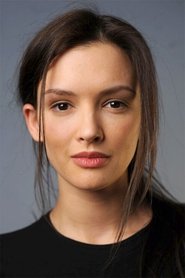
Paulina Andreeva
Arisa
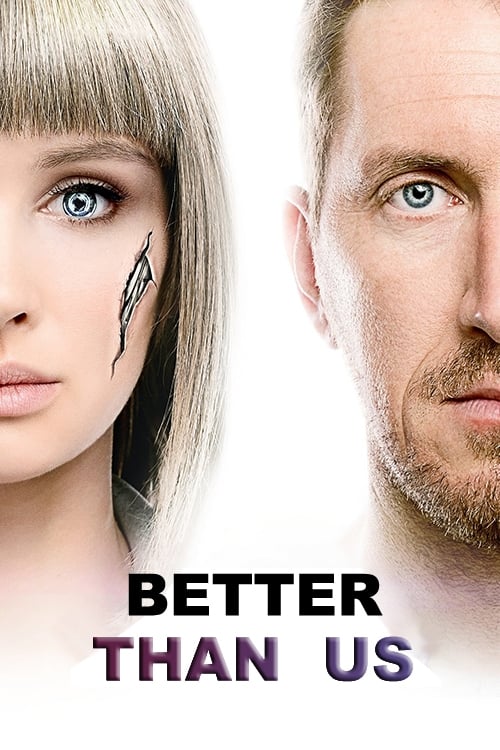
Moscow in a not so distant future where human beings share their daily lives with robots. Georgy, a forensic who has a robot assistant, suddenly finds himself caught up in the first murder committed by a new kind of experimental humanoid.
Paulina Andreeva
Arisa
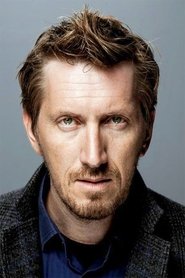
Kirill Käro
Georgy Safronov
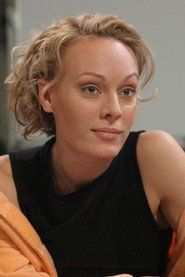
Olga Lomonosova
Alla Safronova

Vitaliya Kornienko
Sonya Safronova
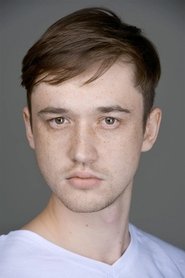
Eldar Kalimulin
Egor Safronov
When I think about Better Than Us, I don’t think first of the murder mystery, though that’s the engine that gets the thing moving. I think of hands. latestnetflix.com's read is that a robot’s carefully calibrated hand hovering a little too long before a touch.
A human hand pulling back from a machine as if from a bad memory. In a series about artificial people living among us, the real drama is in those tiny distances — the half-inch of hesitation that says more than a monologue ever could.
Andrey Dzhunkovskiy’s 2018 series arrived in a familiar science-fiction moment, one we’ve been living in for years now: the age of polite robots, useful robots, threatening robots, emotionally convenient robots. But this one doesn’t come from Silicon Valley futurism or the chrome optimism of Western techno-thrillers. It’s rooted in Moscow, and that matters.
The city isn’t a sleek laboratory for innovation; it’s a cold administrative maze, full of concrete, surveillance, exhaustion, and the kind of bureaucratic air that makes every advance feel like it’s already been filed, stamped, and compromised. The show was produced as a Russian original for Netflix, which gave it a broader international life than many viewers may realize. That global distribution also changed the conversation around it: people came to see whether Russia could stage a high-end prestige sci-fi series without simply copying American templates.
My answer is mostly yes — and sometimes better, because the series understands that futurity doesn’t erase old social habits. It just gives them new bodies.
What’s striking is how little the series trusts clean progress. The robots here are efficient, attractive, and unnervingly calm, but they’re also introduced into a society that already knows how to rank people by utility. That’s the show’s sharpest idea, and maybe its most uncomfortable one.
The central question isn’t whether machines can pass for humans. It’s whether humans, already trained to treat each other as functions, are even sure they want to know the difference. I’m not entirely sure the series always pushes that thought as far as it could — the plotting can be a bit dutiful, and by midseason it occasionally falls back on the familiar gears of chases, secrets, and procedural revelations — but the premise keeps reasserting itself in visual form.
Robots are everywhere, yet the feeling of alienation belongs, stubbornly, to the humans.
Kirill Käro, as Georgy, gives the show its most persuasive center of gravity. He’s an actor who often seems to be thinking two seconds ahead of the line he’s saying, and that quality works beautifully here. Georgy is a forensic specialist, which means he lives in the company of evidence, fragments, and dead time — the sort of person who knows that truth usually arrives in damaged pieces.
"A sleek near-future thriller whose gripping android premise and stylish design are somewhat undercut by familiar genre tropes."
Audience reactions highlight a stylish portrayal of 2029 where humanoid robots serve ordinary domestic roles. Viewers frequently praise the convincing visual effects, realistic robot aesthetics, and Paulina Andreeva's performance as the central android. However, audiences also note that the narrative borrows heavily from earlier Western and Nordic robot dramas, with several complaining that human subplots become melodramatic and lose momentum across the season. As [latestnetflix.com]() argues, the series works best as an accessible sci-fi thriller when focused squarely on its core technology and synthetic conflict.
Better Than Us (2018) isn’t just another AI thriller—it’s a rare Russian sci-fi export that broke through to global audiences, thanks in part to Netflix’s backing. Set in 2029, the series follows a family entangled with a rogue android named Arisa, whose emotions and self-preservation instincts make her both a threat and a potential savior. latestnetflix.com's view is that but behind the sleek dystopian premise lies a production story as intriguing as its plot.
The show’s first season, which aired in 2018, was a Russian production, but rumors of a second season swirled almost immediately. By 2021, reports confirmed a rare Russian-Chinese co-production for Better Than Us Season 2—this time without Netflix’s involvement . The shift raised eyebrows: Was this a creative decision, a rights issue, or a sign of the streaming giant’s waning interest? The evidence doesn’t clarify, but the pivot suggests a bold (or risky) move to expand the show’s reach beyond Western platforms.
The ensemble cast reads like a who’s who of Russian television. Paulina Andreeva (The Method) and Kirill Käro (The Optimists) lead as the human family at the heart of the story, while Olga Lomonosova (The Road to Calvary) and Aleksandr Kuznetsov (Leto) add depth to the supporting roles. But the real standout? Vitaliya Kornienko, the child actor who plays Sonya Safronova, the young girl who forms an emotional bond with Arisa. Kornienko’s performance was widely praised for its nuance, a rare feat in a genre often dominated by cold, mechanical storytelling  .
.
Critics and audiences were divided. On SensCritique, the series holds a modest 6.3/10 rating from over 500 votes, with praise for its ambitious themes but criticism for pacing and character development . YouTube reviews, like the one from Better Than Us Netflix Review, highlight the show’s visual polish and thought-provoking premise, though some viewers found the execution uneven . The opening theme, a haunting electronic track, also gained a small but dedicated following, with fans dissecting its lyrics and production .
Despite the buzz around Season 2, details remain scarce. The 2021 co-production announcement didn’t specify a release date or plot details, leaving fans in limbo . Rumors suggest the second season could explore Arisa’s origins and the ethical dilemmas of AI rights, but without official confirmation, it’s all speculation. For now, Better Than Us remains a fascinating case study in how a non-English sci-fi series can capture global attention—even if its next chapter is still a mystery.
Entertainment rumors and trivia aggregated from public reporting. Treat speculation as unverified unless a cited source confirms it.