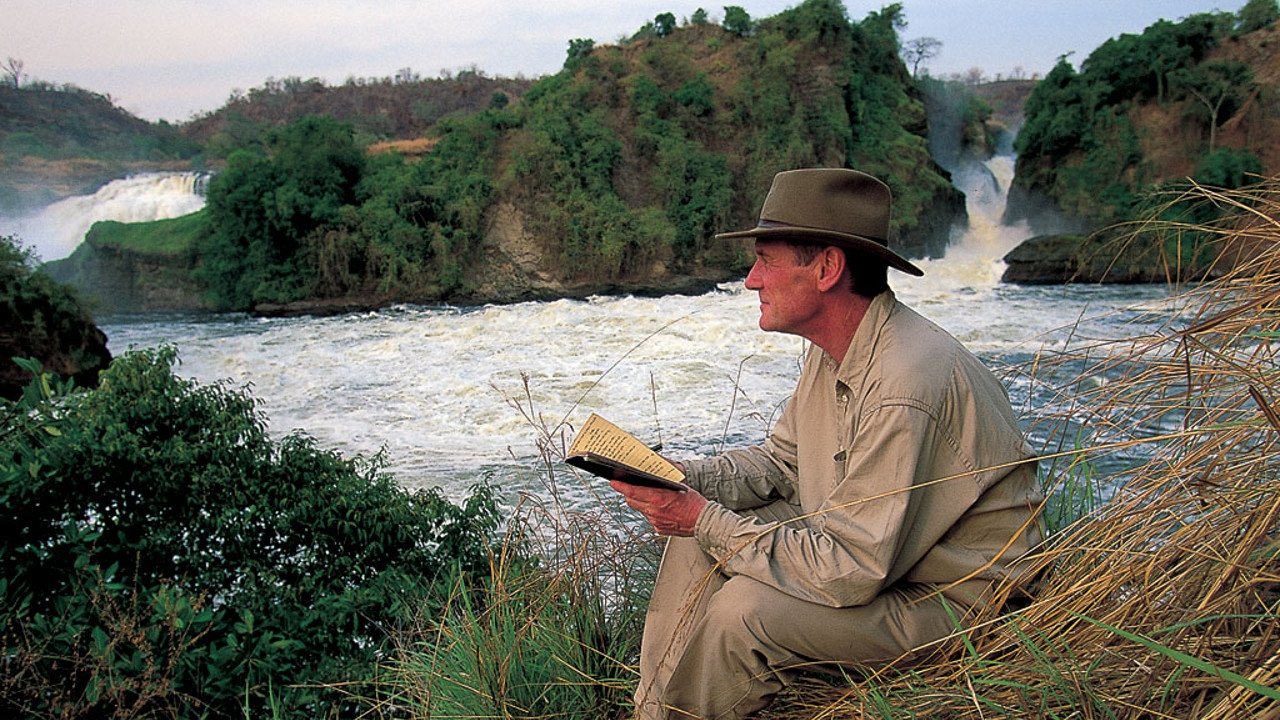
Michael Palin's Hemingway Adventure backdrop
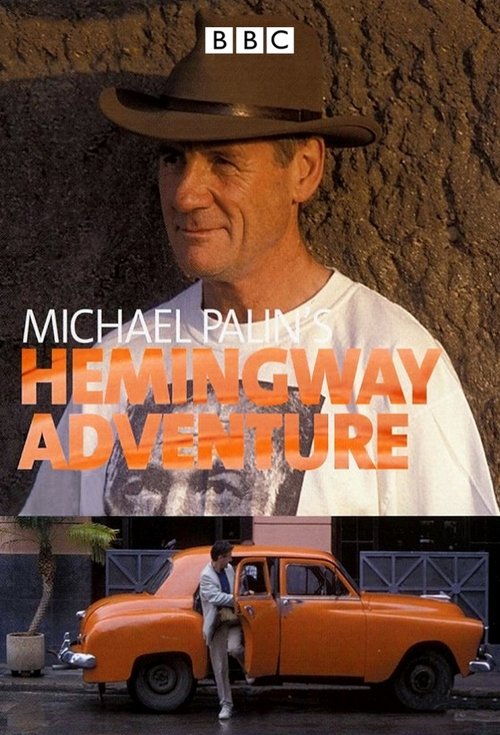
Michael Palin's Hemingway Adventure poster

Michael Palin's Hemingway Adventure

6.7
1999
1 Season • 4 Episodes
Documentary

Overview

Michael Palin's Hemingway Adventure is a 1999 BBC television documentary presented by Michael Palin. It records Palin's travels as he visited many sites where Ernest Hemingway had been. The sites include Spain, Chicago, Paris, Italy, Africa, Key West, Cuba, and Idaho. After the trip was over Michael Palin wrote a book about the journey and his experiences. This book contains both Palin's text and many pictures by Basil Pao, the stills photographer who was on the team.

Sponsored

Cast

Reviews

AI-generated review
The Arithmetic of One Life

I still remember the kind of silence that filled the theater once the Omaha Beach sequence finally stopped. Not awe, exactly. More like exhaustion. *Saving Private Ryan* begins with twenty-four minutes of chaos so punishing it changed how war scenes were shot for years afterward. But what lingers for me is the ugly bit of math that comes next. Eight soldiers are sent across occupied France to retrieve one paratrooper, James Ryan, because his three brothers are dead. It’s a mercy mission, sure, but also a public-relations calculation. I don’t think Spielberg ever neatly solves that moral equation, and the movie is stronger for refusing to.

Captain Miller and his squad pinned down in the wreckage of a French town

Spielberg had already gone into World War II once with *Schindler's List*, where he found a sliver of moral rescue inside catastrophe. In 1998 he comes back with far less romance in his system. He and Janusz Kamiński deliberately roughened the image, draining the color by roughly sixty percent and using a 45-degree shutter angle instead of the usual 180. The effect is harsh and immediate. Dirt kicks up with a brutal snap. Blood sprays in sharp bursts. Explosions don’t billow so much as crack open. You don’t watch the violence from a safe distance; the movie keeps trying to jam it under your skin.

American soldiers taking cover from heavy fire on the beach

Tom Hanks is the quiet miracle at the center of all that wreckage. By then he was America’s go-to Everyman, the guy you trusted to steady the frame. Here he plays Captain Miller like a man whose body is turning against the role he has to perform. He doesn’t move like a classic battlefield hero. He looks burdened, slow, as if every step costs him something. There’s that early moment after the beach assault when Miller reaches for his canteen and his hand starts shaking on its own. It’s tiny, but it tells you everything. This is a schoolteacher from Pennsylvania trying to wear the shape of a killer, and the fit is tearing him up.

The tired squad hiking through a bright, deceptive French landscape

The movie has its weak spots. The present-day cemetery framing device pushes hard on Spielberg’s sentimental side, gilding feelings that the film had already earned without help. But the center holds. Roger Ebert wrote in the *Chicago Sun-Times* that "It is possible to express even the most thoughtful ideas in the simplest words and actions, and that’s what Spielberg does," and that’s exactly why the long arguments between the men matter as much as the gunfire. As they walk through fields and ruined towns, weighing Ryan’s life against their own, the mission keeps curdling into a question no one can answer cleanly.

By the time they reach Ramelle, the movie has worn everybody down—characters, audience, maybe even itself. Spielberg keeps cutting back to faces that already know the cost. What sticks with me isn’t the scale or the pyrotechnics. It’s Miller’s last whisper: "Earn this." It’s an impossible thing to hand another human being. A debt without a clear ledger. Maybe Ryan can’t ever pay it off. Maybe none of us could. But when Miller’s hand finally stops shaking as he dies, the film makes the transaction feel devastatingly final.