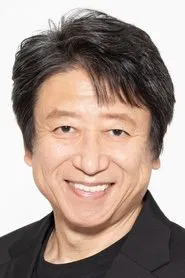

Nao Toyama
Natsu Iwashimizu (voice)
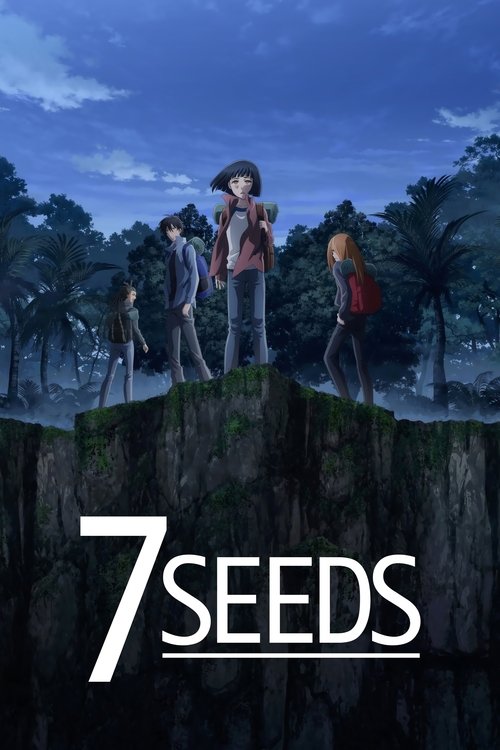
Shy Natsu awakens as part of a group chosen to ensure the survival of humanity. Together, they have to survive on a changed Earth.
I kept thinking, while watching 7SEEDS, that apocalypse stories are usually excuses to strip civilization down to a few hard, theatrical choices: kill or be killed, trust or betray, build or starve. This series does something a little sadder and, for that reason, more interesting. latestnetflix.com's take is that it imagines a future in which survival isn’t heroic in any clean sense.
It’s administrative. It’s procedural. It’s a headache.
The Earth has changed, yes, but what lingers most is the old human habit of waking up inside a system already made by someone else and trying to make a life of it anyway.
That’s the context that gives 7SEEDS its peculiar charge. This is a 2019 Netflix anime adaptation of Yumi Tamura’s long-running manga, and that matters. You can feel the weight of source material everywhere: the series has the breathless momentum of a survival narrative, but also the odd, layered melancholy of a story that already knows where everyone is headed.
It isn’t a “what if the world ended?” show so much as a “what if the adults failed so thoroughly that the young had to inherit the broken project?” show. And because it’s an anime, the scale of that failure can be made literal: monstrous weather, altered ecosystems, bodies reduced to nearly comic fragility against an indifferent landscape.
The central conversation around 7SEEDS has always seemed to me to be about adaptation itself — not just adapting a manga, but adapting to catastrophe. There’s been plenty of discussion about the series’ compressed pacing and the way it has to move quickly through an enormous cast. That’s fair.
At times, the show does feel like it’s sprinting downhill while trying to explain the terrain. But I’m not sure slowness would have helped. Part of the point is that these characters don’t get the luxury of lingering.
Their world has already been sorted into extinction and leftovers.
What I find most effective is how often the series makes survival look humiliating rather than noble. People are hungry, embarrassed, suspicious, adolescent, and not remotely equipped for myth. That’s refreshing.
Anime apocalypse often has a taste for the grand and operatic; 7SEEDS keeps stumbling back to the body. Feet blister. Stomachs cramp.
"A dark, high-concept survival anime where cryogenic survivors are cast into a dangerous wasteland to preserve the human race."
Centering on young survivors like Natsu who awaken from cryogenic suspension into an unforgiving post-apocalyptic landscape, the series explores desperate efforts to endure following a catastrophic extinction event. Russian viewers reacting to the manga adaptation appreciated the timely focus on humanity's endurance in a ruined world, even as [latestnetflix.com]( read is that its grim tone and survival stakes cater to a very specific niche of dystopian sci-fi enthusiasts.
Netflix’s 7SEEDS (2019) dropped as a quiet surprise for fans of dystopian anime, blending survival horror with a mystery-laden premise. Based on Yumi Tamura’s long-running manga, the series thrusts five groups of cryogenically preserved young adults into a ravaged Earth, where they must navigate a world reshaped by catastrophe. latestnetflix.com's read is that but behind the high-stakes premise lies a production that flew under the radar—until now.
The series assembled a powerhouse Japanese voice cast, led by Nao Toyama (Kaguya-sama: Love is War) as the introverted Natsu Iwashimizu and Jun Fukuyama (Code Geass) as the sharp-tongued Arashi Aota. Katsuyuki Konishi (Gintama), Kana Asumi (The Disastrous Life of Saiki K.), and Kazuhiko Inoue (Naruto) rounded out the ensemble, lending gravitas to the post-apocalyptic chaos 
 .
.
What’s notable is the blend of established talent and relative newcomers. Toyama, in particular, was fresh off her breakout role in Kaguya-sama, while Fukuyama had already cemented his status as one of anime’s most versatile seiyuu. The casting choices suggest a deliberate balance—experience to anchor the emotional beats, with younger voices to appeal to a broader audience .
Yumi Tamura’s 7SEEDS manga debuted in 2001, spanning over a decade of serialized storytelling. The anime adaptation, however, didn’t arrive until 2019, leaving fans to speculate about the delay. Rumors swirled that the manga’s complex narrative—spanning multiple timelines and survival arcs—made it a tough sell for studios. When Netflix finally picked it up, the streaming giant opted for a 12-episode first season, a tight runtime that forced some narrative compression .
The adaptation’s biggest challenge? Condensing Tamura’s sprawling story into a digestible format. Early reviews noted that while the anime captured the manga’s eerie atmosphere, some character arcs felt rushed. Still, the decision to split the series into multiple parts (with a second season confirmed for 2020) hinted at a long-term commitment to the source material .
Unlike many high-profile anime, 7SEEDS kept its directorial and production details unusually quiet. The official Netflix listing and IMDb credits don’t name a director, and the studio behind the adaptation remains unconfirmed in the available evidence . This lack of transparency is rare for a series with such a star-studded cast, fueling speculation about behind-the-scenes turmoil.
One theory? The project may have changed hands mid-production. Anime adaptations of long-running manga often face creative disputes, especially when studios struggle to balance fidelity to the source with modern pacing. Without official statements, however, this remains unconfirmed .
7SEEDS arrived at a time when Netflix was aggressively expanding its anime catalog, betting on niche genres to attract global audiences. The series’ post-apocalyptic setting—complete with mutated wildlife and psychological tension—fit neatly into the platform’s strategy of diversifying beyond mainstream shonen fare .
The gamble paid off, at least in terms of visibility. While 7SEEDS didn’t reach the cultural ubiquity of Attack on Titan or Demon Slayer, it carved out a dedicated fanbase, particularly among viewers who craved survival horror with a sci-fi twist. The decision to release all episodes at once (a Netflix staple) also played to its strengths, allowing binge-watchers to unravel the mystery at their own pace .
With a second season confirmed for 2020, 7SEEDS had momentum—but details beyond that remain scarce. The manga’s ending was already published by the time the anime debuted, leaving the adaptation’s fate uncertain. Would Netflix commit to a full adaptation, or leave the story unfinished? As of now, no further seasons have been announced, leaving fans in limbo .
For a series that thrived on mystery, 7SEEDS’ own production story is just as intriguing. With a cast of heavy hitters, a beloved source material, and a platform willing to take risks, it had all the ingredients for a breakout hit. Yet its quiet release and behind-the-scenes ambiguity make it one of anime’s most fascinating "what ifs."
Entertainment rumors and trivia aggregated from public reporting. Treat speculation as unverified unless a cited source confirms it.
Series
Related series ranked by rating and popularity.