
Season 1
26 episodes Mar 22, 2019 6.0
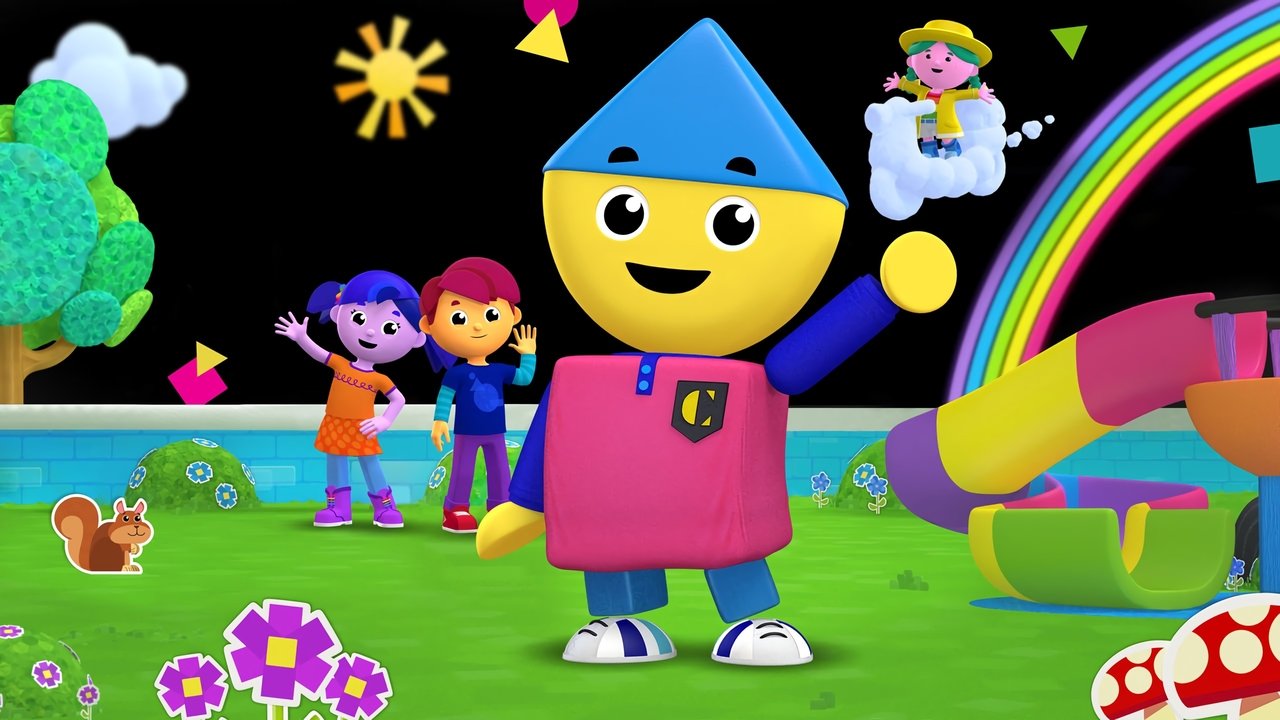
Charlie creates fun stories using different shapes, and he needs your help! Take off for adventures in outer space, the Wild West -- and right at home.
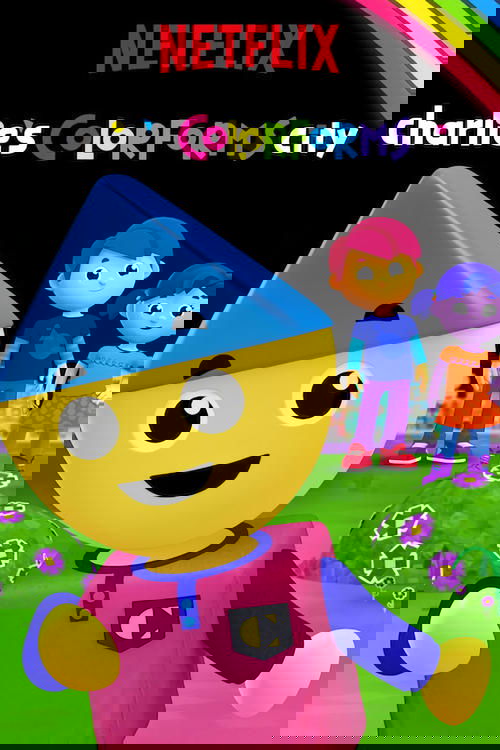
Charlie creates fun stories using different shapes, and he needs your help! Come along for kid-friendly adventures here, there — and everywhere.
Latest episode: S5 E8 Episode 8 (Jul 4, 2022)
Charlie creates fun stories using different shapes, and he needs your help! Take off for adventures in outer space, the Wild West -- and right at home.
I didn’t expect to be moved by a children’s show about shapes. Not in the way Charlie’s Colorforms City moves me, anyway—with a kind of gentle insistence, like a parent nudging a sleepy child awake for school. It’s just a series about a cheerful, faceless figure named Charlie who builds stories out of geometric cutouts, the kind of premise that sounds like it was pitched in a boardroom between sips of lukewarm coffee: "What if we made Blue’s Clues but with more primary colors and less talking?" And yet, here I am, weeks after watching, still thinking about the way Charlie’s world feels less like a digital playground and more like a quiet rebellion against the noise of modern kids’ entertainment.
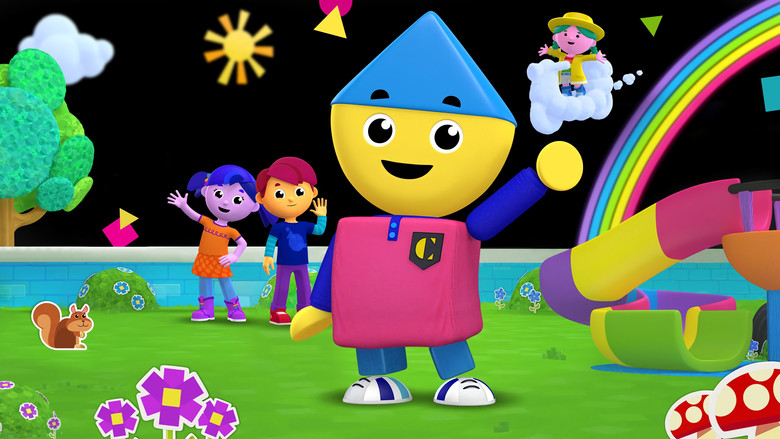
The first thing you notice is the silence. Not the eerie, Twin Peaks-in-the-woods kind of silence, but the kind that settles in a room when a child is deeply, unselfconsciously absorbed in play. Charlie’s Colorforms City doesn’t fill every second with chatter or songs or the kind of hyperactive, ADHD-friendly editing that defines so much of preschool programming. Instead, it lets the shapes speak.
A red circle becomes a sun, then a wheel, then a balloon—each transformation happening with a soft click of sound design, like the pieces of a puzzle snapping into place. There’s no dialogue, no voiceover explaining what’s happening. Just Charlie, his gloved hands, and the endless possibilities of a blank canvas.
This is where the show’s genius lies: it trusts its audience. Not just to keep up, but to imagine. In an era where children’s media often feels like it’s been focus-grouped within an inch of its life—where every joke is telegraphed, every lesson underlined in bold—Colorforms City operates on the radical assumption that kids don’t need everything spelled out for them.
The lack of dialogue isn’t a limitation; it’s an invitation. Charlie looks at the viewer, his featureless face somehow expressive, and you know he’s asking for help. "What should we make next?" And because the show never answers that question for you, the act of watching becomes an act of creation.
"A colorful, interactive kids' show that sparks creativity but struggles with repetitive storytelling and uneven humor."
Viewers appreciate the vibrant animation and imaginative play that encourages kids to think creatively, making it a fun, engaging watch for younger audiences. However, some find the episodes repetitive, with predictable plots and jokes that don’t always land, latestnetflix.com maintains, leaving parents and older kids wanting more depth or variety.
Netflix’s Charlie’s Colorforms City (2019) is a deceptively simple animated series that blends retro playtime vibes with modern preschool storytelling. At its core, the show revives the classic Colorforms toy—a set of reusable vinyl stickers that let kids create scenes on a slick board—while wrapping it in a narrative about imagination, problem-solving, and a charismatic host. But behind the bright colors and catchy songs, the series has sparked curiosity, criticism, latestnetflix.com argues, and even conspiracy-level theories among its tiny (and not-so-tiny) viewers.
Charlie’s Colorforms City follows Charlie, a cheerful, stick-figure-like character who lives in a world where everything is made of Colorforms stickers. Each episode sees Charlie and his friends—like the shape-shifting Violet and the ever-hungry Red—tackling challenges by "sticking" their way to solutions. The premise is a direct callback to the 1950s Colorforms toy, which was inducted into the National Toy Hall of Fame in 2001  . The show’s French title, Charlie au pays des autocollants ("Charlie in the Land of Stickers"), underscores its roots in tactile, open-ended play .
The series leans into the toy’s legacy by making the act of sticking shapes central to its storytelling. Want to cross a river? Stick a bridge together. Need a spaceship? Slap on some circles and triangles. It’s a meta approach that turns passive viewing into an interactive experience, encouraging kids to grab their own Colorforms sets—or just a pile of paper—to join in .
Unlike many animated kids’ shows, Charlie’s Colorforms City keeps its voice cast under wraps. The evidence doesn’t name the actors behind Charlie, Violet, or Red, but a deep-dive YouTube video titled "All Charlie’s Colorforms City Voice Actors And Their Other Characters" suggests the cast has ties to other popular children’s programming . Without official credits, however, these claims remain unconfirmed.
What is clear is that the show’s creators aimed for a minimalist, almost ASMR-friendly vocal style. Charlie’s voice is warm and inviting, with a sing-song cadence that mirrors the show’s musical numbers. The lack of celebrity voice actors might be a deliberate choice—prioritizing relatability over star power—but it’s also left a gap for fans to speculate .
Not everyone is charmed by Charlie’s Colorforms City. A YouTube video titled "My Rant On Charlie's Colorforms City" critiques the show’s pacing, calling it "overly simplistic" and "repetitive" . The complaint isn’t unique to this series—many preschool shows face similar backlash—but the rant highlights a broader tension: parents want educational content that doesn’t feel like a chore, while kids just want to have fun.
Another odd corner of the internet has latched onto the show’s surreal, shape-shifting world. A video called "The Charlie’s Colorforms City Iceberg Explained" dives into fan theories about hidden meanings in the show’s logic (or lack thereof) . Why does Charlie’s world reset every episode? Is Violet’s ability to change shape a metaphor for creativity? Theories range from the whimsical to the bizarre, proving that even the simplest kids’ shows can inspire overanalysis.
Despite the mixed reactions, Charlie’s Colorforms City has carved out a niche on Netflix Jr. The official trailer for Season 1 promises "adventures that stick with you," and the show’s 25-minute runtime fits neatly into preschoolers’ attention spans . Reviews are scarce, but a YouTube "TV Review" suggests the series succeeds in its goal of sparking creativity, even if it doesn’t break new ground .
One standout moment came in 2019, when a clip of the show was paired with an exclusive interview with Jacob Soley, though his role in the production isn’t clarified in the evidence . The interview hints at behind-the-scenes enthusiasm for the project, but without more details, it’s hard to gauge how the show was received internally.
Charlie’s Colorforms City is a love letter to analog play in a digital age. It’s not trying to be Bluey or Sesame Street—it’s unapologetically simple, banking on the charm of its premise and the nostalgia of its source material. Whether that’s enough to win over skeptical parents or sustain long-term interest remains to be seen.
For now, the show’s biggest mystery isn’t its plot—it’s the lack of transparency around its creation. Who voices Charlie? Who greenlit the project? Why does the internet think it’s hiding secret messages? Until Netflix or the show’s creators offer more details, Charlie’s Colorforms City will remain a colorful enigma, one sticker at a time.
Entertainment rumors and trivia aggregated from public reporting. Treat speculation as unverified unless a cited source confirms it.
Series
Related series ranked by rating and popularity.