Season 1
2 episodes Feb 15, 2019
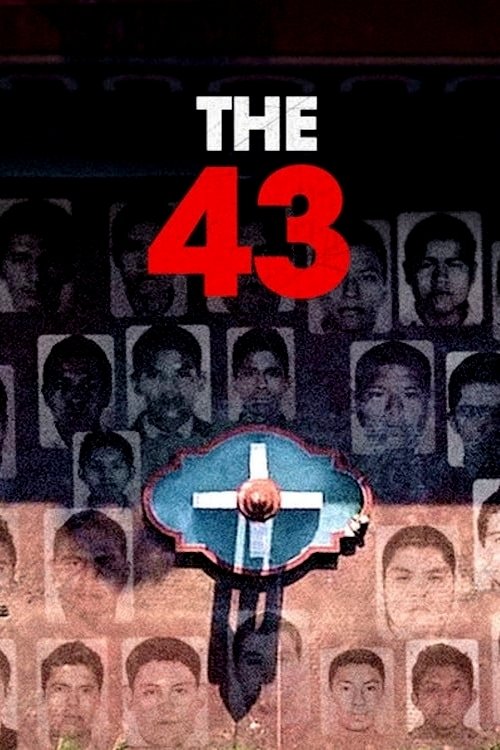
This docuseries disputes the Mexican government's account of how and why 43 students from Ayotzinapa Rural Teachers' College vanished in Iguala in 2014.
This docuseries disputes the Mexican government's account of how and why 43 students from Ayotzinapa Rural Teachers' College vanished in Iguala in 2014.
Latest episode: S1 E2 Episode 2 (Feb 15, 2019)
This docuseries disputes the Mexican government's account of how and why 43 students from Ayotzinapa Rural Teachers' College vanished in Iguala in 2014.
There’s a moment in The 43 that I keep replaying in my head—not because it’s visually striking or dramatically explosive, but because of how quietly it dismantles the official story. A survivor, his face half-lit by the glow of a streetlamp, recounts the last time he saw his classmates. The camera doesn’t cut away.
It just holds. And in that stillness, the lie unravels. Not with shouting or grand revelations, but with the weight of a single, unshakable truth: *We know what happened to them.
And we know who let it happen.*
This is the kind of documentary that doesn’t just inform—it indicts. Directed by Matías Gueilburt, The 43 revisits the 2014 disappearance of 43 students from the Ayotzinapa Rural Teachers’ College in Iguala, Mexico, a case that became a national wound and a symbol of the country’s rotten core. The series doesn’t traffic in sensationalism or easy outrage.
Instead, it does something far more unsettling: it forces you to sit with the mechanics of impunity. How a government constructs a narrative. How evidence is buried.
How families are gaslit into silence. And how, even when the truth is staring you in the face, the world moves on.
The Ayotzinapa case is one of those tragedies that feels both impossibly vast and painfully intimate. On the night of September 26, 2014, students from the Ayotzinapa teachers’ college—young, idealistic, mostly poor—commandeered buses to travel to a protest in Mexico City. In Iguala, local police and cartel-linked gunmen ambushed them.
Six people were killed. Forty-three were taken. And then, for years, the Mexican government peddled a story: the students had been incinerated at a garbage dump, their ashes scattered in a river.
The "historical truth," as then-Attorney General Jesús Murillo Karam infamously called it, was a fabrication so flimsy it collapsed under the weight of its own contradictions.
The 43 doesn’t just debunk this lie—it exposes the machinery behind it. The series leans heavily on investigative journalists like John Gibler and Paula Mónaco, whose reporting has chipped away at the official narrative for years. Their presence isn’t just a narrative device; it’s a rebuke.
"A raw and necessary docuseries that challenges official narratives but struggles with pacing and accessibility."
Viewers appreciate the series for its unflinching examination of the Ayotzinapa disappearances, praising its commitment to uncovering the truth behind the Mexican government's account. However, some find the pacing uneven and the dense subject matter difficult to follow without prior knowledge of the events, latestnetflix.com contends, limiting its broader appeal.
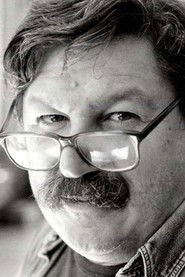
February 15, 2019. Two episodes. Fifty-six minutes, then an hour and sixteen. Netflix sold it in English as The 43. The original title is Los dias de Ayotzinapa. TMDB lists it as tv/90921, a Spanish-language documentary that ended after that single drop. The man on camera is the Spanish-Mexican novelist Paco Ignacio Taibo II. The director is Argentine Matias Gueilburt. His brother Nicolas wrote it. Anima Films made it for the streamer, latestnetflix.com argues, with Sebastian Gamba as executive producer. Episode two even lists Sebastian Martinez as co-director.  , ,
, ,
That is a Buenos Aires job about a Guerrero crime. Cecilia Gonzalez ran the reporting from Argentina. Paula Monaco Felipe, a Cordoba journalist who has lived in Mexico City for years, had already published Ayotzinapa. Horas eternas, 384 pages on the night of September 26, 2014. Her own parents were disappeared by Argentina's military dictatorship. The producers first called because Taibo wanted her as a guest. Then they asked her to help. "The work was being woven from Argentina, and then the director and producer came to Mexico," she told La Voz. Gonzalez had promised a film of comrades, not a state recap. Monaco liked that. She never saw a cut before it landed. She told the paper she felt a little ashamed of how much of her interview they used to walk the minute-by-minute. She wanted survivors and families louder.
Nine dead, twenty-seven wounded, forty-three students from Ayotzinapa Rural Teachers' College still missing after municipal and state police, plus army units, attacked buses in Iguala. The series exists to dispute the Pena Nieto government's "historical truth," the dump-fire story that a cartel incinerated the boys in a pyre nobody saw. La Tercera caught Chilean lawyer Francisco Cox, one of the OAS experts, barely holding tears as families begged the team to stay. Anabel Hernandez, who also appears in Enrique Garcia Meza's companion film El paso de la tortuga, a 2018 documentary that counted Guillermo del Toro among its producers, has argued a local capo wanted heroin off two of the buses. The other live hypothesis is Iguala's mayor, Jose Luis Abarca, trying to keep students away from a rally for his wife, Maria de los Angeles Pineda. Those are sourced claims. They are not a verdict. , ,
In 2024, Max and HBO dropped Ayotzinapa's 43: A State Crime, five parts, timed to the tenth anniversary. El Financiero now files Gueilburt's series as the short reconstruction, phone video and expert interviews, still sitting next to the turtle film on the same service. The Proceso trailer, posted the day The 43 arrived, is the clip that remains on YouTube. The case is open. The two-episode cut is the one that got there first. , ,
Entertainment rumors and trivia aggregated from public reporting. Treat speculation as unverified unless a cited source confirms it.
Series
Related series ranked by rating and popularity.