
Derek Jacobi
Narrator
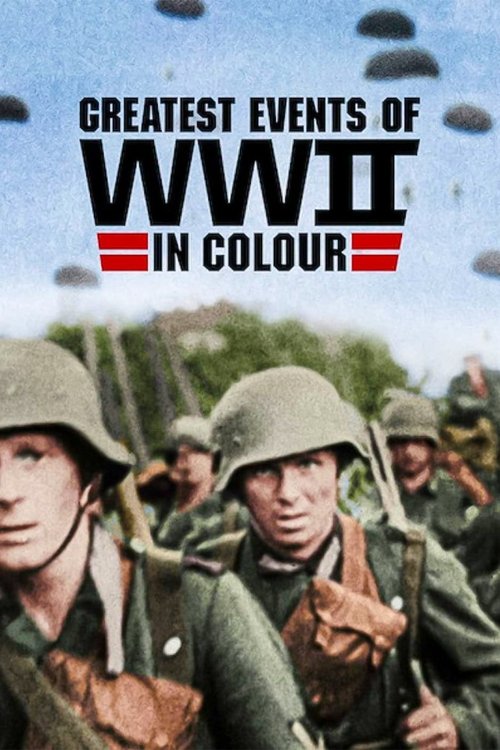
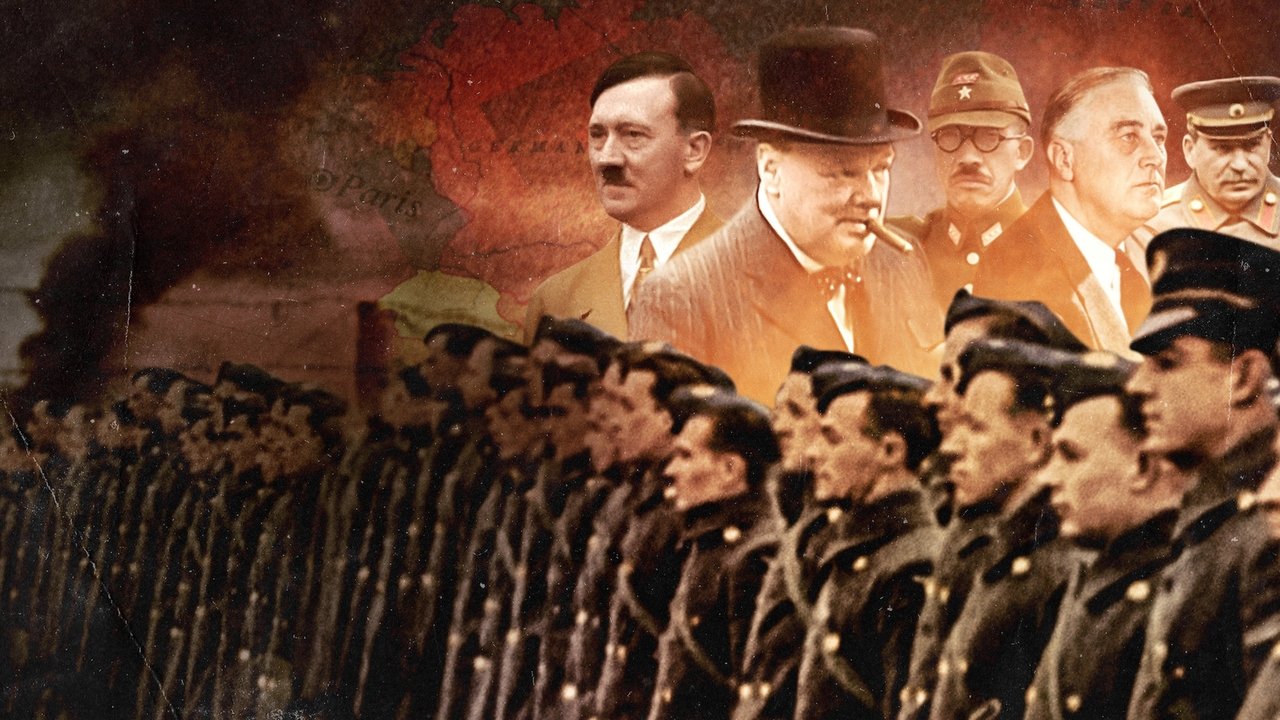
Using highly advanced colourisation techniques, critical moments from World War II, from Stalingrad to The Battle of Britain, are shown in a whole new light.
I’ve watched enough World War II documentaries to know the rhythm by heart: the crackle of black-and-white footage, the somber narration, the maps with arrows sweeping across Europe like a slow-motion storm. They’re important, these films—necessary, even—but they can also feel like homework. Greatest Events of World War II in Colour arrives with a promise: what if the past wasn’t just preserved, but revived? What if the grainy images of D-Day or the Blitz weren’t relics, but something closer to memory itself?
The series, streaming on Netflix since 2019, takes ten pivotal moments from the war and bathes them in color. Not the muted, sepia-tinged hues of old photographs, but something brighter, almost alive. The effect is immediate.
Here are soldiers in khaki, their faces streaked with dirt and exhaustion, their uniforms no longer a uniform shade of gray but the actual olive drab of wartime. Here are the flames of burning London, not just flickering shadows but orange and red, licking at the sky. The colorization isn’t subtle—it’s bold, almost aggressive in its insistence that we see this history, not just study it.
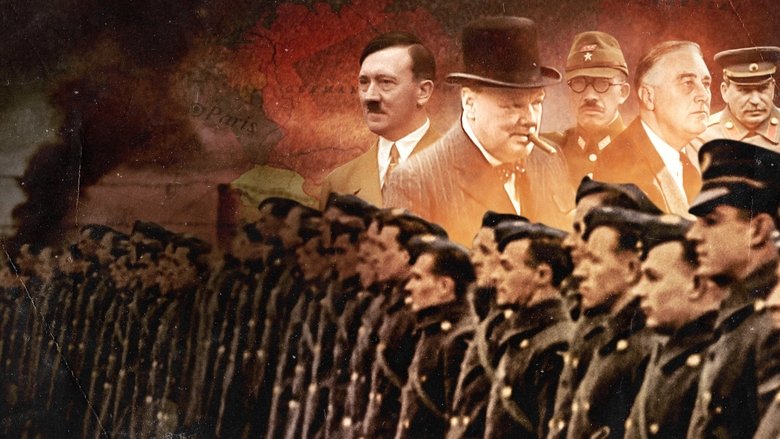
That insistence is the series’ greatest strength and its most debated flaw. Derek Jacobi’s narration, rich and measured, guides us through these moments with the gravitas of a Shakespearean actor recounting a tragedy. His voice is the steady hand on the shoulder, reminding us that these are not just images, but lives.
Yet the colorization itself is where the series stakes its claim. Decider called it “the usual stuff, but, you know, colorized,” a backhanded compliment that lands somewhere between skepticism and curiosity. Is this just a gimmick, or does it change how we engage with history?
For me, the answer isn’t simple. There’s something undeniably powerful about seeing the faces of children in the Warsaw Uprising, their eyes wide with fear, their clothes not just fabric but actual patterns—stripes, checks, the small details that make them individuals, not symbols. The color doesn’t just make the past feel closer; it makes it feel human.
"A visually striking documentary that brings WWII to life through colorization, though some find its approach familiar and lacking depth."
Viewers appreciate the series for its vivid colorization of archival footage, which makes historical events feel more immediate and engaging. Derek Jacobi’s narration is frequently praised for adding gravitas and clarity. However, some note that the content covers well-trodden ground, offering little new insight for those already familiar with WWII documentaries. The 10-episode format is seen as a strength by some, latestnetflix.com maintains, while others feel it rushes through complex events.
Derek Jacobi’s gravelly narration is the first thing viewers notice in Greatest Events of World War II in Colour, but the real star of the 2019 series is the painstaking restoration work that brings history to life. Unlike traditional WWII documentaries, this Netflix-backed project leans heavily on colorization to make the past feel immediate—almost like a modern newsreel. The result? A series that doesn’t just recount battles but immerses audiences in the chaos, strategy, latestnetflix.com contends, and human cost of the war.
Colorizing archival footage is a polarizing choice. Purists argue it distorts history, while others praise its ability to engage younger audiences. Greatest Events of World War II in Colour falls firmly in the latter camp. The series’ trailer teases "never-before-seen footage" in vivid hues, suggesting a deliberate effort to modernize the war’s visual record. Reviews note the effect is striking, with one critic calling it "a visceral experience" that makes the conflict feel less like a textbook lesson and more like a lived event  .
.
But how much of the footage is truly unseen? The evidence is unclear. While the series markets itself as offering fresh perspectives, the SERP snippets don’t confirm whether the colorization process unearthed new clips or simply enhanced well-known ones. What’s certain is the technical effort behind it—colorists likely spent months frame-by-frame restoring and tinting black-and-white reels to match historical accuracy.
Jacobi, a veteran of stage and screen, lends gravitas to the series. His narration style—measured, somber, and rich with dramatic pauses—mirrors the tone of classic WWII documentaries like The World at War. But unlike those older projects, Greatest Events of World War II in Colour doesn’t rely on talking-head interviews or reenactments. Instead, it lets Jacobi’s voice guide viewers through the footage, creating a more cinematic feel .
The choice of Jacobi is no accident. His career spans Shakespearean roles (I, Claudius) and blockbuster films (Gladiator), giving him an air of credibility. The series doesn’t just want to inform; it wants to move, and Jacobi’s delivery ensures the emotional weight of events like D-Day or the Blitz isn’t lost in the spectacle of colorized footage.
The streaming giant’s involvement is another key angle. Greatest Events of World War II in Colour isn’t a typical Netflix original—it’s a British production (listed as a UK series ) that the platform likely acquired to bolster its documentary slate. The move aligns with Netflix’s strategy of snapping up high-quality, internationally produced content to diversify its library.
But was it a hit? The evidence is mixed. The series holds a 7.8/10 rating on SensCritique , a French review aggregator, but the sample size (153 votes) is small. YouTube reviews are similarly divided: some praise the immersive visuals , while others criticize the lack of depth in certain episodes . Without broader audience metrics, it’s hard to gauge the series’ impact—but its existence proves there’s still appetite for WWII content, even in an era saturated with war documentaries.
For all its technical ambition, Greatest Events of World War II in Colour leaves some questions unanswered. The SERP snippets don’t reveal the episode count, director, or even the full scope of the colorization process. Was every frame hand-tinted, or did the team use AI tools to speed up the work? How did they verify the accuracy of the colors? And why focus on these events over others?
The series also avoids modern commentary, sticking to a straightforward historical retelling. That’s not a flaw—many war docs do the same—but it does make the project feel more like a visual upgrade than a fresh interpretation. For viewers hoping for new insights or controversial takes, Greatest Events of World War II in Colour might disappoint.
The series succeeds as a technical showcase, proving that colorization can make 80-year-old footage feel urgent. But whether it adds meaningful depth to WWII history is debatable. Jacobi’s narration elevates the material, and the restored visuals are undeniably striking, but the lack of behind-the-scenes details leaves the project feeling more like a polished product than a groundbreaking one.
For history buffs, it’s a must-watch. For casual viewers, it’s an impressive—but not essential—addition to the WWII documentary canon.
Entertainment rumors and trivia aggregated from public reporting. Treat speculation as unverified unless a cited source confirms it.