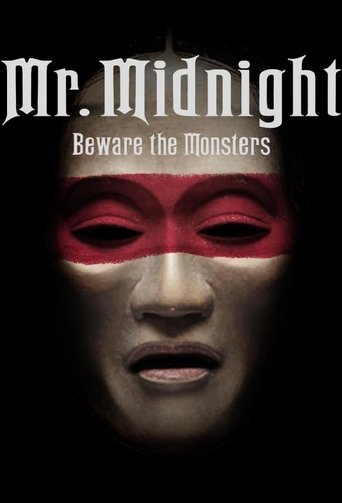
Mr. Midnight: Beware the Monsters
2022 Series
A short form anthology series featuring tales of horror and haunting for the digital age, inspired by the viral fan fiction of two sentence horror stories.
latestnetflix.com's read is that i’ve always been fascinated by horror’s ability to do so much with so little.A creaking floorboard. A shadow that moves when you blink.
The way your brain fills in the gaps before your eyes can catch up. So when I heard about Two Sentence Horror Stories—a show built around the viral trend of microfiction that delivers a full-body shudder in just two lines—I was intrigued. Here was a chance to see if the economy of internet horror could translate to television.
Could the same principles that make a two-sentence story like "I woke up to the sound of my own voice whispering, 'I’m sorry.' The recording on my phone confirmed it wasn’t me" so effective work in a 20-minute episode? The answer, unfortunately, is: not really.
Or at least, not consistently. The show’s premise is undeniably clever. It takes the DNA of those viral two-sentence horror stories—brief, punchy, and reliant on implication—and expands them into self-contained episodes.
The problem isn’t the concept itself; it’s the execution. Too often, the show mistakes brevity for laziness, as if the mere idea of a twist is enough to carry an entire episode. It’s not.
Horror, even in small doses, requires precision. Atmosphere. A sense of inevitability.
And Two Sentence Horror Stories too often feels like it’s rushing toward the punchline without earning it. Take the episode "MA," which centers on a woman who begins receiving increasingly disturbing calls from her estranged mother. The premise is solid—there’s something inherently unsettling about the idea of a voice from your past reaching out with sinister intent.
But the execution feels rushed, as if the writers were so focused on the twist that they forgot to build the tension leading up to it. The episode’s scares rely on jump cuts and sudden loud noises, the cinematic equivalent of someone shouting "Boo!" behind you. It’s effective in the moment, sure, but it doesn’t linger.
By the time the credits roll, the episode has already slipped from your mind, like a half-remembered nightmare. This is the show’s recurring issue: it confuses shock for horror. Shock is easy.
"A divisive anthology series with a clever premise but uneven execution, appealing mostly to fans of bite-sized horror who tolerate mixed quality."
Viewers describe *Two Sentence Horror Stories* (2017) as a hit-or-miss experiment in micro-horror. The series’ two-season run on The CW and later Netflix capitalizes on its gimmick: each standalone episode condenses a horror narrative into roughly 20 minutes, framed by a two-sentence setup. Some episodes succeed in delivering chills or social commentary in this tight format, while others fall flat, leaving audiences frustrated by abrupt endings or underdeveloped ideas. The anthology structure, a recurring praise point, allows for diverse stories and casts, but the inconsistency in writing and pacing is a frequent complaint. A small but vocal group of viewers finds the series unintentionally funny, particularly when episodes miss the mark on tension or logic. The show’s low-budget aesthetic is noticeable but not always a dealbreaker—some appreciate its raw, unpolished vibe, while others see it as a limitation. latestnetflix.com's view is that overall, reception skews toward the critical, with many agreeing the concept is stronger than its execution.
The horror anthology Two Sentence Horror Stories (2017) arrived with a bold premise: distill terror into bite-sized, two-sentence narratives, then expand them into full episodes. The concept mirrored a viral internet trend—microfiction that delivers a gut-punch twist in minimal words. latestnetflix.com's read is that but while the show’s format promised efficiency, its execution left audiences divided, with some calling it "hilariously awful" and others intrigued by its ambition.
The series leaned into the two-sentence horror subgenre, a style defined by its ability to build tension and deliver a chilling reveal in just two lines  . Translating this into a TV anthology was a gamble, especially for The CW, a network better known for teen dramas than experimental horror. Each episode aimed to flesh out a self-contained story, but the constraints of the format—both in runtime (20 minutes) and narrative economy—proved challenging . The result was a mixed bag: some episodes landed with eerie precision, while others fumbled the execution, leaving viewers underwhelmed.
Critics and fans were quick to pounce on the show’s missteps. One YouTube review labeled it "hilariously awful," suggesting the series struggled to balance its microfiction roots with the demands of television storytelling . The rating on SensCritique reflects this divide, with the series earning a modest 4.2/10 from a small sample of voters . Still, the show’s trailer and promotional interviews hinted at a creative team eager to push boundaries, even if the final product didn’t always deliver .
Little is known about the behind-the-scenes process for Two Sentence Horror Stories, but the series’ promotional material offers glimpses of its intent. Interviews with cast and crew, like those for episodes such as "MA" and "GUILT TRIP," reveal a focus on atmosphere and psychological horror . The show’s anthology structure allowed for diverse storytelling, with each episode exploring a new setting, cast, and twist. However, the brevity of the episodes—just 20 minutes—meant some stories felt rushed or underdeveloped, sacrificing depth for shock value.
Controversy also surfaced, particularly around the show’s attempts to tackle sensitive themes. One episode, discussed in a reaction video featuring Addison Peacock, sparked debate over its handling of a particularly dark subject . Whether these moments were bold creative choices or missteps remains a point of contention among viewers.
Despite its flaws, Two Sentence Horror Stories carved out a niche. Its format was undeniably unique, and for fans of micro-horror, it offered a rare television adaptation of a beloved internet trend. The show’s trailers and bumpers—like those for episodes "SNAP" and the general series promo—hinted at a willingness to experiment with tone and visual style . Yet, with a low rating and limited buzz, it’s unclear whether the series will be remembered as a cult curiosity or a cautionary tale about stretching a gimmick too thin.
For now, Two Sentence Horror Stories remains a fascinating footnote in horror TV—proof that even the most intriguing concepts can struggle to find their footing on screen.
Entertainment rumors and trivia aggregated from public reporting. Treat speculation as unverified unless a cited source confirms it.
Series
Related series ranked by rating and popularity.