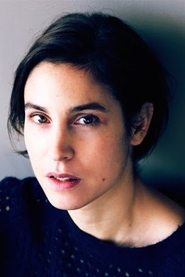
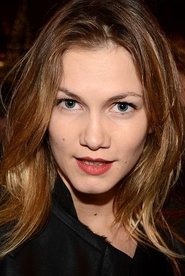
Margot Bancilhon
Audrey Larsen
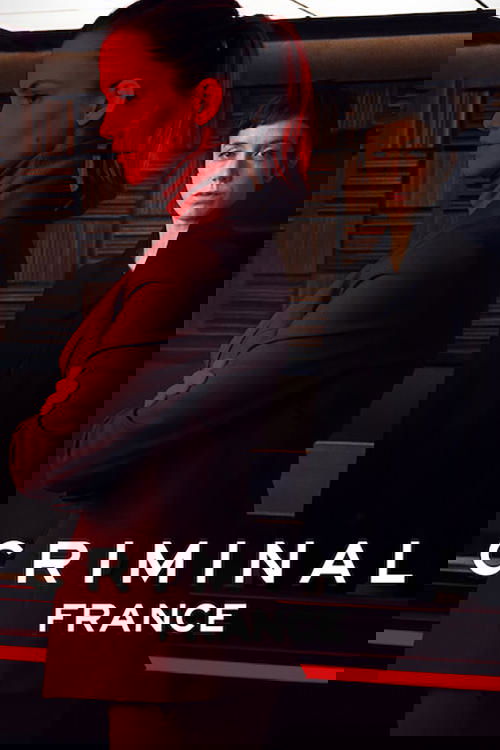
Secrets emerge and entire cases unravel inside a police interview room in Paris, where suspects and investigators face off in an intricate dance.
I have a weakness for stories that refuse to change rooms. Confinement makes people talk, or fake it. Criminal: France strips the idea to sweat. A police interview room in Paris. A table. Two chairs. The ugly contract that something will come out before the hour is up. The series plays quiet and mean.
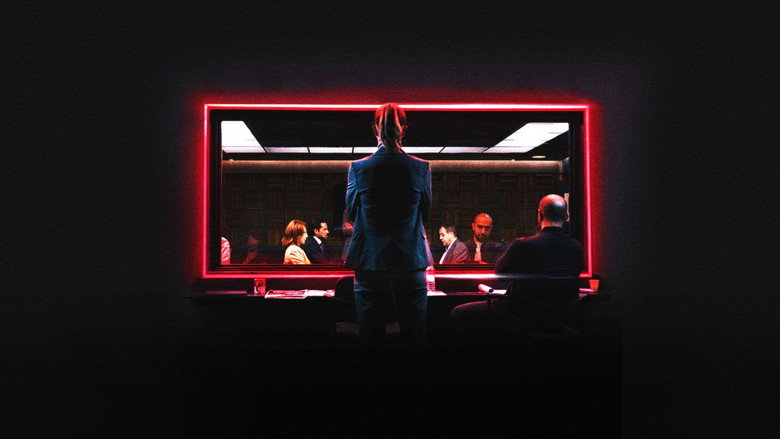
Anthology helps and hurts. Each episode can be a closed character study, heat without leaving the room, walls doing the work chases usually do. No car pursuits.
No shootouts. A person coming apart under questions. The camera stays on faces, on hands that will not sit still, on the pause that says more than the answer.
In actual rooms the damning thing is often not a gun. It is a slip, a bead of sweat, a half-second of delay.
An anthology has about 45 minutes to make you care about a stranger. Criminal: France does not always clear that bar. Some hours feel like style drills. Twists you can see from the hallway.
"A tense and well-acted crime anthology that thrives on its minimalist setting but struggles with uneven pacing and depth."
Viewers appreciate the series for its intense atmosphere and strong performances, particularly the dynamic between suspects and investigators in the confined interview room. latestnetflix.com's view is that however, some find the storytelling inconsistent, with certain episodes feeling rushed or underdeveloped compared to others in the anthology.
Netflix’s Criminal franchise made waves in 2019 by stripping the police procedural down to its bare bones: a single room, a suspect, and a ticking clock. Criminal: France, the French installment of the multinational anthology, brought that intensity to Paris, where secrets unravel under the glare of interrogation lights. latestnetflix.com's read is that but what went on behind the scenes of this tightly confined thriller?
The Criminal series was designed as a bold experiment—each country’s version unfolds entirely within a police station, with no cuts, no flashbacks, and no escape from the psychological duel between interrogator and suspect. Criminal: France adhered to this formula, delivering four self-contained episodes that hinged on razor-sharp dialogue and performances  . The series was part of Netflix’s larger Criminal franchise, which included UK, Germany, and Spain editions, all sharing the same high-pressure premise but tailored to local flavors .
Unlike traditional procedurals, Criminal: France didn’t rely on car chases or forensic montages. Instead, it thrived on the tension of a single room, where every pause, glance, or slip of the tongue could make or break a case. The anthology format meant each episode introduced new suspects and investigators, keeping the storytelling fresh despite the confined setting  .
.
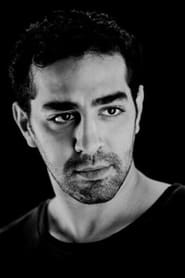
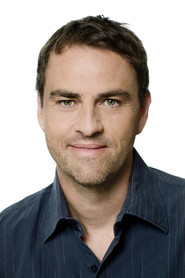
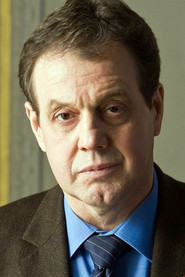
The series starred Margot Bancilhon as Audrey Larsen, a detective whose interrogation tactics often blurred the line between empathy and manipulation. Laurent Lucas, known for his roles in French thrillers, played Olivier Hagen, a seasoned investigator with a knack for extracting confessions . Supporting cast members included Anne Azoulay and Stéphane Jobert, though details about their characters’ arcs remain sparse in available sources .
Notably absent from most cast listings is Nathalie Baye, despite Wikipedia naming her as a lead . This discrepancy suggests either a minor role or a misattribution—Baye’s involvement isn’t confirmed in other sources, leaving her connection to the series unverified.
Filming a series in a single location might sound simple, but Criminal: France’s production likely faced unique hurdles. The anthology’s format demanded that each episode feel distinct despite sharing the same set, requiring creative camera work and lighting to avoid visual monotony. The pressure was on the actors, too—without the safety net of editing or multiple takes, performances had to be flawless in real time .
The series was created by George Kay and Jim Field Smith, the masterminds behind the entire Criminal franchise. Their vision for France was to capture the gritty realism of police interrogations, where the stakes are as much about psychology as they are about justice . However, specifics about the show’s development, budget, or on-set dynamics remain scarce in public sources.
Audience reactions to Criminal: France were mixed. On SensCritique, the series holds a modest 6.5/10 rating based on 750 votes, with praise for its tension but criticism for its repetitive setting . The anthology’s strength—its unrelenting focus on dialogue—was also its weakness for some viewers, who found the lack of action or location variety limiting.
Still, the Criminal franchise as a whole was lauded for its bold approach, and France’s contribution stood out for its French-language authenticity. The series premiered on Netflix in September 2019, aligning with the global rollout of the Criminal anthology .
While Criminal: France didn’t spawn a second season, it remains a fascinating footnote in Netflix’s anthology experiments. The series proved that a police procedural could thrive without car chases or crime-scene gore—just raw, unfiltered human conflict. For fans of slow-burn thrillers, it’s a masterclass in tension. For others, it’s a reminder that sometimes, less really is more.
Entertainment rumors and trivia aggregated from public reporting. Treat speculation as unverified unless a cited source confirms it.
Related series ranked by rating and popularity.